“Self-Reliance Is the Only Way to Beat U.S. Curbs”: China’s State-Orchestrated Semiconductor Drive Moves in Lockstep, Rapidly Adapting DeepSeek V4

Authored On
Modified
China’s Semiconductor Sector Races to Secure Compatibility With DeepSeek V4
China’s Government Accelerates State-Led Growth by Integrating Semiconductor Supply Chains Under U.S. Restrictions
YMTC, CXMT and Others Gain Ground in Global Markets
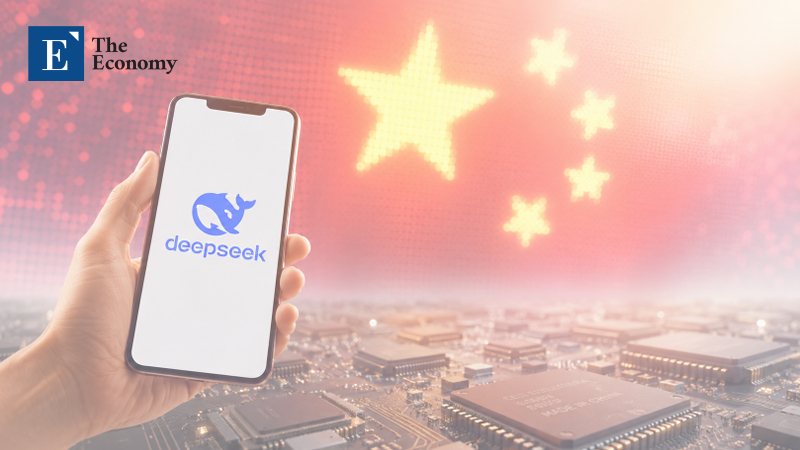
China’s leading semiconductor and artificial intelligence chipmakers are accelerating efforts to deploy V4, the latest large language model from domestic AI start-up DeepSeek. As Beijing drives the integration and expansion of semiconductor supply chains in response to sweeping U.S. restrictions, private companies are moving in lockstep with the state’s agenda. These firms are rapidly expanding their presence in global markets on the strength of price and volume competitiveness, extending their ambitions beyond the construction of a self-contained domestic ecosystem.
DeepSeek V4 and Chinese Semiconductors Achieve Compatibility in Short Order
According to a report by Hong Kong’s South China Morning Post on the 6th, local time, China’s semiconductor industry has recently been moving swiftly to secure compatibility with the V4 model. Huawei, the Chinese electronics and telecommunications equipment manufacturer, is leading this push. The company said it had fully adapted V4 to its Ascend 950PR chip platform, enabling single-card inference performance up to 2.87 times higher than Nvidia’s H20 chip, which was designed specifically for export to China. The Ascend 950 processor is a high-performance AI chip equipped with Huawei’s self-developed HBM and has demonstrated robust demand, led by China’s three major internet groups: Alibaba, ByteDance and Tencent.
AI semiconductor designer Cambricon also completed full-stack adaptation on the day V4 was released and made its deployment code available as open source. Fabless company Moore Threads likewise secured compatibility from the first day of the V4 launch and took steps to support extended context length and advanced reasoning modes through its flagship graphics processing unit, the MTT S5000. T-Head, Alibaba’s chip subsidiary, has also joined the trend by confirming V4 compatibility across eight chip architectures.
Baidu’s AI chip subsidiary Kunlunxin has also accommodated V4 by deploying mass-produced AI chips in its search infrastructure, while Hygon, a fabless company that secured an x86 license from AMD, has achieved compatibility through advanced central processing units and deep computing units. AI chip start-up Infinigence is supporting V4 Pro and Flash models through its L600 chip, a purpose-built accelerator design, while GPU designer Iluvatar CoreX has also announced compatibility across the full V4 product lineup.
Beijing’s Determination to Foster the Semiconductor Industry
The moves by Chinese semiconductor companies are being viewed as part of Beijing’s broader plan to integrate the semiconductor supply chain. The Chinese government has long intervened directly in the semiconductor sector and pushed for industrial restructuring. The state-led industrial concentration strategy China has previously deployed in sectors such as solar power and electric vehicles is being applied once again. Large-scale mergers and acquisitions have served as the core axis of this strategy. A representative case is SMIC’s incorporation of SMNC. SMIC, China’s largest foundry, disclosed in December last year that it would acquire the remaining 49% external stake in SMNC and turn it into a wholly owned subsidiary. SMNC is one of SMIC’s key production bases.
Hua Hong Semiconductor, China’s second-largest foundry, is also seeking to incorporate a 97.5% stake in Huali Microelectronics. The move is an attempt to strengthen production capacity through the consolidation of existing assets rather than new capacity expansion. The acquisition proposal was submitted to the Shanghai Stock Exchange earlier this month and is now undergoing substantive review. Similar transactions have continued in the materials and components segment. Jiangfeng Electronics, which manufactures ultra-high-purity metal targets and precision components for semiconductors, said in February that it would acquire a stake of more than 20% in Kaide Quartz, a supplier of quartz products for semiconductors.
This supply-chain integration and scale expansion are measures aimed at strengthening China’s self-sufficiency in response to stringent U.S. restrictions. Through the CHIPS and Science Act enacted in 2022, the United States blocked exports to China of extreme ultraviolet lithography equipment, which is exclusively produced by Dutch semiconductor equipment maker ASML. EUV lithography equipment is essential for the production of advanced semiconductors at 7 nanometers or below. In addition, the U.S. Congress is now pursuing legislation that would add key equipment for mature-node processes, including deep ultraviolet immersion lithography systems, to the sales-ban list. This means the external supply chains on which Chinese semiconductor companies could rely are being cut off one after another. Under these conditions, securing an independent manufacturing base by integrating and expanding production lines and core assets is effectively being regarded as a critical prerequisite for supply-chain self-reliance.
A Challenge to South Korea’s Global Leaders
National self-reliance targets are also being established rapidly. Nikkei Asia reported on the 5th, citing multiple sources, that “the Chinese government is targeting domestic production of more than 70% of the silicon wafers used by its semiconductor manufacturers.” The sources said Beijing is issuing an “unspoken order” for semiconductor manufacturers to use domestically produced 12-inch, or 300-millimeter, wafers, and analyzed that the measure would mark a key inflection point in China’s semiconductor self-sufficiency drive. One industry official said, “Only 30% of the market will be open to foreign suppliers,” adding that “in the legacy chip market, Chinese silicon wafer products already meet market demand and requirements.”
Backed by the government’s strong commitment to industrial development, Chinese companies are gaining prominence in global markets as well as in the domestic ecosystem. Dramatic price competitiveness is emerging as a core engine drawing market demand. According to a South China Morning Post report last month, Arisa Liu, a researcher at the Taiwan Institute of Economic Research, said Chinese companies hold a price advantage of more than 15% over products with equivalent specifications. That price competitiveness is being assessed as a powerful weapon in consumer markets such as general-purpose servers and home appliances.
Chinese companies are also mounting an aggressive push in terms of volume. YMTC and CXMT, China’s leading memory companies, are pouring resources into production-line expansion to catch up with South Korean players such as Samsung Electronics and SK Hynix, which hold dominant positions. CXMT, in particular, has disclosed a plan to invest about $1.1 billion from funds raised through its initial public offering into upgrading wafer mass-production lines. Amid these efforts, Chinese companies’ global market share is rising rapidly. According to market research firms Omdia and Counterpoint Research, YMTC’s share of global shipments had climbed to 13% as of the third quarter of last year. CXMT has also recently lifted its global market share to the 4% to 5% range, overtaking Taiwan’s Nanya Technology and settling into the No. 4 position worldwide.
- Previous "Silicon Valley Capital Floods In" Ocean Data Centers Emerge as New Alternative, Yet Commercialization Barriers Remain High
- Next Rheinmetall, Core Pillar of Germany’s Rearmament, Takes Hard Line with “$13 Billion Increase” for F126 Program: “Full-Scale Push to Monetize Its Dominant Position”
Similar Post