“U.S.-Iran Talks Gain Traction” Yet Global Oil Supply Chain Risks Persist, With UAE’s OPEC Exit Emerging as a Wild Card

Aoife Brennan is a contributing writer for The Economy, with a focus on education, youth, and societal change. Based in Limerick, she holds a degree in political communication from Queen’s University Belfast. Aoife’s work draws connections between cultural narratives and public discourse in Europe and Asia.
Authored On
Modified
MOU Under Review for U.S.-Iran Ceasefire and Nuclear Negotiations
Fragile Oil Supply Chains Unlikely to Stabilize Quickly
UAE’s Departure From OPEC Raises Prospect of Accelerated Producer Output
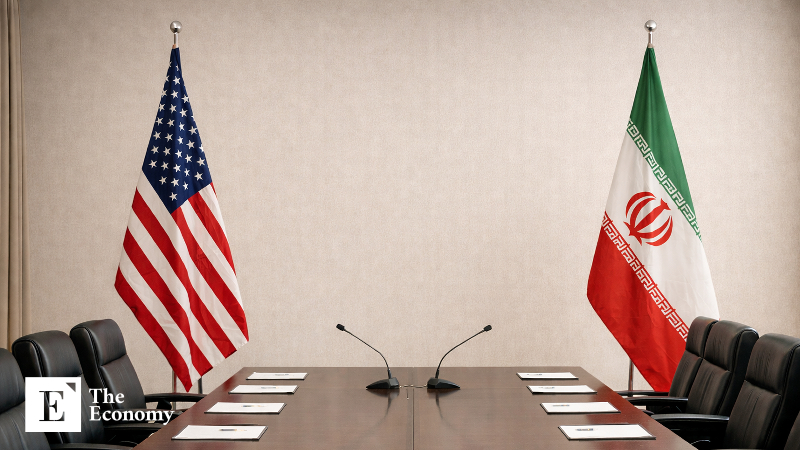
Analysts say the United States and Iran are moving closer to an agreement aimed at ending the war, with both sides reportedly seeking substantive compromises on key issues through a memorandum of understanding (MOU). Markets, however, believe that even if the two sides reach a deal, stabilization of global oil supply chains will remain elusive in the near term. Some observers also warn that the United Arab Emirates’ (UAE) withdrawal from the Organization of the Petroleum Exporting Countries (OPEC) and the broader OPEC+ alliance could emerge as the single biggest variable reshaping the energy market landscape.
Progress in U.S.-Iran Ceasefire Talks
On May 6 local time, U.S. outlet Axios, citing White House officials, reported that “the United States is nearing an agreement with Iran through a one-page MOU designed to end the war and establish a framework for more detailed nuclear negotiations.” The reported MOU includes provisions covering a temporary suspension of Iran’s uranium enrichment activities, partial lifting of U.S. sanctions and release of frozen Iranian assets, phased easing of Iran’s restrictions on transit through the Strait of Hormuz, and a gradual rollback of the U.S. maritime blockade against Iran.
Axios assessed that President Donald Trump’s recent abrupt suspension of the so-called “Liberation Project,” which had been aimed at rescuing vessels trapped in the Strait of Hormuz, reflected progress in negotiations centered around the proposed MOU. According to the report, the two countries are considering signing the MOU first and then spending the following 30 days finalizing detailed ceasefire conditions. Some sources also indicated that Iran could agree to export highly enriched uranium abroad — the most contentious issue in the negotiations — with discussions reportedly including the possibility of transferring the material to the United States.
Iranian Foreign Ministry spokesman Esmail Baghaei partially affirmed the report in an interview with semi-official Iranian news agency ISNA, stating that “the Iranian government is reviewing the U.S. proposal and will convey its position to Pakistan once the review is completed.” ISNA, however, offered a more cautious interpretation, saying that “parts of the Axios report appear intended to shape media narratives and public sentiment.” The outlet further claimed to have obtained “credible information” indicating that the Iranian negotiating team is currently discussing only the issue of ending the war, while nuclear issues remain outside the scope of the present stage of negotiations, effectively distancing itself from speculation surrounding enriched uranium transfers. Another Iranian semi-official outlet, Tasnim News Agency, also cited sources as saying that “Iran has yet to provide an official response to the U.S. final proposal, which contains several unacceptable provisions.” Analysts believe such reports from local Iranian media may form part of a broader public relations campaign designed to secure leverage in the final phase of negotiations.
Mounting Strain on Global Oil Supply Chains
Expectations that Washington and Tehran are approaching an agreement triggered a sharp decline in international crude prices. On May 6, July Brent crude futures traded on London’s ICE Futures Exchange fell 7.83% ($8.20) from the previous session to settle at $101.27 per barrel. On the same day, June West Texas Intermediate (WTI) crude futures closed down 7.03% ($7.19) at $95.08 per barrel on the New York Mercantile Exchange. The magnitude of the declines marked the steepest single-day drop for both benchmarks since April 17.
Despite the market’s optimism, many believe that even a finalized agreement would not stabilize oil supply-demand conditions in the near term. Crude shipments from the Middle East would still require weeks to reach refineries worldwide after any reopening of the Strait of Hormuz, while already strained strategic petroleum reserves and commercial inventories across major economies may prove insufficient to absorb peak summer energy demand. Similar warnings are increasingly emerging across the market. Chevron CEO Mike Wirth said in an interview with Reuters on May 4 that market conditions had deteriorated beyond the existing supply buffer capacity and warned that the world could face a fuel shortage crisis comparable to the oil shocks of the 1970s. Equinor CEO Anders Opedal echoed the concern during the Norwegian state-controlled energy company’s earnings announcement on May 6, predicting that “even if peace returns to the Middle East, it will take at least six months for markets to normalize.”
Financial institutions are also issuing increasingly pessimistic forecasts. In a report released May 4, Goldman Sachs projected that global crude inventories would decline from 101 days of supply at current demand levels to just 98 days by the end of the month. The bank also noted that refined product inventories had fallen from 50 days of supply before the outbreak of war to 45 days currently, warning that supply shortages in certain regions and product categories were approaching “critical levels.” Morgan Stanley likewise forecast that U.S. gasoline inventories could shrink to 198 million barrels by the end of the summer, marking the lowest level ever recorded in the firm’s dataset and falling substantially below the previous trough of 215.6 million barrels logged in 2022.
UAE Emerges as a Critical Variable
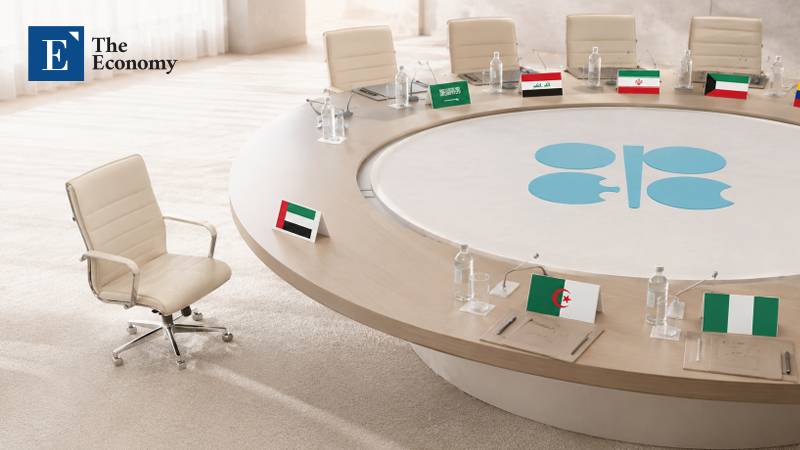
A major complicating factor, however, lies in the UAE’s formal departure from OPEC and OPEC+ effective May 1. Since publicly declaring its exit, the UAE has maintained that the move was driven solely by national interests. ADNOC CEO Sultan Al Jaber emphasized on May 4 that “the sovereign decision to recalibrate the UAE’s position within the global energy landscape and leave OPEC was not directed at any specific country,” adding that “the decision was made from the standpoint of long-term national interests.” International media previously interpreted the UAE’s withdrawal as an attempt to escape Saudi Arabia’s influence within the Arab and Islamic sphere and establish an independent energy and security strategy.
Saudi Arabia and other OPEC members, however, are reacting with considerable sensitivity to the UAE’s move. On May 3, seven OPEC+ countries announced in a joint statement that they would increase crude production by a combined 188,000 barrels per day starting in June. The increases vary by country. Saudi Arabia and Russia are each expected to raise output by 62,000 barrels per day, followed by Iraq with 26,000 barrels, Kuwait with 16,000 barrels, Kazakhstan with 10,000 barrels, Algeria with 6,000 barrels, and Oman with 5,000 barrels. The countries also said they would begin holding monthly meetings starting June 7 to review market conditions and compliance with existing production cuts.
The production increase is widely interpreted as a direct response to the UAE’s effective withdrawal from OPEC and OPEC+. Until now, OPEC+ has managed oil prices through a quota system that restricted output by member states. The UAE’s exit is therefore being viewed as an implicit signal that Abu Dhabi may pursue independent production increases. Concerns are mounting within OPEC+ that other countries could eventually follow the UAE’s path and abandon the organization, creating circumstances in which broader output increases become increasingly difficult to resist. Even so, the latest production hike is unlikely to produce meaningful price stabilization. The scale of the increase remains far too limited to offset the millions of barrels per day in supply disruptions caused by the Strait of Hormuz blockade.
Aoife Brennan is a contributing writer for The Economy, with a focus on education, youth, and societal change. Based in Limerick, she holds a degree in political communication from Queen’s University Belfast. Aoife’s work draws connections between cultural narratives and public discourse in Europe and Asia.
Similar Post