China Erasure Gains Momentum Across Europe as EU Moves to Block Chinese Industrial Offensive, Beijing Prepares Retaliation

Anne-Marie Nicholson is a fearless reporter covering international markets and global economic shifts. With a background in international relations, she provides a nuanced perspective on trade policies, foreign investments, and macroeconomic developments. Quick-witted and always on the move, she delivers hard-hitting stories that connect the dots in an ever-changing global economy.
Authored On
Modified
EU Agrees to Phase Out Chinese Inverters and Telecom Equipment Over Cybersecurity Risks
Brussels Expands Investment Barriers Through Industrial Accelerator Act and Cuts Advanced Research Cooperation
Drive to Reduce Dependence on China and Reinforce Domestic Manufacturing Competitiveness Accelerates
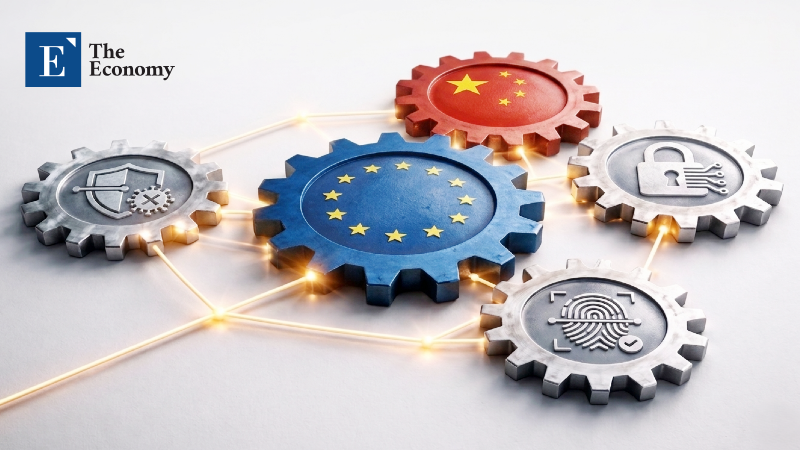
The European Union’s decoupling strategy toward China is rapidly expanding beyond telecommunications and semiconductors into power infrastructure and advanced manufacturing sectors. Framing Chinese-made equipment as a cybersecurity threat, the EU is accelerating efforts to reduce dependence on China by combining subsidy restrictions with supply-chain regulations. China, in turn, has signaled retaliatory measures, raising the likelihood that trade and technology frictions between Brussels and Beijing could evolve into a full-scale confrontation centered on supply chains and investment controls.
EU to Suspend Subsidies for Projects Using Chinese Inverters
According to the Financial Times and Euronews on the 6th local time, the European Commission recently agreed to phase out inverters manufactured in countries classified as high-risk states, including China, Russia, North Korea, and Iran, from the European market. Given the minimal market share held by manufacturers outside China, the measure effectively amounts to a ban on Chinese-made inverters. Inverters are critical components that connect renewable energy sources to power grids and are widely embedded in solar panels, electric vehicles, wind power systems, and battery storage infrastructure.
China currently dominates the global inverter market, accounting for roughly 80% of worldwide supply. The European Commission has focused on the possibility that Chinese-made inverters could be exploited as instruments of cyber sabotage. According to a January report released by consulting firm Wood Mackenzie, Chinese brands Huawei and Sungrow ranked as the world’s two largest solar inverter manufacturers during the first half of last year, surpassing Germany’s SMA and Austria’s Fronius.
Under the new measures, financial institutions were required by the 15th of this month to notify the Commission if projects inside or outside the EU intended to connect to the European grid using Chinese inverters. By Nov. 1 this year, the Commission plans to determine on a case-by-case basis whether exemptions should be granted for projects unable to continue operations without changing suppliers. A European Commission official stated, “One of the most pressing foreign cyber threats is the possibility of foreign actors disrupting the EU’s critical energy infrastructure,” adding, “It has been confirmed that EU member-state power grids can in fact be remotely shut down through inverters. In a crisis situation, this could expose entire countries to blackout risks.”
Chinese Components Excluded Entirely From Advanced Defense Sectors
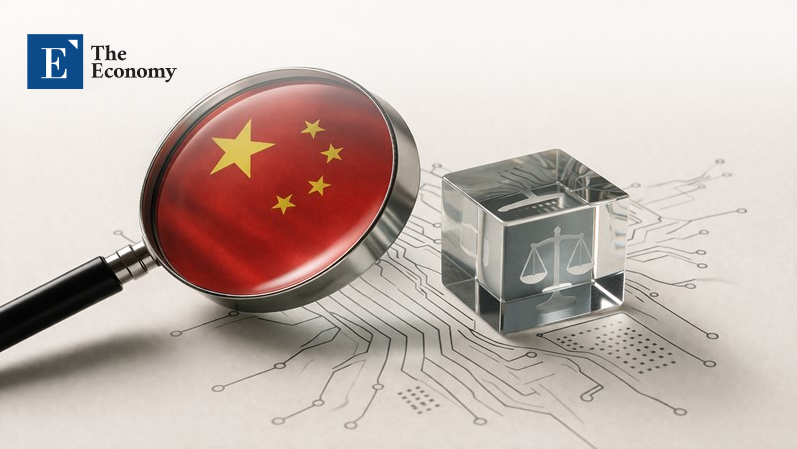
Europe’s campaign to exclude Chinese technology did not begin with inverters. The EU has already blocked Chinese participation in Horizon Europe, the bloc’s flagship research funding program, in strategic sectors including artificial intelligence and semiconductors. As with the inverter restrictions, the rationale centers on security concerns linked to sensitive information sharing and potential military applications. During a recent webinar, a Commission official stated that the current economic and geopolitical climate requires close scrutiny of collaboration partners, identifying intellectual property protection as a central concern.
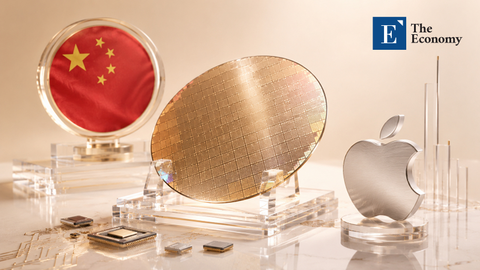
Beginning this year, research institutions based in China or under Chinese control have been barred from applying for EU funding in AI, 5G communications, healthcare, semiconductors, biotechnology, and quantum technologies. The restrictions also apply to the so-called “Seven Sons of National Defense,” including Beihang University and six other Chinese universities affiliated with China’s Ministry of Industry and Information Technology. Even research institutions outside China must prove that their partner organizations are not directly owned or controlled by Chinese entities in order to qualify for funding in these fields.
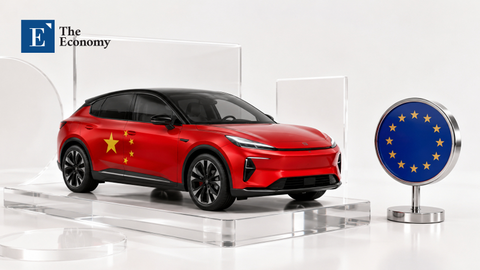
Europe is also moving to limit Chinese investment participation through the proposed Industrial Accelerator Act (IAA). The draft legislation, unveiled by the European Commission in March and currently under discussion among member states, would impose restrictions on foreign investments exceeding $100 million in strategic sectors such as batteries, solar panels, and nuclear energy if the investing country accounts for more than 40% of global production in those industries. Specifically, the law would require at least 50% of the workforce to be hired within the EU, mandate participation by local firms in manufacturing processes, and compel technology know-how transfers to European partners. The proposal also stipulates that products in key industries, including automobiles, must contain at least 70% EU-origin value in order to qualify for government procurement contracts or subsidies.
While preparing the legislation last year, the European Commission stated that it had referenced China’s industrial development strategies, including “Made in China 2025” and “Made in China 2035.” The Financial Times noted that the legislation is widely interpreted as Europe’s response to China’s long-standing practice of forcing foreign companies into joint ventures and technology transfers. European companies increasingly argue that Chinese manufacturers receiving massive state subsidies have accumulated technological capabilities and high-value production capacity to the point where fair competition has become increasingly difficult. According to the Organisation for Economic Co-operation and Development (OECD), Chinese manufacturers receive subsidies ranging from three to nine times higher than those granted to foreign competitors. Europe argues that excessive subsidies have fueled overproduction, flooding regional markets with low-cost Chinese imports and eroding local manufacturing competitiveness. The EU aims to raise manufacturing’s share of regional GDP from 14.3% last year to 20% by 2035.
EU Also Pushes to Remove Huawei and ZTE Equipment
The EU is also accelerating efforts to remove Chinese telecommunications equipment makers from Europe’s communications infrastructure. During a briefing in Brussels on the 4th, the European Commission said it had recommended that member states prevent domestic telecom operators from using equipment supplied by Huawei and ZTE in network infrastructure. The move is viewed as part of a broader European effort to gradually phase out equipment from so-called “high-risk vendors” over concerns tied to telecom network security and national security.
Through ongoing revisions to the EU Cybersecurity Act, Brussels is seeking to establish a legal basis that would allow restrictions or outright bans on network equipment supplied by high-risk vendors. Although the legislation has not yet been finalized, the initiative has increasingly shifted away from voluntary recommendations toward the possibility of binding regulations applicable across all member states.
The latest measures build on the “5G Security Toolbox” introduced in 2020. At the time, the EU established common guidelines urging member states to assess supply-chain risks and reduce dependence on high-risk suppliers in order to strengthen 5G network security. In June 2023, the Commission concluded that Huawei and ZTE posed materially higher risks than other 5G equipment providers.
The challenge, however, has been the uneven pace of implementation among member states. While some countries have already restricted or excluded Huawei and ZTE equipment from core telecom networks, others have maintained a cautious stance due to concerns over potential Chinese retaliation and the high cost of replacing existing infrastructure. The Commission’s decision to escalate regulatory pressure reflects growing recognition that voluntary guidance alone would be insufficient to establish a uniform level of telecom security across Europe.
China Denounces “Discriminatory Measures”
China has reacted sharply to the EU’s moves. Chinese officials argued that the bloc’s new cybersecurity rules constitute discriminatory measures targeting Chinese firms and demanded the removal of provisions referring to “cybersecurity concern countries” and “high-risk” suppliers. Chinese diplomatic officials accused the EU of applying double standards and warned that Beijing could adopt countermeasures if the regulations are not revised. Huawei also condemned the measures as protectionism. The company argued that legislation restricting or excluding suppliers based on country of origin rather than technical standards or concrete evidence violates the EU’s principles of fairness, non-discrimination, and proportionality.
Beijing has also issued strong warnings regarding the EU’s Industrial Accelerator Act, signaling the possibility of retaliatory action. In a statement released on the 27th of last month, China’s Ministry of Commerce said it had formally submitted comments to the European Commission expressing Beijing’s official position and “grave concerns” regarding the legislation.
The ministry criticized the bill for restricting foreign investment in four emerging strategic sectors — batteries, electric vehicles, solar energy, and critical raw materials — while imposing exclusive “EU-origin” requirements in public procurement and subsidy programs, thereby creating institutional discrimination and investment barriers. Beijing further argued that the legislation violates core principles such as most-favored-nation treatment and breaches international trade agreements including those related to tariffs and trade, warning that the measures would unfairly discriminate against Chinese investors and undermine market-economy principles.
The ministry also urged the EU to remove discriminatory requirements targeting foreign investors, origin-based restrictions, compulsory IP and technology transfer provisions, and limitations tied to public procurement policies, while expressing willingness to maintain dialogue with Brussels regarding the legislation. It further warned that if the EU ignores China’s proposals and presses ahead with the law in ways that damage Chinese corporate interests, Beijing “will be compelled to take countermeasures and resolutely safeguard the legitimate rights and interests of Chinese companies.”
Chinese state media also amplified criticism from domestic experts. According to the Global Times, Jin Junbo, director of the Center for China-Europe Relations at Fudan University’s Institute of International Studies, argued that the legislation contains severe discrimination against Chinese companies, particularly in emerging and strategic industries, while displaying clear protectionist characteristics targeting specific countries. He warned that the bill lacks firm legal and rational foundations and could violate key international trade rules such as the principle of most-favored-nation treatment and agreements including the General Agreement on Tariffs and Trade (GATT) 1994.
Shi Xiaoli, director of the WTO Law Research Center at China University of Political Science and Law, stated that although the EU has substantial practical demand for economic cooperation with China, pressure from the United States has pushed Europe toward containment-oriented strategies, including inserting targeted provisions into trade legislation. Shi argued that such moves do not align with the fundamental interests of either the EU or its member states. Jin further claimed that Europe’s tightening regulations across trade, technology, and supply chains reflect deepening strategic anxiety as the bloc confronts internal divisions, declining industrial competitiveness, and weakening growth momentum.
Anne-Marie Nicholson is a fearless reporter covering international markets and global economic shifts. With a background in international relations, she provides a nuanced perspective on trade policies, foreign investments, and macroeconomic developments. Quick-witted and always on the move, she delivers hard-hitting stories that connect the dots in an ever-changing global economy.
Similar Post