Japan Opens the Door for Banks in Its Ongoing Crypto Deregulation Push

As one of the youngest members of the team, Tyler Hansbrough is a rising star in financial journalism. His fresh perspective and analytical approach bring a modern edge to business reporting. Whether he’s covering stock market trends or dissecting corporate earnings, his sharp insights resonate with the new generation of investors.
Authored On
Modified
Japan Considering Allowing Bank-Affiliated Firms to Enter the Cryptocurrency Market
Since the 2016 revision of the Payment Services Act, Japan has maintained a pro-crypto stance
This year’s PSA amendment aims to accelerate deregulation and establish clearer market rules
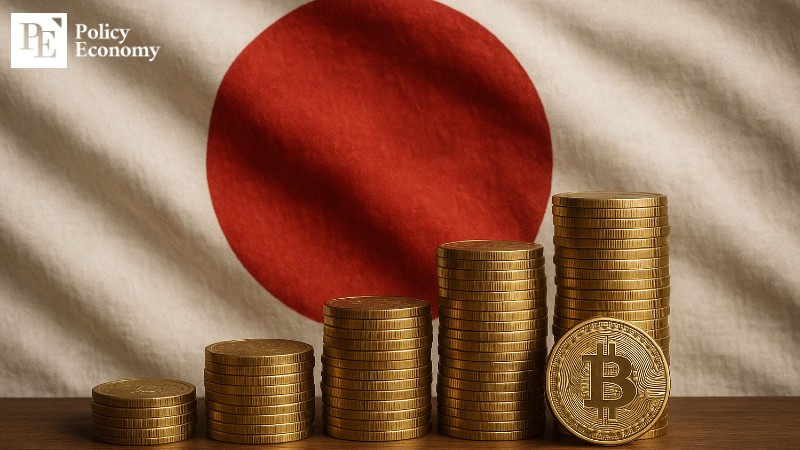
Japan’s financial authorities are reportedly considering allowing banks to invest in digital assets. The move marks another sign of Japan’s increasingly accommodative stance after years of efforts to refine its cryptocurrency regulations.
Will Japan’s FSA Allow Banks to Handle Digital Assets?
According to Nikkei and other media reports on October 21, Japan’s Financial Services Agency (FSA) has begun detailed discussions on allowing banking group affiliates to offer cryptocurrency trading and exchange services. The goal is to create an environment where both individuals and institutions can invest in digital assets more easily, thereby stimulating market activity. Under current banking regulations, subsidiaries of banking groups are not permitted to obtain licenses for virtual asset exchange operations from the FSA. As a result, Japan’s crypto trading landscape is currently dominated by securities-affiliated firms such as SBI Holdings’ SBI VC Trade and Rakuten Securities’ Rakuten Wallet.
The FSA now seeks to change this by allowing securities subsidiaries of banking groups to provide crypto exchange and trading services, aiming to foster fair competition between bank-affiliated and independent securities firms while broadening the country’s digital asset market. In addition, the agency plans to revise supervisory guidelines to allow banking groups’ headquarters to acquire and hold cryptocurrencies like Bitcoin for investment purposes. This move would effectively recognize digital assets as an investment class alongside government bonds and equities, helping banks diversify their asset management strategies.
At the same time, the FSA intends to strengthen financial soundness requirements and risk management frameworks to ensure that the high volatility of digital assets does not compromise banks’ balance sheets or threaten depositor safety. Bank-affiliated securities firms will also be required to provide clear risk disclosures to retail investors. An FSA official said, “We aim to expand investment opportunities while implementing proper safeguards so that banks are not exposed to short-term price fluctuations or excessive management risks.”
Japan’s Path to Establishing Its Virtual Asset Framework
Japan has long pursued a pro–virtual asset stance. Among major economies, it was one of the first to introduce comprehensive regulations after the Mt. Gox incident, amending the Payment Services Act in 2016 to officially recognize virtual assets as legal property. However, the initial regulations were notably strict. The government placed crypto exchanges under the supervision of the Financial Services Agency (FSA) and required new tokens to be approved by the Japan Virtual and Crypto Assets Exchange Association (JVCEA) before being listed on an official “whitelist.” Established in 2018, the JVCEA operates as a self-regulatory body authorized by the government, overseeing crypto businesses and the listing of tokens on domestic exchanges.
The challenge, however, lay in the cumbersome whitelist process — even after submitting all necessary documents, screening could take one to two years. To streamline this, in 2022 the JVCEA introduced a “green list” system that eased initial listing requirements for tokens already traded on at least three member exchanges. As a result, the number of listed tokens in Japan grew rapidly, from 37 in 2021 to over 100 by 2023.
Japan also allows corporations to open company-level crypto accounts. As the global digital asset industry continues to evolve, many viewed prohibiting corporate investment as outdated. Allowing companies to participate in crypto trading broadens the range of market participants and contributes to greater market activity.

PSA Amendment Introduced in the First Half of the Year
In the first half of this year, Japan amended its Payment Services Act (PSA) to strengthen the regulatory framework for virtual assets and stablecoins. The amendment eases the reserve requirements for trust-type stablecoins, classified as “electronic payment instruments.” Under the current rule, issuers of such stablecoins must hold reserves equivalent to 100% of the issuance amount in demand deposits or other highly liquid assets. The revised PSA relaxes this requirement, allowing up to 50% of the reserves to be managed in low-risk assets with minimal principal loss. Eligible assets include Japanese or U.S. government bonds with maturities of three months or less and time deposits with early withdrawal options.
The amendment also introduces a new category for “electronic payment instrument and crypto-asset service intermediaries.” Previously, intermediaries that merely connected users with registered service providers were subject to the same strict registration requirements as full-fledged crypto exchanges. The revision establishes a separate framework for intermediaries who do not hold customer assets. These entities focus solely on connecting users seeking to buy, sell, or exchange crypto assets or electronic payment instruments with registered service providers. Since they do not hold client funds, they are exempt from capital adequacy requirements, and anti–money laundering and counter–terrorist financing (AML/CFT) obligations do not apply directly.
A new legal mechanism was also introduced to allow authorities to require insolvent virtual asset exchanges or electronic payment instrument providers to retain their assets within Japan. This measure aims to prevent cross-border outflows of customer assets. The provision was inspired by the 2022 case of FTX Japan, where keeping customer assets within the country proved effective in protecting investor interests.
As one of the youngest members of the team, Tyler Hansbrough is a rising star in financial journalism. His fresh perspective and analytical approach bring a modern edge to business reporting. Whether he’s covering stock market trends or dissecting corporate earnings, his sharp insights resonate with the new generation of investors.
Similar Post