Negotiations Stalled, Troop Buildup Accelerates? White House: “Sufficient Grounds to Strike Iran,” Shadow of Full-Scale War

Stefan Schneider brings a dynamic energy to The Economy’s tech desk. With a background in data science, he covers AI, blockchain, and emerging technologies with a skeptical yet open mind. His investigative pieces expose the reality behind tech hype, making him a must-read for business leaders navigating the digital landscape.
Authored On
Modified
Signs of Nuclear Talks Collapse, Military Options Fully Deployed
Israel–U.S. Strikes Fail to Eliminate Nuclear Variable
Rising Instability in Theocratic Regime, Implications for Alliance Structure
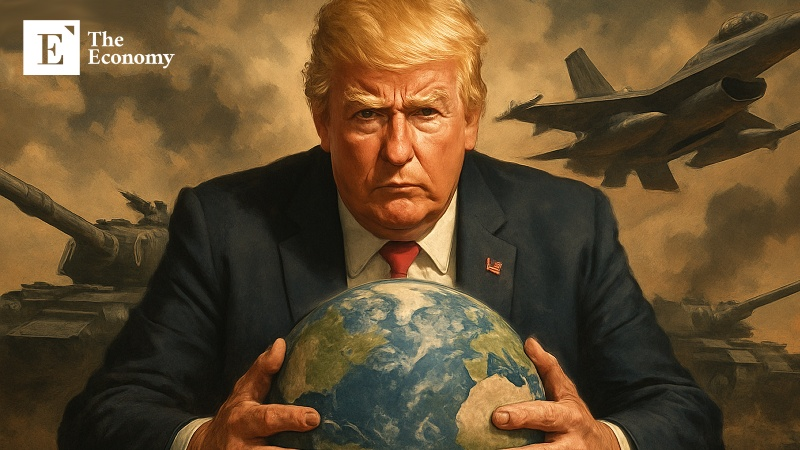
Nuclear negotiations between the United States and Iran have entered a phase of heightened military tension without producing a clear breakthrough. The White House has publicly stated that there are sufficient grounds to strike Iran, and multiple aircraft carriers and fighter jets have reportedly been deployed to the Middle East. Global attention has intensified, with crude oil prices swinging sharply amid the prospect of full-scale conflict. Despite sequential strikes by Israel and the United States last year, indications have emerged that Iran has rebuilt elements of its nuclear and missile capabilities, while political and economic instability inside Iran continues to deepen.
Negotiation Fatigue, Hard-Line Posture Intensifies
According to U.S. outlet Axios, “the Trump administration has moved closer to a major war in the Middle East,” and Washington could potentially launch an attack on Iran at any moment. While diplomatic talks aimed at reaching an agreement remain ongoing, the parallel preparation of military operations raises the possibility that a collapse in negotiations could escalate into full-scale war. Citing multiple sources, Axios reported that “the operation is expected to be conducted jointly by the United States and Israel and would be far larger in scale than the ‘12-day war’ in June of last year that destroyed Iran’s nuclear facilities.”
The outlet pointed to the deployment of two aircraft carriers, 12 warships, hundreds of fighter jets, and multiple air defense systems in the region as evidence of the seriousness of U.S. military preparations. Some assets remain in transit, and U.S. transport aircraft have reportedly carried weapons systems and munitions to the Middle East more than 150 times. “In the past 24 hours alone, more than 50 fighter jets—including F-35s, F-22s, and F-16s—have been redeployed,” the report noted, adding that “such an operation against Iran would resemble a full-scale war far more closely than the January operation to remove Venezuelan President Nicolás Maduro.”
As negotiations fail to yield a breakthrough, international attention has increasingly shifted toward the prospect of armed conflict. High-level nuclear talks resumed in Muscat, Oman, eight months after June of last year, and subsequent meetings were held in Geneva, Switzerland, but no meaningful agreement was reached. U.S. Vice President JD Vance stated that the talks “went well in some respects,” yet added that “Iran did not demonstrate a willingness to acknowledge and resolve the red lines set by the president.” He further said that Iran must present a detailed proposal within two weeks of the most recent meeting.
President Trump in January strongly condemned Iran’s violent suppression of anti-government protests and referenced the possibility of “strong measures.” On the 13th of this month, he said at a White House press conference that “regime change in Iran could be one of the best possible outcomes.” White House Press Secretary Karoline Leavitt also stated in a briefing that “there are sufficient reasons and justifications to attack Iran.” As the likelihood of military confrontation between the two countries increased, March WTI crude and April Brent crude both rose more than 4%. The parallel track of stalled negotiations and military preparation has further elevated the risk of direct confrontation.
Fortification Signs at Underground Complex Near Nuclear Facilities
Iran has previously faced sequential attacks by Israel and the United States last year. On June 12, Israel launched airstrikes under the operation name “Rising Lion,” initiating hostilities, and on June 21, nine days later, the United States dropped massive bunker-buster bombs on three major nuclear facilities—Fordow, Natanz, and Isfahan. At the time, President Trump wrote on social media that “precision strikes have been carried out on key nuclear facilities in Iran,” emphasizing that “Iran’s major nuclear enrichment facilities have been completely destroyed.”
Analysts generally assess that Israel’s preemptive strike was driven by a combination of military, diplomatic, and domestic political motivations. The attack came shortly after the International Atomic Energy Agency (IAEA) announced serious violations of the Nuclear Non-Proliferation Treaty (NPT) by Iran, reinforcing Israel’s assessment that Iran’s nuclear program had entered an advanced weaponization phase. President Trump warned that “if Iran, the bully of the Middle East, rejects peace, it will face much stronger attacks,” signaling a posture aimed not only at halting the nuclear program but also at compelling regime-level choices.
Despite these military strikes, Iran’s nuclear program has not ceased expanding. The New York Times reported on the 6th of this month that satellite imagery of approximately 24 sites targeted in last June’s strikes showed repair work underway at more than 12 facilities. Many sites reportedly began reconstruction immediately after the attacks, suggesting that the ballistic missile program has also been substantially restored. However, experts believe that the three main nuclear facilities—Fordow, Natanz, and Isfahan—remain offline, with only limited and slow repair activity continuing.
Differences in reconstruction speed are interpreted as indicators of Iran’s military priorities. The New York Times assessed that “if the United States attacks, Iran is most likely to retaliate with ballistic missiles targeting Israel and U.S. assets in the region.” John Caves, an advisor at the U.S. National Defense University’s Center for the Study of Weapons of Mass Destruction, stated that “Iran’s ability to threaten U.S. bases and allies in the Middle East through missile attacks is one of the few means it has to deter repeated strikes on its nuclear facilities.” A recent report by the Institute for Science and International Security (ISIS) citing increased activity at the Isfahan nuclear site has further heightened tensions surrounding both nuclear and missile programs.
“Regime Collapse Inevitable if Nuclear Program Abandoned”
Iran’s determination to retain its nuclear program, even at the risk of full-scale war with the United States, is closely tied to regime survival calculations. The nuclear program functions not merely as a military capability but as a final leverage point in negotiations under external pressure. The BBC noted that “historically, authoritarian regimes tend to decline gradually and then collapse suddenly,” assessing that “so far, Iran remains in the gradual phase.” In a context of repeated crises, abandoning the nuclear program could undermine internal cohesion and rapidly erode regime legitimacy.
Public dissatisfaction remains persistent. Earlier this month, the Iranian rial reached a record low of 1.47 million rials per dollar. At the time of the 2015 Joint Comprehensive Plan of Action (JCPOA), the exchange rate stood at 32,000 rials per dollar, indicating a 45-fold depreciation over roughly a decade. Economic pressure intensified further after the United Kingdom, Germany, and France reinstated United Nations (UN) sanctions in September of last year. As economic deterioration and diplomatic isolation accumulate, the nuclear issue has increasingly functioned as a political instrument that channels domestic discontent into external confrontation.
Some analysts, however, view the immediate risk of regime collapse as limited. The Islamic Revolutionary Guard Corps (IRGC) is estimated to command approximately 150,000 personnel and maintains direct ties to Supreme Leader Ayatollah Seyyed Ali Khamenei. The Basij militia, a paramilitary force that has underpinned Iran’s theocratic system for more than 40 years, is estimated to number in the hundreds of thousands. The continued loyalty of these key security institutions remains central to regime defense. The U.S.-based Institute for the Study of War (ISW) described the deployment of IRGC ground forces to suppress protests as “highly unusual,” interpreting it as evidence that the regime is exerting maximum effort to maintain control through communications blackouts and forceful crackdowns.
Although the arrest of all identified protest participants has pushed the civic movement into a lull, underlying tensions persist. President Trump warned that if Iran continues its harsh crackdown on protests, he would respond “very strongly,” and also threatened to impose an additional 25% tariff on all countries trading with Iran. This has complicated calculations not only for China, a major buyer of Iranian oil, but also for Russia, which maintains friendly ties with Tehran. With the United States and China having agreed to a trade war truce last fall and preparing for talks in Beijing in April, the nuclear issue is increasingly evolving beyond Iran’s internal dynamics into a focal point of strategic interaction among the United States, China, and Russia.
Stefan Schneider brings a dynamic energy to The Economy’s tech desk. With a background in data science, he covers AI, blockchain, and emerging technologies with a skeptical yet open mind. His investigative pieces expose the reality behind tech hype, making him a must-read for business leaders navigating the digital landscape.
Similar Post