CXMT Gears Up Post-IPO, Setting Stage for Four-Player DRAM Reshuffle

Niamh O’Sullivan is an Irish editor at The Economy, covering global policy and institutional reform. She studied sociology and European studies at Trinity College Dublin, and brings experience in translating academic and policy content for wider audiences. Her editorial work supports multilingual accessibility and contextual reporting.
Authored On
Modified
Narrowing Technology Gap, Capital Raise Accelerates Catch-Up
Loss Streak Ends → Push to Expand Market Influence
Capacity Expansion and Supply Growth May Improve Margins
As China’s largest DRAM producer, ChangXin Memory Technologies (CXMT), moves toward an initial public offering, attention across the semiconductor market has converged on the company. CXMT plans to deploy IPO proceeds to improve yield rates in existing processes and expand production lines. After years of losses, the company returned to profitability last year, strengthening the financial rationale for listing. With memory supply shortages persisting, expansion incentives for DRAM makers have increased, and CXMT’s post-IPO capital execution could reshape competitive dynamics.
Targeting Up to USD 4.13 Billion in Funding
According to industry sources, CXMT is aiming to list on Shanghai’s STAR Market in the first half of the year, having submitted its listing prospectus late last year. The company’s valuation is estimated at up to USD 42 billion, and if the IPO proceeds successfully, it could raise as much as USD 4.13 billion. CXMT intends to use the funds to enhance process yields and accelerate capacity expansion in Beijing and Shanghai. The move is viewed as a turning point for more than a decade of accumulated capital and human resource investment within China’s semiconductor industry.
Founded in 2016, CXMT expanded with financial backing from local and central Chinese government entities. Shareholders include a Hefei municipal government special fund (21.67%), Anhui Investment Group (7.91%), and the National Integrated Circuit Industry Investment Fund Phase II (8.73%), with government-linked stakes totaling roughly 40%. Private capital—such as Alibaba, Xiaomi, China Life Insurance, and China Taiping Insurance—also holds shares, and Alibaba and Xiaomi are listed among key customers. With stable sales channels and IPO funding layered onto government and private capital support, capital expenditure could accelerate further.
CXMT began its technological buildout by acquiring patents from Qimonda, a European memory company that went bankrupt in 2009, reducing sanctions exposure while strengthening in-house process capabilities. Following formal operations, the company advanced by recruiting engineers from competitors. In January, Seoul Central District Prosecutors indicted five former Samsung Electronics employees for technology leakage, identifying CXMT as the recipient firm. An industry source stated that more than 40 Korean employees currently work at CXMT, with a larger number in earlier stages, suggesting that workforce shifts accompanied technology acquisition efforts.
U.S. semiconductor restrictions and related scrutiny had previously slowed CXMT’s expansion pace. However, with IPO funding now within reach, capital spending momentum is strengthening. New equipment orders are set to resume in the second quarter. South Korea’s Jusung Engineering is supplying atomic layer deposition equipment, Nex틴 is providing wafer defect inspection systems, and Mirae Corporation is delivering post-packaging chip inspection tools. If equipment deployment proceeds as planned, CXMT’s wafer capacity could increase from approximately 200,000 wafers per month to about 300,000 within the year.
Such expansion could alter the DRAM industry landscape. The global market has long been dominated by Samsung Electronics, SK hynix, and Micron. In a market where Korean companies collectively hold more than 70% share, CXMT’s aggressive expansion represents a potential structural shift. The company maintains a strategy centered on price-competitive DRAM supply, and increased output could translate into expanded market influence. Observers view the IPO as a possible inflection point in China’s long-term strategy of sustained capital and talent investment despite extended losses.
Improved Earnings Strengthen Expansion Capacity
After years of losses, CXMT turned profitable last year. According to IPO review documents submitted to the Shanghai Stock Exchange, the company reported annual revenue of USD 7.7–8.1 billion and net income of USD 280–490 million. Revenue increased by up to 139.89% from the prior year’s USD 3.39 billion, while net income rebounded sharply from a USD 1.27 billion loss. With improved profitability even before raising new funds, IPO proceeds would allow expansion without significant financial strain.
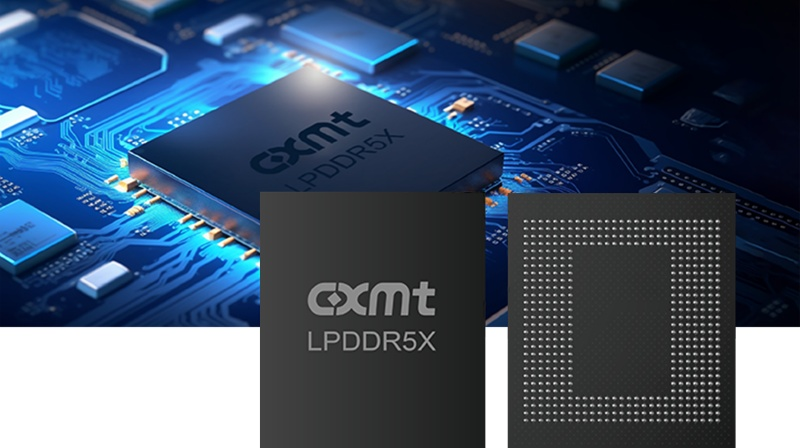
Until 2024, CXMT continued production without prioritizing margins. Gross margin for DDR4 once fell to –108.76%, and LPDDR4X reached –121.62%, indicating selling prices significantly below cost. However, by halting legacy DRAM production at the end of 2024 and focusing on mass production of DDR5 and LPDDR5, the company reversed course. It stated that surging global demand for AI servers and high-performance computing drove a sharp increase in DRAM prices and revenue.
Inventory clearance further supported earnings. Approximately USD 3.92 billion worth of unsold memory inventory was shipped during the price upswing. Gross margin rose to around 30% in the third quarter of last year. Operating profit excluding non-recurring items reached an estimated USD 390–420 million. CXMT stated that based on production ramp-up, market expansion, and R&D progress, profitability is expected to continue through 2026.
Product competitiveness and customer reach are also expanding. After beginning DDR4 mass production in 2019, CXMT reached DDR5 and LPDDR5 production stages in 2024, with DDR5 yield reportedly approaching 80%. Major customers include Xiaomi as well as Oppo, Vivo, Honor, and Transsion. Of the anticipated USD 4.13 billion in IPO proceeds, approximately USD 1.82 billion is allocated to DRAM technology upgrades and about USD 1.26 billion to advanced technology research.
Supply Stability Becomes Strategic Priority
Global memory shortages have created favorable conditions for CXMT’s expansion. As AI servers and high-performance computing systems absorb high-capacity DRAM for data centers, mainstream DDR markets have faced tighter supply. Memory prices remained firm even during seasonal slowdowns, and expected demand weakness during China’s Lunar New Year did not materialize. Producers capable of immediate capacity expansion have seen utilization gains translate directly into margin improvement.
Procurement strategies among PC manufacturers have also shifted. Major OEMs have begun engaging Chinese DRAM makers and initiating DDR5 module validation, seeking to diversify sourcing amid supply constraints. Nikkei Asia reported earlier this month that as global memory shortages deepen, PC manufacturers are expanding procurement channels through broader supplier networks, with Chinese memory emerging as a practical alternative to secure shipment schedules.
Investor focus has likewise shifted. During investor meetings held from the 9th to the 13th in Malaysia, Singapore, and Hong Kong, discussions centered on memory price trends, capital expenditure plans, and Chinese expansion. Whereas high-bandwidth memory strategy and technological leadership dominated discussions three months earlier, valuation pressure, supply bottlenecks, and Chinese capacity expansion have now become key variables. Analyst Ryu Young-ho of NH Investment & Securities noted that DDR5 yields remain below market expectations and that potential new equipment orders equivalent to 30,000–40,000 wafers post-IPO have intensified scrutiny of medium- to long-term competitive shifts.
However, the durability of favorable conditions remains uncertain. While data center demand appears resilient, PC and smartphone markets could see DRAM demand soften amid consumer weakness. If leading producers such as Samsung Electronics or SK hynix adjust mainstream DRAM pricing, expansion strategies of later entrants could face pressure. In commodity DRAM, cost competitiveness determines profitability. If incumbents with lower depreciation burdens reduce prices, margins for expanding players such as CXMT could be squeezed, potentially delaying breakeven timelines.
Niamh O’Sullivan is an Irish editor at The Economy, covering global policy and institutional reform. She studied sociology and European studies at Trinity College Dublin, and brings experience in translating academic and policy content for wider audiences. Her editorial work supports multilingual accessibility and contextual reporting.
Similar Post