U.S.-EU Trade Tensions Reignite Over Trump’s ‘Global Tariff’ Move, Scenario of Rebuilt Tariff Barriers Gains Traction

Matthew Reuter is a senior economic correspondent at The Economy, where he covers global financial markets, emerging technologies, and cross-border trade dynamics. With over a decade of experience reporting from major financial hubs—including London, New York, and Hong Kong—Matthew has developed a reputation for breaking complex economic stories into sharp, accessible narratives. Before joining The Economy, he worked at a leading European financial daily, where his investigative reporting on post-crisis banking reforms earned him recognition from the European Press Association. A graduate of the London School of Economics, Matthew holds dual degrees in economics and international relations. He is particularly interested in how data science and AI are reshaping market analysis and policymaking, often blending quantitative insights into his articles. Outside journalism, Matthew frequently moderates panels at global finance summits and guest lectures on financial journalism at top universities.
Authored On
Modified
EU Backlash Over U.S. Global Tariffs, Warning of Agreement Breach
Delay in Ratification Vote and Potential Use of ACI Emerge as Options
Prospect of Tariff Restoration Under Section 301 and Section 232 Authorities
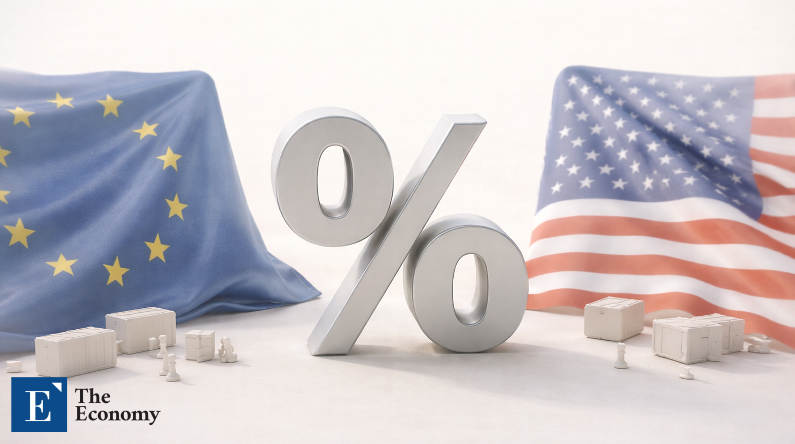
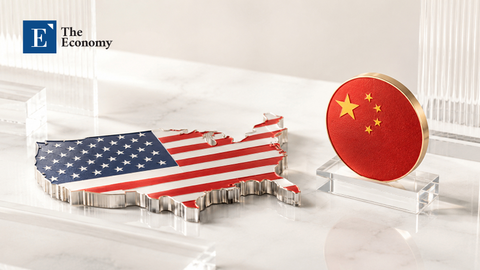
The European Commission has formally urged Washington to honor the terms of the existing trade accord between the United States and the European Union. The move follows President Donald Trump’s imposition of a sweeping “global tariff” regime after the U.S. Supreme Court invalidated his earlier reciprocal tariffs, prompting Brussels— which concluded a trade agreement with Washington last year— to voice strong objections. As transatlantic trade frictions flare anew, analysts increasingly contend that the Trump administration is likely to incrementally reconstruct tariff barriers under alternative statutory authorities.
EU on Alert After Trump’s New Tariff Announcement
According to Reuters on the 22nd (local time), the European Commission stated that the United States must comply with the terms of the EU-U.S. trade agreement concluded last year. “A deal is a deal,” the Commission said, adding that the current circumstances are not conducive to realizing the “fair, balanced, and mutually beneficial trade relationship” agreed upon by both sides. In July of last year, Washington agreed to reduce reciprocal tariffs on EU member states from 30% to 15%, while the EU committed to investing 600 billion dollars in the United States.
Brussels’ protest was triggered by President Trump’s recent decision to impose a global tariff. On the 20th, the U.S. Supreme Court ruled that Trump’s reciprocal tariffs were unlawful, effectively nullifying duties previously levied on multiple trading partners. In response, Trump signed an executive order invoking Section 122 of the Trade Act to impose a 10% global tariff on all countries and subsequently announced on the 21st that the rate would be raised to 15%. However, the initial rate applied upon implementation on the 24th is reported to remain at 10%.
The pivotal question is whether the new global tariff will supersede the existing agreement with the EU. Should it do so, the new duties could be imposed in addition to existing most-favored-nation tariffs, while the same rate would apply to countries without a bilateral arrangement with Washington. Such an outcome would effectively erase the comparative advantage previously enjoyed by the EU. Global Trade Alert, a trade policy monitoring body, estimates that the measure would place the EU at a 0.8 percentage point disadvantage overall, with Italy facing an additional 1.7 percentage point tariff burden.
Potential EU Countermeasures, Including ACI
Political backlash within Europe has intensified. Bernd Lange, chair of the European Parliament’s Committee on International Trade, told Politico on the 22nd that President Trump’s announcement of a 15% global tariff following the Supreme Court ruling constitutes a clear violation of the agreement reached between the two sides. He proposed suspending ratification of the accord for the time being and warned that the possibility of renegotiation cannot be ruled out.
In a post on social media platform X the same day, Lange said that Trump’s global tariff move has only deepened uncertainty for the EU and other U.S. trading partners and altered the terms and legal foundation of the Turnberry Agreement, the U.S.-EU tariff accord. He questioned whether the new tariffs under Section 122 are compatible with the agreement and stressed that legislative procedures should be halted until a proper legal assessment is conducted and Washington provides clear assurances. A proposal to delay the parliamentary vote on implementing legislation is expected to be discussed at an extraordinary session on the 24th. The vote is currently scheduled for the 25th.
The possibility of EU retaliation also remains on the table. Nicolas Fournier, France’s minister for trade, told the Financial Times on the 21st that the EU possesses instruments to respond to Trump’s tariff measures and is in discussions with Commission officials regarding the appropriate course of action. He indicated that, if necessary, the EU could deploy suitable countermeasures, explicitly referencing the Anti-Coercion Instrument (ACI), which could significantly affect major U.S. technology firms. Often described as a “trade bazooka,” the ACI enables the EU to restrict market access for third countries that exert economic coercion against the bloc or its member states. Adopted in 2023, it has yet to be activated.
Trump Administration’s Plan B
Among policy experts, there is growing consensus that Trump’s global tariff may function as a stopgap measure. The administration is seen as buying time under Section 122 while preparing to rebuild tariff barriers through Section 301 of the Trade Act and Section 232 of the Trade Expansion Act.
Section 301 empowers the Office of the United States Trade Representative (USTR) to investigate and respond to unreasonable or discriminatory foreign trade practices that burden U.S. commerce. The provision contains no statutory cap on tariff rates, allowing, in theory, for the imposition of exceptionally high duties. During Trump’s first term, the administration invoked Section 301 to address alleged forced technology transfers and intellectual property violations by China, imposing tariffs of 7.5% to 25% on approximately 370 billion dollars worth of Chinese imports between 2018 and 2019. Those measures remain in effect under the Biden administration.
The process for imposing tariffs under Section 301, however, is procedurally demanding. It requires notice of investigation, a minimum 30-day comment period, at least 60 days of consultations with the target country, public hearings, and a final determination published in the Federal Register. The process typically spans six months to over a year, and any attempt to accelerate it unilaterally could trigger litigation under the Administrative Procedure Act. Once tariffs are in place, however, USTR retains considerable discretion to adjust rates upward or downward, as affirmed by judicial precedent.
Section 232 of the Trade Expansion Act authorizes the president to impose import restrictions and tariffs directly on national security grounds. The Commerce Secretary must complete an investigation within 270 days, after which the president determines whether to impose sanctions. The Trump administration relied on this authority extensively during its first term and has continued to apply additional tariffs on automobiles, steel, and aluminum in the second term. Investigations are currently underway in the semiconductor and pharmaceutical sectors. Like Section 301, Section 232 does not impose a ceiling on tariff rates and is widely regarded as affording even greater flexibility in subsequent rate adjustments.
Matthew Reuter is a senior economic correspondent at The Economy, where he covers global financial markets, emerging technologies, and cross-border trade dynamics. With over a decade of experience reporting from major financial hubs—including London, New York, and Hong Kong—Matthew has developed a reputation for breaking complex economic stories into sharp, accessible narratives. Before joining The Economy, he worked at a leading European financial daily, where his investigative reporting on post-crisis banking reforms earned him recognition from the European Press Association. A graduate of the London School of Economics, Matthew holds dual degrees in economics and international relations. He is particularly interested in how data science and AI are reshaping market analysis and policymaking, often blending quantitative insights into his articles. Outside journalism, Matthew frequently moderates panels at global finance summits and guest lectures on financial journalism at top universities.
Similar Post