“Leader Strikes” Escalate in the Middle East as Hezbollah Commander Killed Following Khamenei’s Death

Authored On
Modified
Real-time tracking of targets’ locations, movements, and survival status
Accumulating cases of precision operations combining intelligence and psychological warfare
Missile retaliation limits persist despite heightened security measures
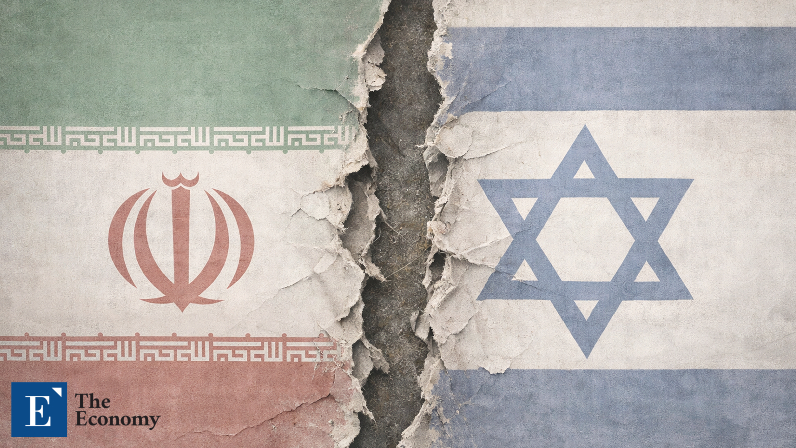
After Israel announced it had eliminated Hezbollah’s intelligence chief, international attention has focused on a pattern of leadership strikes across the Middle East following the death of Iran’s Supreme Leader Ayatollah Ali Khamenei. Within the region, attacks directly targeting the leadership of specific states or organizations have continued, fueling anxiety among figures aligned with anti-U.S. factions. The emergence of a new battlefield environment—combining communications disruption, cyber operations, and real-world attacks—has further heightened tensions among political circles across the Middle East.
Most Tehran Traffic Cameras Hacked
According to a report by The Times of Israel (TOI) on the 3rd, the Israel Defense Forces (IDF) said in a statement the previous day that it had killed Hezbollah’s intelligence chief and other operatives. The IDF said Hussein Makhlad, Hezbollah’s intelligence chief, was killed in an airstrike on Beirut, adding that he had worked closely with senior Hezbollah commanders who planned and advanced attacks against Israel. Earlier, Hezbollah had launched missile strikes against Israel in response to the death of Iran’s Supreme Leader Ayatollah Ali Khamenei in a joint U.S.-Israeli attack.
Israel subsequently expanded the scope of its air operations, intensifying pressure. Later that day the IDF issued evacuation warnings to Lebanese civilians and carried out retaliatory strikes targeting Beirut and southern Lebanon, hitting roughly 70 Hezbollah weapons depots and missile launch sites. IDF Chief of Staff Eyal Zamir warned that operations would continue until the threat from Lebanon was removed, demanding Hezbollah’s disarmament. Israel’s defense minister also stated immediately after the strikes that Hezbollah leader Naim Qassem was a potential target, adding that anyone following Khamenei would “end up in the depths of hell like him.”
The shock of the operation spread further at the level of intelligence warfare. The Financial Times reported in an article titled “Inside the Plot to Assassinate Khamenei” that Israel’s foreign intelligence agency Mossad had hacked most of Tehran’s traffic cameras and monitored the movements and daily routines of Iranian leaders for years. According to the report, Mossad accumulated long-term data on the residences, travel routes, and parking areas used by Khamenei and other senior Iranian officials. This information reportedly allowed the Central Intelligence Agency (CIA) to determine on the morning of the attack exactly when Khamenei would leave for his office and who would accompany him.
During the operation itself, communications networks were simultaneously disrupted. Mossad reportedly interfered with more than a dozen mobile base stations, causing all phone calls to appear as “connecting,” which prevented Khamenei’s security team from receiving warning calls. Meanwhile Israeli forces dropped 30 bombs on Khamenei’s office. Khamenei was believed to have died shortly after the strike, along with seven senior Iranian officials and more than ten relatives and aides. Until two or three years ago, tracking individual targets relied largely on manual intelligence analysis, but Mossad’s accumulation of massive datasets and the introduction of algorithm-based automated systems have significantly improved the speed and accuracy of target identification.
As details of the operation became known, concern spread rapidly among anti-U.S. leaders across the Middle East that they too could become targets of similar attacks at any time. The revelation that personal movements and daily routines had been monitored for years fueled a growing perception that existing security arrangements or safe houses could no longer guarantee protection. At the same time, the recent rise in operations directly eliminating foreign leaders has intensified anxiety. Former Mossad officer Sima Shine said repeated successes in intelligence operations could create a temptation for even more ambitious actions, adding that a series of successful missions likely served as a powerful incentive. The remark suggested that many leaders in the region now face a new threat combining intelligence warfare and precision strikes.
Psychological Warfare Aims to Paralyze Response Capabilities
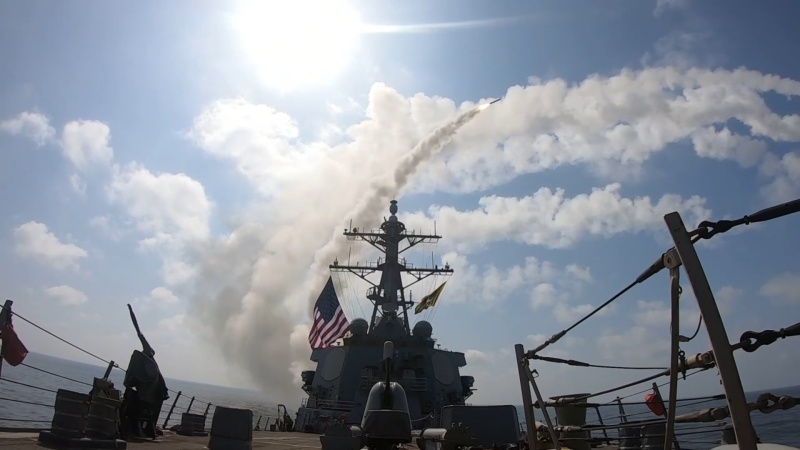
On today’s battlefield, physical strike tools such as drones and missiles are increasingly deployed alongside communications disruption, internet shutdowns, cyber operations, and psychological warfare. On the 28th of last month, when the United States and Israel carried out airstrikes on Iran, millions of mobile phones across the country simultaneously received mysterious messages. After the prayer-time notification app “Badesaba” was hacked, messages such as “Help has arrived,” “The time of judgment has come,” and “Lay down your weapons and join the liberation forces” were sent repeatedly for about 30 minutes. The incident was widely interpreted as a new model of psychological warfare conducted through civilian mobile platforms.
At the same time Iran’s digital infrastructure experienced widespread disruption. Government websites, state media, and national internet networks malfunctioned simultaneously, pushing the country into a digital blackout effectively cut off from the outside world. According to the global internet monitoring group NetBlocks, Iranian internet traffic—normally operating at close to 100% capacity—plunged to roughly 1% immediately after the airstrikes and remained blocked for more than 36 hours. Major media outlets described the episode as the largest coordinated digital assault in history, combining electronic warfare, distributed denial-of-service (DDoS) attacks, and intrusions into energy and aviation infrastructure systems.
Such tactics produce effects distinct from conventional military attacks. When communications networks and the internet are shut down, command structures lose situational awareness, and the ability to coordinate air defenses or counterattacks weakens. Fox News reported that the operation aimed to disrupt the command-and-control systems of Iran’s Islamic Revolutionary Guard Corps (IRGC) and neutralize its capacity to launch drones or ballistic missiles in retaliation. The objective, according to the report, was to cripple the adversary’s response capability before the physical phase of the attack even began.
The spread of these methods reflects technological advances in drones and precision-strike weapons. Drones, which are relatively inexpensive and capable of long-duration surveillance missions, have become widely used platforms for continuously tracking targets. Location data gathered during such missions can then be linked with missiles or precision-guided weapons to carry out strikes. The U.S. strategic bomber B-2, one of the most prominent long-range precision-strike platforms, possesses stealth capabilities that make it difficult to detect on radar and can deploy the GBU-57 bunker-buster designed to destroy deeply buried facilities. Using this capability, B-2 bombers penetrated Iranian air defenses during the Israel-Iran confrontation in June last year and dropped 14 GBU-57 bunker-buster bombs on the Fordow nuclear facility.
Political Regime Survival Comes Into Question
In the Middle East, the elimination of leaders has increasingly appeared not as an exceptional incident but as a recurring feature of warfare. In recent years, clashes among Israel, Iran, and Palestinian armed groups have repeatedly involved attacks directly targeting political leaders, making the survival of leadership itself a central variable on the battlefield. Until relatively recently, the assassination of leaders was widely regarded as a taboo in the international community. In conflict zones, however, targeted killings have increasingly become part of military strategy. One prominent example is the death of Hamas political leader Ismail Haniyeh.
Haniyeh was killed shortly after visiting Tehran, Iran, in July 2024. As a key figure in Hamas’s political leadership and a central participant in Gaza ceasefire negotiations, his death altered the diplomatic landscape surrounding the talks. Qatar’s Prime Minister Mohammed bin Abdulrahman Al Thani commented that while negotiations for a ceasefire continued, political assassinations and attacks on civilians in Gaza persisted, raising doubts about whether meaningful dialogue or successful mediation could occur when one side assassinated the other’s negotiators.
The death of Hamas leader Yahya Sinwar likewise left a major mark on Middle Eastern politics. The Israeli military announced that Sinwar was killed during fighting in the Tel al-Sultan area of southern Gaza on October 16, 2024. Video footage released at the time, believed to have been recorded by a drone, showed a wounded man thought to be Sinwar sitting on a chair inside a damaged building and throwing a stick toward the drone. Moments later a tank shell struck the building, killing the person seen in the footage.
As attacks directly targeting leaders continue, governments across the Middle East have begun to treat survival itself as a critical security issue. Shortly before his death, Supreme Leader Khamenei reportedly instructed that succession arrangements be prepared in advance in case senior leadership figures—including himself—were assassinated. He designated four levels of succession for military and government leadership and ordered senior officials to nominate up to four potential successors each. The move indicated that political systems themselves are beginning to prepare for survival in a military environment where traditional protective measures such as personal security or concealment may no longer be sufficient.
Similar Post