"High Performance vs. Low Cost": Hyundai Motor–Tesla Humanoid Rivalry Ignites, Boston Dynamics IPO Valuation Hangs in the Balance

As one of the youngest members of the team, Tyler Hansbrough is a rising star in financial journalism. His fresh perspective and analytical approach bring a modern edge to business reporting. Whether he’s covering stock market trends or dissecting corporate earnings, his sharp insights resonate with the new generation of investors.
Authored On
Modified
Hyundai Motor and Tesla Advance into the Market with Divergent Strategies
Hyundai Must Secure Technological Superiority to Overturn the Price Gap
“Atlas Must Defeat Optimus”: Boston Dynamics’ IPO Trajectory at Stake
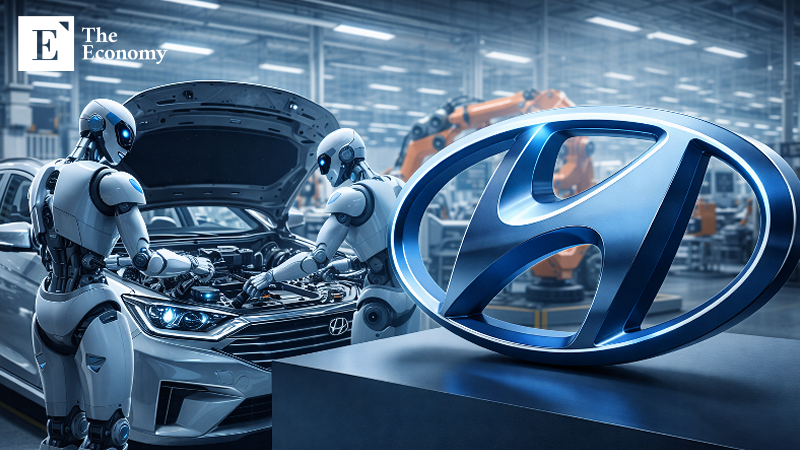
The year 2028 has been identified as a potential inflection point that could determine the trajectory of the global humanoid robot industry. Hyundai Motor Group is expected to intensify market competition by deploying its next-generation humanoid robot, Atlas, across its own manufacturing facilities. As Tesla—Hyundai’s principal rival—pushes forward with a low-cost sales strategy to accelerate the mass adoption of robots, market observers argue that Hyundai must secure meaningful technological superiority in order to seize the upper hand in the competition.
Atlas Deployment in Production Lines Starting 2028
On March 3, Chinese IT-focused outlet GeekPark reported that “the real race begins when robots actually enter factories and start tightening screws,” describing 2028 as a watershed moment that could determine the success or failure of the humanoid robot industry. The year coincides with Hyundai’s pledge to deploy Atlas at its Hyundai Motor Group Metaplant America (HMGMA) facility in Georgia, United States.
Atlas is a humanoid robot developed since 2013 by Boston Dynamics, the U.S.-based robotics manufacturer acquired by Hyundai Motor Group in 2020. According to Boston Dynamics, Atlas is capable of lifting and transporting objects weighing up to 50 kilograms and can extend its reach to a height of 2.3 meters. When its battery runs low, the robot can autonomously move to a charging station, replace its battery, and resume operations. It is also designed with durability that enables full operational performance in temperatures ranging from minus 20 degrees Celsius to 40 degrees Celsius.
At CES 2026 held in Las Vegas this January, Hyundai announced plans to initially deploy Atlas in 2028 for processes where safety and operational efficiency have been clearly verified, such as parts sorting and transportation. Beginning in 2030, the company intends to expand its deployment to include component assembly. The plan is widely interpreted as a strategic step toward automating the vehicle assembly process, considered the final frontier in automotive manufacturing automation.
The assembly process involves installing approximately 30,000 vehicle components—including doors, seats, interior materials, electronic modules, and wiring. The number of possible component combinations can expand to tens of thousands depending on vehicle models and options. Differences in component size, shape, and assembly sequence require highly refined judgment and delicate assembly capabilities from workers. The process is therefore well suited to leveraging the advantages of humanoid robots, which can think and manipulate small parts in ways similar to humans.
Divergent Robotics Strategies Between Hyundai and Tesla
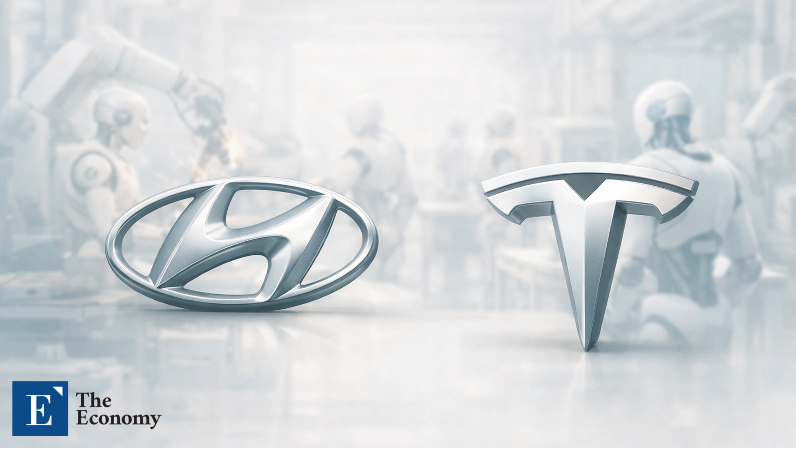
Should Hyundai’s vision materialize, competition among global automakers in the robotics sector is expected to intensify. Tesla is widely regarded as Hyundai’s primary rival in this field. Tesla has already spent more than a year collecting data and training its humanoid robot Optimus at its Fremont factory in California, and has begun gradually introducing the robot at its Austin, Texas plant this year. The move effectively places robots directly within production environments for what could be described as an apprenticeship-style training process. Tesla CEO Elon Musk is reportedly planning to deploy thousands of Optimus units across simple repetitive processes within the company’s Gigafactories to dramatically reduce labor costs.
In addition, Tesla recently announced plans to halt production of its electric vehicle models Model S and Model X next quarter and convert its Fremont facility into a mass-production base for Optimus. The production target is one million units annually, with an estimated price of about $20,000 per robot. The figure reflects Tesla’s strategy of achieving economies of scale by popularizing robot usage across households and small manufacturing operations. Musk previously indicated at the Davos Forum last month that general sales of Optimus could begin by the end of 2027.
Hyundai has chosen a markedly different path from Tesla, which is emphasizing cost reductions through disruptive pricing strategies and large-scale deployment. Atlas is a high-end system priced at nearly $1.3 million per unit. Hyundai intends to focus on enhancing high-precision task capabilities and target the enterprise (B2B) market. In this regard, one market specialist noted, “Tesla is likely to hold a clear advantage in price competition within the robotics market,” adding that “Atlas must demonstrate unmistakable technological superiority sufficient to offset its price disadvantage in order to secure competitiveness.”
Boston Dynamics’ IPO Prospects Linked to Atlas Performance
Industry observers are also focusing on Hyundai’s decision to bet on the advancement of bipedal robot technology, which currently faces clear technical limitations. Bipedal robots have long been criticized as inefficient compared with wheeled robots or quadruped systems. Their high center of gravity makes it difficult to maintain balance when encountering external shocks or inclined surfaces, and the narrow contact area of their two feet requires constant micro-adjustments even while standing still. Because sensors must detect ground conditions and instantly translate them into movement corrections, the complexity of control system development is also extremely high.
The various costs involved present another major challenge. To replicate human-like walking, bipedal robots require at least 20 to 30 actuators (motors), each of which must interact in real time while performing enormous computational tasks. This complex structure drives up both production costs and maintenance expenses. There is also a high risk of hardware damage if the robot loses balance and falls. Hyundai’s strategy to develop high-performance bipedal robots therefore represents a notably bold strategic gamble.
Boston Dynamics’ planned IPO is considered one of the factors behind Hyundai’s willingness to assume such risk. Recently, the company has been shifting from an engineering-centric organization toward a more finance- and profitability-driven structure. A notable example is the recent announcement that Robert Playter, the CEO who had long led Boston Dynamics’ technological development, intends to step down, with Chief Financial Officer Amanda McMaster assuming the role of acting CEO. Hyundai Motor Group has also established a business planning task force directly under Vice Chairman Jaehoon Chang dedicated to robotics and AI strategy. Such moves are widely interpreted as preparatory steps toward a Nasdaq listing in the United States.
Industry sources predict that Boston Dynamics could pursue its listing as early as the beginning of next year. The company is expected to complete preliminary review filings and select underwriters during the first half of this year, proceed with the public offering process in the second half, and move toward listing early next year. In the event of a successful IPO, Boston Dynamics’ corporate valuation is projected to reach at least $67 billion. Should Atlas establish a clear technological advantage over competing products such as Optimus within the robotics market, Boston Dynamics could command an even higher valuation.
As one of the youngest members of the team, Tyler Hansbrough is a rising star in financial journalism. His fresh perspective and analytical approach bring a modern edge to business reporting. Whether he’s covering stock market trends or dissecting corporate earnings, his sharp insights resonate with the new generation of investors.
Similar Post