[U.S.–Iran War] U.S. Signals Possibility of Early War Termination “Irrespective of Iranian Surrender,” Tehran Responds with Fierce Opposition

Aoife Brennan is a contributing writer for The Economy, with a focus on education, youth, and societal change. Based in Limerick, she holds a degree in political communication from Queen’s University Belfast. Aoife’s work draws connections between cultural narratives and public discourse in Europe and Asia.
Authored On
Modified
U.S. May End War Once Objectives Are Achieved Even Without Explicit Iranian Capitulation
Trump Says Iran’s Military and Leadership Structure Collapsing, War Could End Within Days
Iran Reacts Angrily to Washington’s Stance, Military Tensions Persist Amid Hormuz Closure Threat
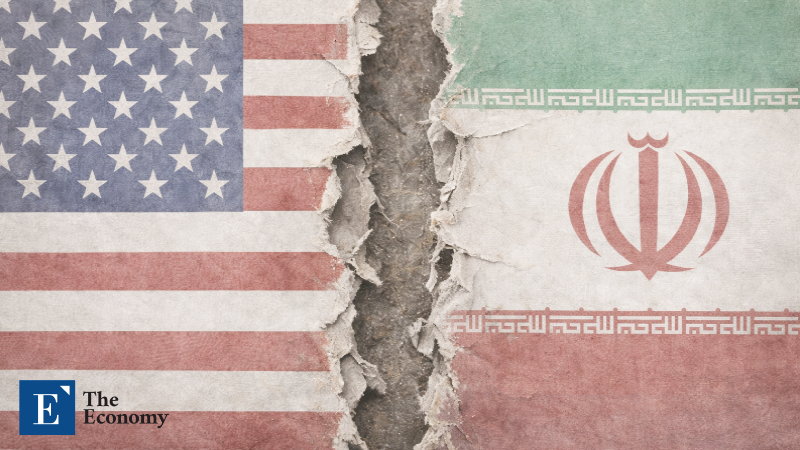
The United States has signaled that it may bring its war with Iran to an early conclusion. Washington’s position is that Iran’s military capabilities and leadership structure have already been largely dismantled, and that once the objectives of the military operation are fully achieved, the war could be ended regardless of whether Iran formally declares surrender. Tehran, however, has strongly rejected this stance, asserting that the decision on when the war ends lies with Iran.
U.S. Leaves Door Open for Early War Termination
On the 10th (local time), White House Press Secretary Karoline Leavitt said during a briefing that the timing of the conclusion of military operations against Iran would ultimately depend on the commander-in-chief, U.S. President Donald Trump. She stated that the operation would end “when the commander-in-chief determines that the military objectives have been fully achieved and that Iran has reached a state of complete and unconditional surrender, regardless of whether Tehran formally declares it.” The statement effectively signaled that the United States could quickly end the war once its objectives are met even without an explicit surrender declaration from Iran.
Asked whether President Trump is still demanding unconditional surrender from Iran, Leavitt replied, “The president stated that Iran is in a position where it has no choice but to surrender unconditionally; he did not claim that the Iranian regime must formally issue such a declaration.” She added, “The Iranian government may issue threats verbally, but without the capability to back them up, they are merely hollow threats,” explaining that the president’s remarks were intended to ensure that Iran’s global nuclear threat—sustained by its ballistic missile capabilities—would no longer remain viable.
Leavitt also said that President Trump would determine whether Iran is effectively in a state of unconditional surrender when Tehran no longer poses a direct threat to the United States or its allies. Regarding the possibility of deploying ground forces, she reiterated the administration’s standing position, stating that “the president, as commander-in-chief, does not rule out any options.” She added that “we are winning this critical battle far more quickly than expected,” noting that since the start of the operation Iran’s ballistic missile attacks have declined by more than 90 percent and drone attacks by roughly 85 percent.
Addressing the surge in global oil prices driven by concerns over a possible closure of the Strait of Hormuz, she said, “The president and the energy team are closely monitoring the market and consulting with industry leaders, while the U.S. military is preparing additional response options to ensure the Strait of Hormuz remains open in accordance with the president’s directive.” She added that the recent rise in oil prices is “temporary” and that the operation will ultimately lead to lower oil prices over the long term.
Iran Suffers Severe Shock from the War
President Trump had previously delivered remarks of a similar tone. Speaking at a press conference on the 9th at Trump National Doral Miami in Doral, Florida, he responded to a reporter’s question on whether the war could end within the week or within a few days by saying, “I think so.” He added that “the biggest danger of this war has already passed,” stating that “the major risk ended three days ago, and we essentially knocked them out in the first two days.” The comments suggested that U.S. attacks have already neutralized most of Iran’s military capabilities.
Trump asserted, “They have no navy, no air force, and no air defense equipment,” adding, “Their radar systems, communications networks, and leadership are gone.” He continued, “They have very few missiles left, and their drone capacity has been reduced to about 25 percent,” noting that drone production facilities are currently under attack. He described the military operation as “a level of military success that people have never seen before,” praising the U.S. armed forces by saying, “The United States has the best military, the best equipment, and the best generals, and this operation has succeeded very quickly.”
He further claimed that the operation has dealt a severe blow to Iran’s leadership structure. “Everything they had is gone, including the leadership,” Trump said. “Iran has two levels of leadership—actually more than that—but at least two tiers of leadership have disappeared.” Referring to Mojtaba Khamenei, who was recently selected as Iran’s new supreme leader, he expressed a negative assessment, saying that the choice “could continue to produce the same problems.” Regarding Iran’s future leadership, he also said that it would be preferable for power to remain with an internal figure rather than an external one.
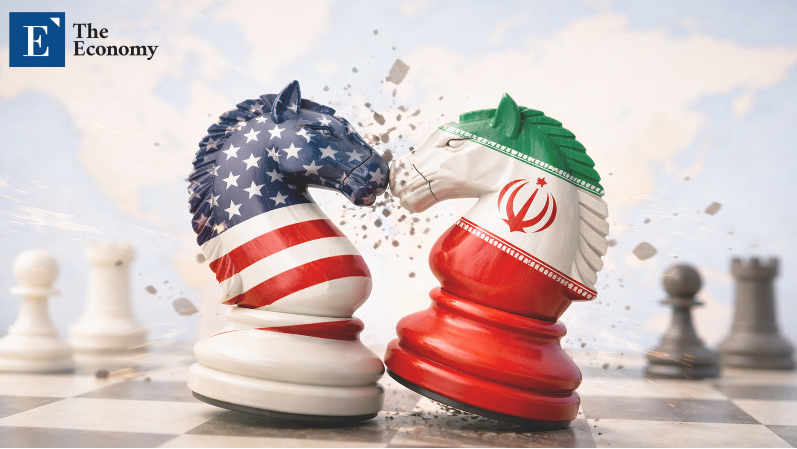
Iran Signals Determination to Continue Fighting
As the United States hinted at the possibility of an early end to the war, countries around the world began intensifying efforts to mediate a ceasefire. According to reports by Iran’s ISNA news agency and state television on the 9th, Iranian Deputy Foreign Minister Kazem Gharibabadi said that “several countries, including China, Russia, and France, have contacted us regarding a ceasefire.” This marks the first time Iran has publicly disclosed receiving ceasefire requests from the international community. Russian President Vladimir Putin spoke by phone with President Trump for about an hour that day to discuss the war, while Turkish President Recep Tayyip Erdoğan also discussed ending the conflict during a call with Iranian President Masoud Pezeshkian.
However, Iran has shown little sign of backing down and has expressed strong resentment toward the White House’s position. On the 10th, a spokesperson for Iran’s elite military organization, the Islamic Revolutionary Guard Corps (IRGC), dismissed Trump’s remarks about the possibility of an early end to the war in comments carried by state media. “It is we who will decide the end of this war,” the spokesperson said, warning that if attacks by the United States and Israel continue, “not a single liter of oil will be allowed to leave the Middle East.” The statement signaled continued threats toward the Strait of Hormuz, a critical global oil transit route.
Iranian Foreign Minister Abbas Araghchi also indicated in an interview with PBS that the likelihood of Iran resuming negotiations with the United States is low. “After three rounds of talks, the U.S. negotiating team itself said we had made major progress, yet they decided to attack us,” he said. “Therefore, further dialogue with the United States will not appear on our agenda.”
Responding to these remarks, President Trump issued an immediate warning through his social media platform Truth Social, stating that “if Iran takes any action to disrupt oil shipments through the Strait of Hormuz, the United States will strike Iran 20 times harder than it has so far.” He added that Washington would eliminate “targets that could easily be destroyed so thoroughly that rebuilding Iran as a nation would become virtually impossible,” warning that “death, fire, and fury will come upon them.” He concluded by saying, “However, I hope and pray that such a situation does not occur.”
Aoife Brennan is a contributing writer for The Economy, with a focus on education, youth, and societal change. Based in Limerick, she holds a degree in political communication from Queen’s University Belfast. Aoife’s work draws connections between cultural narratives and public discourse in Europe and Asia.
Similar Post