Qatar’s Force Majeure Declaration Wipes Out 20% of Global Gas Supply, Leaving Europe and Asia Reeling While the U.S. Gains

Siobhán Delaney is a Dublin-based writer for The Economy, focusing on culture, education, and international affairs. With a background in media and communication from University College Dublin, she contributes to cross-regional coverage and translation-based commentary. Her work emphasizes clarity and balance, especially in contexts shaped by cultural difference and policy translation.
Authored On
Modified
Qatar production halt erases 20% of global supply
European gas prices surge 68%, with Asia also taking a direct hit
U.S. LNG industry stands to reap windfall gains
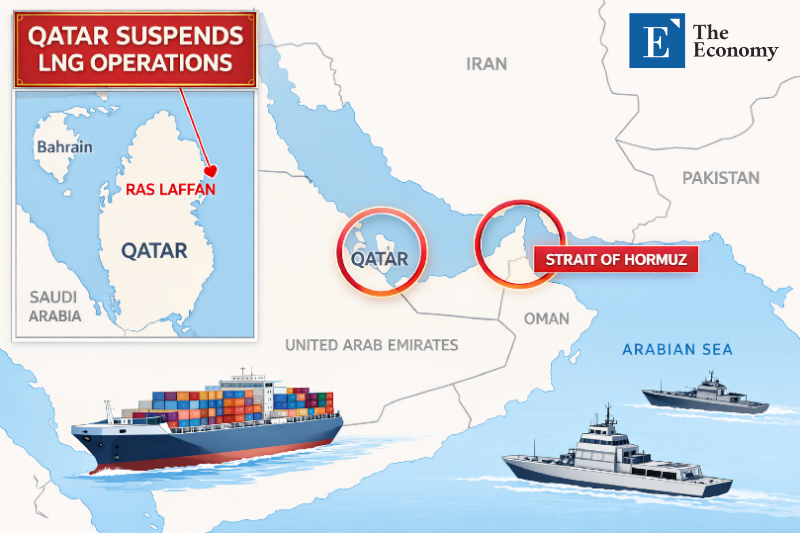
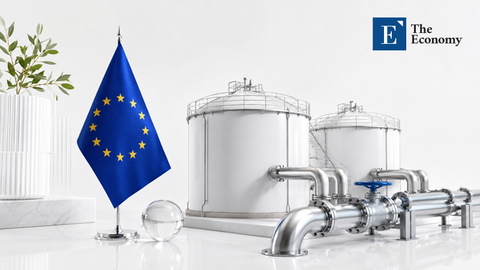
The energy heartland of the Middle East has ground to a halt following a surprise Iranian attack. After Qatar, which accounts for 20% of global liquefied natural gas supply, declared a production suspension, the global energy market plunged into unprecedented turmoil. European gas prices soared 68% in just one week, while Asia was likewise unable to escape the sharp upswing. By contrast, U.S. LNG exporters, backed by a flexible supply chain, are reaping substantial windfall gains.
Global LNG Supply Crippled by 20% After Qatar Declares Force Majeure
According to energy-focused outlet Oilprice.com on March 12, the paralysis of Qatar’s supply chain has sent global gas market prices soaring by as much as 85% in a single week, marking the gravest crisis since the 2022 energy shock. Last week, QatarEnergy halted operations at its LNG production facilities with annual capacity of 77 million tons and declared force majeure on scheduled cargoes. It has also postponed its domestic gas facility expansion plan to 2027.
As a result, Shell and TotalEnergies, which have each received more than 12 million tons of LNG annually from Qatar and sold it on to utilities worldwide, formally notified downstream customers of supply disruptions on March 11. Force majeure is a contractual clause that exempts parties from liability for non-performance when uncontrollable events such as war or natural disasters occur.
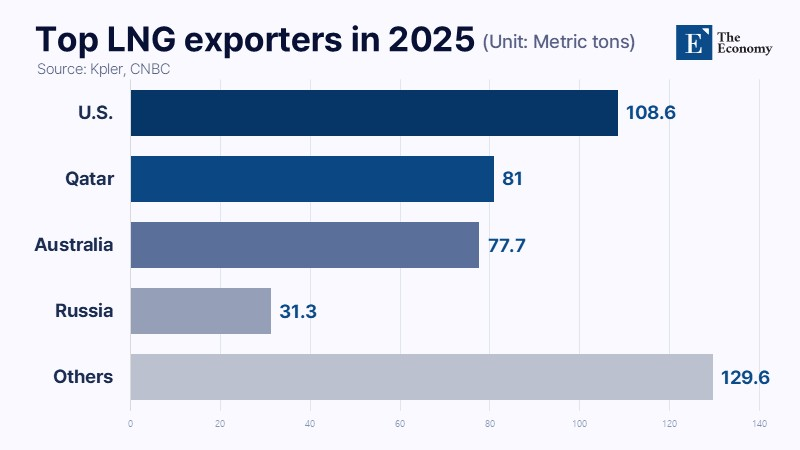
The immediate trigger for this gas shock was Iran’s retaliatory strike in response to the assassination of Supreme Leader Ayatollah Ali Khamenei by the United States and Israel. As Iranian drone attacks forced Qatar to suspend all LNG production at the Ras Laffan and Mesaieed industrial complexes, the market descended into chaos. Qatar is the world’s second-largest LNG exporter after the United States, and Goldman Sachs estimates that the shutdown has erased roughly 19% of global short-term supply. While multiple Middle Eastern countries produce crude oil, Qatar’s LNG output is concentrated in the single industrial hub of Ras Laffan.
Compounding the crisis, Iran’s Islamic Revolutionary Guard Corps declared that it would fully block the Strait of Hormuz, triggering a logistics shock on top of the production disruption. The Strait of Hormuz is the maritime corridor linking the Persian Gulf and the Gulf of Oman, and roughly 20% of global seaborne crude shipments pass through the strategic chokepoint. A significant share of LNG produced in the Middle East also moves through the strait. Any prolonged disruption to maritime traffic there would inevitably reverberate across the global energy supply chain.
Gas Shock Sweeps Across Europe and Asia
Experts warn that if the crisis persists, it could trigger a second energy emergency on the scale of the aftermath of Russia’s invasion of Ukraine in 2022. Europe, in particular, is poised to absorb the direct blow, with a full ban on imports of Russian pipeline gas and LNG set to take effect on March 18. According to the Financial Times, Dutch TTF futures, Europe’s benchmark for natural gas trading, rose 68% last week from the end of the previous month. That marked the steepest increase since March 2022, immediately after Russia’s invasion of Ukraine. Having sharply reduced Russian gas imports and deepened its dependence on LNG, Europe remains acutely exposed to supply disruptions originating in the Middle East.
Within Europe, the U.K. is facing the most acute strain. According to National Gas, the state-run operator of the British gas transmission network, U.K. gas storage stood at 6,999 gigawatt-hours as of March 7. That compares with 9,105 gigawatt-hours during the same period last year, underscoring a sharp decline. British daily The Guardian warned that while the country has the capacity to store up to 12 days’ worth of gas, current inventories do not even cover two days. The paper added that although the U.K. government insists diversified sourcing ensures supply security, a prolonged crisis could still result in gas shortages. Goldman Sachs estimated that a 10% rise in LNG prices over the fourth quarter would reduce gross domestic product in the U.K. and the eurozone by 0.2%.
Asia is by no means insulated. Key destinations for Qatari LNG exports include South Korea and Taiwan. Spot LNG prices in Asia recently hit a three-year high of $25.4 per million BTU and were still holding at $24.80 as of March 10. That compares with roughly $11 on Feb. 27, representing a rise of more than twofold. Last week’s Japan-Korea Marker price also surged 41% from the previous week to $15,068 per million BTU. South Korea, which depends on imports for more than 90% of its energy needs, routes 70.7% of its crude oil imports and 29.4% of its LNG imports through the Strait of Hormuz. Should the blockade persist, some analysts warn that the country could face outright supply interruptions, with fuel potentially becoming unavailable at any price.
Buy U.S. Energy Instead of Iranian Supply
While much of the world is struggling under an energy crunch, the United States is entering a boom of its own. The U.S. is the world’s largest LNG exporter and the third-largest petroleum exporter. If Middle Eastern routes are blocked, alternative options outside the United States remain limited. Since a significant portion of Middle Eastern LNG must transit the Strait of Hormuz, any protracted tension there would only strengthen the relative competitiveness of U.S. LNG. Historically, geopolitical crises have repeatedly redirected demand toward suppliers with superior supply security.
The United States is also expected to place purchases of U.S. crude oil and gas on the agenda at next month’s summit with China. Washington is reportedly preparing to press Beijing to replace Russian and Iranian oil and gas with U.S. supply. Several countries have already begun moving to expand imports of American energy. Indonesia recently said it would replace part of its Middle Eastern crude imports, which account for 20% to 25% of total oil purchases, with U.S. supply in order to strengthen energy security. The move is also tied to its previously pledged plan to purchase $15 billion worth of U.S. energy as part of tariff negotiations with Washington.
The foundation of U.S. resilience against Middle Eastern disruptions lies in the shale gas revolution. Over the past decade, American drilling firms have extracted vast quantities of natural gas from shale formations, transforming the country into the world’s largest energy exporter. As a consequence, the U.S. domestic gas market now rests on a supply base sturdy enough to withstand even major conflict in the Middle East. That resilience is translating into clear benefits for U.S. LNG exporters. The sector’s contractual flexibility, with destinations often left unrestricted, allows cargoes to be redirected swiftly toward markets where demand spikes. Long-term contracts are typically signed for 15 to 20 years and serve as a core condition enabling final investment decisions on export terminal construction.
That said, if a U.S.-Iran war drags on, accountability for the rise in global energy prices could increasingly be directed at Washington’s foreign policy strategy. Iran’s response, in particular, remains a major variable that could further destabilize the Middle East. Repeated flare-ups in the Strait of Hormuz would leave the global energy supply chain exposed to persistent risk. One military and security expert said the end of the war could hinge on President Donald Trump’s political judgment, yet the essence of the problem lies in the phase that follows. He warned that if a country controlling one of the world’s most critical energy transit chokepoints were to adopt a prolonged retaliation strategy, drone attacks and maritime threats alone could leave the entire global energy market in a state of sustained instability.
Siobhán Delaney is a Dublin-based writer for The Economy, focusing on culture, education, and international affairs. With a background in media and communication from University College Dublin, she contributes to cross-regional coverage and translation-based commentary. Her work emphasizes clarity and balance, especially in contexts shaped by cultural difference and policy translation.
Similar Post