Tesla Sets Aside EV Icon, Bets on Humanoid “Optimus” as the Future

Authored On
Modified
Strategic shift toward a robotics platform company gains momentum
Workforce and production facilities reorganized to build mass-production capacity
Entering market competition with a cost-focused manufacturing strategy
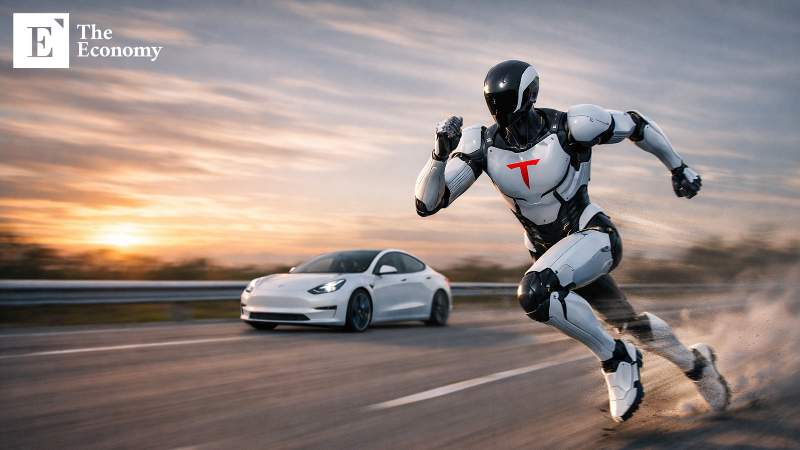
Tesla has moved to end production of two electric vehicle models that helped drive its early growth while accelerating a strategy centered on its humanoid robot Optimus. With the unveiling of the next-generation Optimus and a broader reorganization of production bases and workforce structures around robotics, analysts say Tesla’s business identity is increasingly shifting beyond its roots as an automobile manufacturer. At the same time, technological and price competition is intensifying with rival models such as Boston Dynamics’ Atlas, which is preparing for deployment in industrial environments.
Expanding Into Precision Work Applications
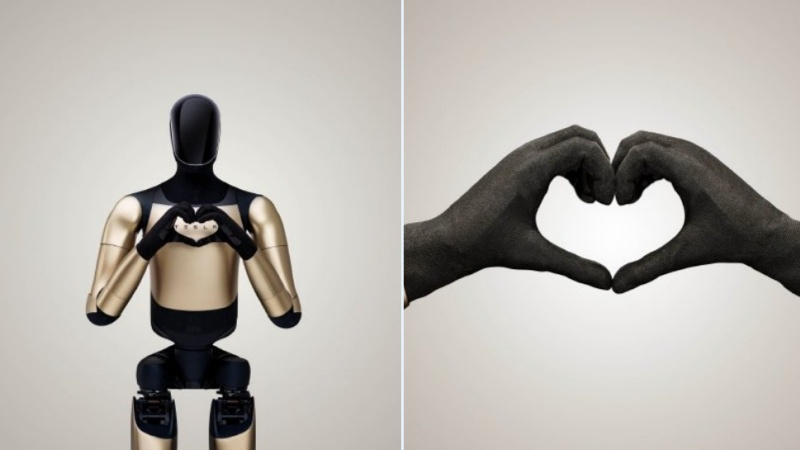
Tesla’s China division recently revealed some capabilities of the third-generation Optimus on its social media platform Weibo. Images released showed the humanoid robot forming a heart shape naturally with both hands held forward. The outlet reported that commercialization of the third-generation Optimus is approaching and assessed that Tesla is demonstrating its determination to evolve beyond its identity as a car manufacturer into a dominant force in the artificial intelligence and robotics ecosystem. Industry observers also noted that Tesla has gradually increased the level of public disclosure surrounding the next-generation Optimus.
The most significant change in the third-generation Optimus unveiled this time is a high-degree-of-freedom hand designed to precisely replicate the movements of a human hand. Tesla equipped each hand with 25 actuators, enabling a total of 50 degrees of freedom across both hands, more than doubling the 11 degrees of freedom provided by the previous second-generation model. In addition, Tesla redesigned finger length ratios and joint arrangements to resemble the structure of a human hand, allowing the robot to use conventional human tools and home appliances without modification. The change is expected to mark a turning point in expanding humanoid robot applications from simple repetitive tasks to precision work.
Tesla had earlier begun dismantling parts of its traditional automobile lineup. During its fourth-quarter earnings call in late January, Tesla Chief Executive Officer Elon Musk said it was time to bring the Model S and Model X programs to an honorable close, describing the move as part of a broader restructuring aimed at focusing on robotaxis and humanoid robots. Full production shutdown is expected in the second quarter of this year, and the Fremont factory in California that previously produced the two vehicles is scheduled to be converted into a dedicated Optimus manufacturing facility with an annual capacity of one million units.
Industry analysts view the decision as highly unconventional, given that the Model S and Model X played a critical role in expanding electric vehicles into the mass market. Introduced in 2012 and 2015 respectively, the two models served as core products during Tesla’s transformation from a startup into one of the world’s most valuable automakers. However, as competition in the global EV market intensified, the share of the two models declined rapidly. Of Tesla’s total vehicle deliveries of 1.59 million units last year, the Model S and Model X accounted for roughly 3 percent.
Tesla intends to transfer the large-scale manufacturing experience accumulated in the electric vehicle industry directly into humanoid robot production. Musk said on March 11 via X that Optimus could become the first “Von Neumann machine” capable of replicating itself and building civilization on any planet. The concept refers to a system in which robots can independently obtain resources, repair themselves, and create identical copies. Market observers see the shift as an attempt to simultaneously reduce labor costs and improve production efficiency, accelerating the development of a robot-centered manufacturing system.
Workforce Recruitment and Facility Expansion
Immediately after announcing its transition toward becoming a humanoid robotics company, Tesla moved to secure talent. According to global recruitment platform Indeed, as of late January Tesla was simultaneously hiring around 220 positions related to Optimus and robotics in the Fremont area. The roles included core research positions such as Optimus data project managers, robot actuator designers, physical AI managers, and AI safety managers, along with large-scale recruitment for production roles including robot assembly and manufacturing test managers, Optimus process and equipment engineers, manufacturing supervisors, and assembly control developers.
The simultaneous hiring of personnel across research and development as well as manufacturing operations indicates that the Optimus project is moving from an experimental stage into a phase focused on building a full production system. Compensation levels were also set aggressively to secure key robotics talent. Job postings listed salaries ranging from $100,000 to $250,000 for Optimus-related positions, a pay scale considered among the upper tier even by Silicon Valley technology industry standards.
Facility restructuring is also advancing rapidly around robotics. Tesla previously announced that the Fremont plant would be converted into a humanoid robot production hub and has additionally leased a building located one kilometer from the factory with a land area of 10,034 square meters. The facility, with a total floor space of 9,940 square meters, consists of office space covering 4,180 square meters and warehouse and manufacturing areas totaling 5,760 square meters. This arrangement, which physically brings research and development organizations closer to production facilities, is interpreted as a strategy to accelerate the transition from development to mass production.
Tesla has also outlined long-term production plans, reinforcing its intention to expand the robotics business. Musk said at a shareholder meeting that Optimus could help end poverty and presented a target of reducing the robot’s price to below $30,000 under mass production. He added that if annual production reaches one million units, manufacturing costs could fall to between $20,000 and $25,000. To support the plan, Tesla is building a dedicated Optimus production facility at its Texas Gigafactory, which has been designed with a long-term goal of achieving an annual production capacity of 10 million units by 2027.
Technological Advancement vs. Price Competitiveness
In the robotics industry, two different competitive approaches have recently emerged simultaneously: one centered on technological performance and the other on mass production. In this context, Boston Dynamics represents a contrasting strategy to Tesla. Boston Dynamics’ Atlas is widely regarded as the humanoid robot with the highest level of movement performance currently demonstrated. The latest Atlas model unveiled at CES 2026 earlier this year features fully electric operation, a total of 56 degrees of freedom in its joints, and an automated battery replacement system that allows continuous long-duration operation.
Hyundai Motor Group is pushing forward with plans to deploy Atlas in industrial environments. The robot is intended to handle logistics transport and hazardous tasks on factory production lines, and pilot projects are underway to verify its practicality in real industrial settings. Research is also being conducted to integrate artificial intelligence technology from Google DeepMind. Based on these efforts, Hyundai Motor Group has announced plans to establish a production system capable of manufacturing about 30,000 robots, including Atlas, by 2028, reflecting a strategy aimed at expanding its position in the industrial robotics market through technological performance.
By contrast, Tesla’s Optimus strategy emphasizes price competitiveness and mass production. The second-generation Optimus model weighs about 57 kilograms and is designed for use in a wide range of environments, from factory production tasks to household service roles. Early estimates place the robot’s initial price between $80,000 and $120,000, but the long-term objective is to reduce the consumer price to around $30,000. This explains why Tesla is mobilizing its electric vehicle manufacturing processes, battery technology, and artificial intelligence capabilities to accelerate large-scale production.
- Previous Qatar’s Force Majeure Declaration Wipes Out 20% of Global Gas Supply, Leaving Europe and Asia Reeling While the U.S. Gains
- Next "Cutting Arms Imports, Expanding Military Spending" China’s Drive for Military Self-Reliance Heightens Tensions Across Asia and Oceania, While Doubts Over Chinese Weapons Performance Persist
Similar Post