The Fear of a Hormuz Blockade Becomes Reality, Heightening Global Economic Tension Over an Energy Artery With No Substitute

Niamh O’Sullivan is an Irish editor at The Economy, covering global policy and institutional reform. She studied sociology and European studies at Trinity College Dublin, and brings experience in translating academic and policy content for wider audiences. Her editorial work supports multilingual accessibility and contextual reporting.
Authored On
Modified
Major Oil Producers Face Direct Impact, Qatar’s GDP Projected to Fall 14%
Iran Adopts a Strategy of Endurance Despite Military Disadvantage
U.S. Seeks a Short War but Lacks a Clear Endgame Scenario
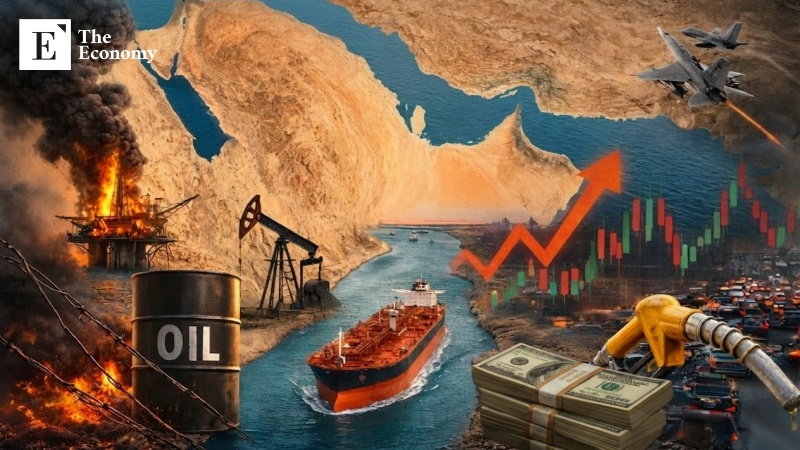
The ongoing clash between the United States and Iran in the Middle East has begun to directly disrupt global energy supply chains. Concerns over a possible closure of the Strait of Hormuz, the key passage for transporting the world’s crude oil and liquefied natural gas, have emerged as a tangible risk, sending international oil prices sharply higher and spreading economic shockwaves across major oil-producing countries. With limited capacity for bypass pipelines and alternative shipping routes, instability in energy markets has continued to intensify. Against this backdrop, Iran has entered a phase of strategic endurance grounded in asymmetric tactics designed for a prolonged conflict, while debates within the United States over how the war should ultimately end have grown increasingly contentious.
Growing Fears of a “Third Oil Shock”
On the 15th, The New York Times reported that Iran, currently in conflict with the United States, could potentially block the Strait of Hormuz, noting that “alternative transport routes built by neighboring oil-producing countries such as Saudi Arabia and the United Arab Emirates can handle only about 25 percent of the total shipping volume, leaving virtually no viable substitute.” The newspaper assessed that “with the central artery of global energy supply at risk of being severed, the world economy has entered a state of extreme emergency comparable to a ‘third oil shock.’” The crisis has already pushed international oil prices above $100 per barrel for the first time in four years, intensifying inflationary pressure worldwide.
Saudi Arabia’s state-owned energy company Aramco had earlier increased the operating capacity of the East-West Pipeline, which connects to the Red Sea, to its maximum level. However, the pipeline’s total capacity stands at only 7 million barrels per day, and after accounting for 2 million barrels reserved for domestic consumption, the actual exportable volume remains limited to about 5 million barrels per day. This figure falls significantly short of the shipping volume that typically passes through the Strait of Hormuz under normal conditions. The United Arab Emirates has also been operating a bypass pipeline linking Abu Dhabi to the port of Fujairah, but its stability remains uncertain because it lies within the potential strike range of Iranian forces.
The vulnerability of the energy supply chain is even more pronounced in the liquefied natural gas sector. Qatar, one of the world’s largest gas exporters, is geographically located deep inside the Persian Gulf, making maritime exports virtually impossible without passing through the Strait of Hormuz. Political tensions, including a past diplomatic rift with Saudi Arabia, have long prevented meaningful progress toward constructing a joint pipeline network with its only land neighbor. As a result, Qatar suspended LNG shipments entirely from the early stages of the conflict, exacerbating supply imbalances in energy markets across Europe and Asia.
As the likelihood of a prolonged conflict increases, major oil-producing economies in the Middle East also face the prospect of direct economic damage. In a recent report, Goldman Sachs projected that if the war continues through April and the Strait of Hormuz—through which roughly 20 percent of the world’s crude oil shipments pass—remains closed for two months, Qatar’s and Kuwait’s gross domestic product this year could each decline by about 14 percent. The report stated that “this war will deliver a greater short-term shock to many Gulf economies than the COVID-19 pandemic of 2020,” adding that “while reconstruction and recovery may be possible after the conflict ends, the damage to market confidence could leave lasting scars that are difficult to quantify.”
Strengthening Internal Control in Iran
Facing overwhelming airstrikes from the United States and Israel, Iran has opted for a long war centered on endurance rather than direct confrontation. Concluding that the gap in military capabilities cannot be reversed quickly, Tehran has adopted an approach that prioritizes regime survival and long-term political outcomes over immediate battlefield victory. The British broadcaster BBC described this strategy as “a form of warfare fought for survival under conditions set by Iran itself.” In other words, Tehran appears focused on prolonging the conflict to increase the political burden on its adversaries. The calculation aligns with a strategic objective that places regime survival above outright military victory in a full-scale war.
This asymmetric strategy has also been evident in actual combat patterns. In clashes that have continued for more than two weeks, Iran has repeatedly deployed Shahed suicide drones against targets including the Al Udeid Air Base in Qatar and early-warning facilities stationed in Jordan and the United Arab Emirates. These drones, reportedly costing around $30,000 each, are deployed in large numbers with the aim of exhausting the United States’ expensive interceptor missile systems. Because defensive systems such as the Patriot used by U.S. forces carry extremely high per-intercept costs, a prolonged conflict would inevitably cause the financial burden on the defending side to rise sharply.
Iran’s command structure has also adapted to the airstrike environment. Reports indicate that the country has activated a so-called “mosaic strategy,” allowing regional units to continue operations independently even if senior leadership figures are eliminated. Internal control has simultaneously tightened. Dozens of people are reportedly being arrested each day on suspicion of transmitting footage of airstrike sites or military information to foreign media outlets. Joo Won, head of research at the Hyundai Research Institute, commented that “in wartime conditions, it is difficult to explain a country’s behavior using ordinary economic logic,” adding that “Iranian society may display stronger internal cohesion than many outside observers expect.”
Escalating Internal Debate in Washington as U.S. Expands Military Options
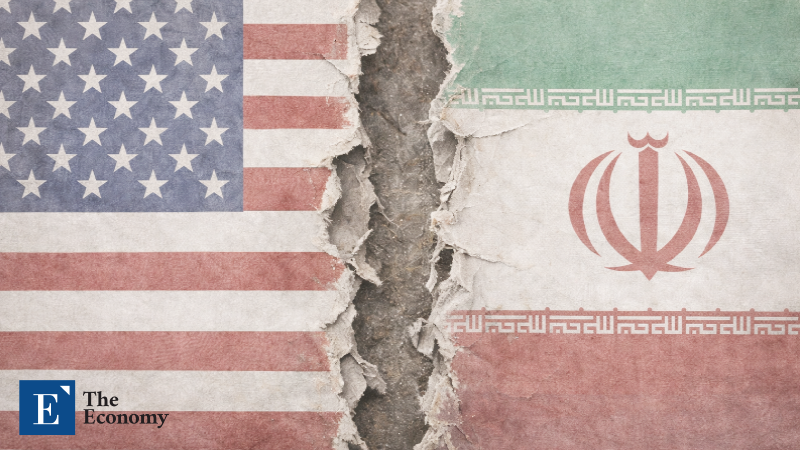
As signs emerge that the war may drag on, the United States has yet to present a clear exit strategy regarding when and how the conflict should end. In this context, U.S. forces struck Kharg Island—an essential hub for Iran’s oil exports—on the 13th. The facility, equipped with storage tanks, pipelines, and loading infrastructure, handles about 90 percent of Iran’s seaborne crude oil exports. Analysts viewed the strike as a military signal intended to increase Washington’s leverage in any future negotiations. Rather than a simple tactical attack on a specific installation, the move was interpreted as a direct attempt to pressure the financial foundation of the Iranian regime.
At the same time, the United States has gradually expanded its military options to intensify pressure. Reports recently confirmed that approximately 3,000 U.S. Marines have been deployed to the Middle East, fueling speculation about the possibility of amphibious operations. However, considering the experiences of past conflicts such as the Vietnam War and the Iraq War, most analysts still regard the likelihood of a large-scale ground troop deployment as low. Ground warfare carries both substantial international political costs and the risk of heavy casualties. As a result, experts assess that the most realistic military options available to the United States consist of sustained airstrikes, maritime control operations, and targeted attacks on key infrastructure.
Debate within the White House over the direction of the war has also intensified. Moderates centered around the economic and political advisory lines argue that surging oil prices could become a burden for both the U.S. economy and domestic politics, urging the administration to signal an early conclusion to military operations. In contrast, hard-line Republican figures insist that military action must continue until the possibility of Iran acquiring nuclear weapons and threats against U.S. forces are completely eliminated. At the same time, isolationist voices, including Steve Bannon, have warned that the United States should avoid becoming deeply entangled in a prolonged Middle Eastern conflict.
This dynamic has narrowed the range of strategic choices available to Washington. Expanding military pressure against Iran risks escalating the conflict across the wider Middle East, while ending operations too quickly could invite political criticism that the United States failed to sufficiently subdue its adversary. Some observers suggest that rising oil prices could provide limited benefits to the U.S. economy. However, with the oil industry accounting for less than 1 percent of U.S. gross domestic product, market analysts generally conclude that higher crude prices primarily raise logistics costs and intensify inflationary pressure.
Niamh O’Sullivan is an Irish editor at The Economy, covering global policy and institutional reform. She studied sociology and European studies at Trinity College Dublin, and brings experience in translating academic and policy content for wider audiences. Her editorial work supports multilingual accessibility and contextual reporting.
- Previous [U.S.–Iran War] Oil Shock Pushes U.S. to Consider Easing Century-Old Shipping Rule, East Asian Production Faces Strain and Europe’s Energy Burden Grows
- Next Trump Urges Five Nations, Including South Korea, to Dispatch Warships to Hormuz, Seeking to Deter Iranian Provocations Through ‘Multinational Joint Response’
Similar Post