[GLP-1] China and India, With Wegovy Patent Protections Lapsed, Set Their Sights on the Global Obesity Drug Market With Ultra-Low-Cost Generics

Siobhán Delaney is a Dublin-based writer for The Economy, focusing on culture, education, and international affairs. With a background in media and communication from University College Dublin, she contributes to cross-regional coverage and translation-based commentary. Her work emphasizes clarity and balance, especially in contexts shaped by cultural difference and policy translation.
Authored On
Modified
Semaglutide patents expire in China and India
A stream of generic drugs priced at one-eighth of the list price stands ready
Broader access to obesity drugs begins in earnest
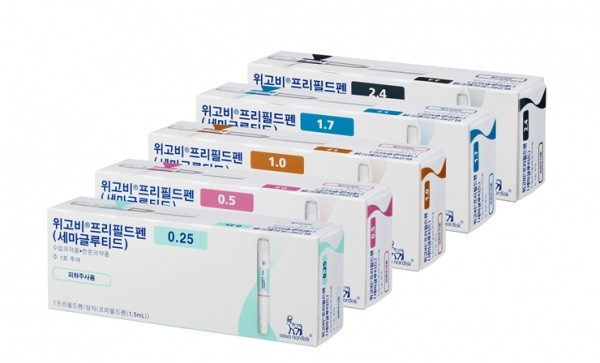
The global obesity-drug battle has entered a second round. If the first round was a contest over the “miracle injection,” the second is a war over price. With patents in India and China expiring for Novo Nordisk’s obesity treatment Wegovy, competition in the global obesity-treatment market is showing signs of intensifying in earnest. As generic launches line up in India and China, the world’s largest obesity-drug markets, domestically developed Chinese medicines are also entering the fray, deepening price competition.
Indian Drugmakers Expected to Launch More Than 50 Brands This Year
According to AFP and The New York Times on March 22, Indian drugmaker Eris Lifesciences on March 20 launched a generic Wegovy injection under its diabetes-treatment brand “Sunday.” Another drugmaker, Dr. Reddy’s Laboratories, also entered the competition the same day by launching the Wegovy generic “Oveda.” The company is also aiming to launch Oveda in Canada by May.
The prices of the generics introduced by Indian drugmakers are strikingly low. Eris’s product is priced at $14 per month for the lowest dose, 2 mg, amounting to just 12% of the price of the original Wegovy. Industry observers say that if competition intensifies, the price could fall to as low as $12 a month. Given that the highest-dose Wegovy in the United States currently costs $349 a month, the decline is being described as tantamount to a price collapse.
The market expects generic competition in India to gain real momentum this year. Pharmaceutical market research firm Pharmarack projected that about 42 drugmakers in India alone will launch more than 50 generic brands this year. Indian drugmakers, which have built competitiveness on low-cost generic production, are already racing to seize market share with pricing strategies offering discounts of at least 50% to 80% from the original.
The most aggressive pricing policy in India’s biopharmaceutical industry is being pursued by Natco Pharma. Natco has set monthly treatment costs at about $14 to $19, marking an 88% reduction from previous pricing. Glenmark has likewise introduced a generic at about $14 to $18 per month, roughly 85% cheaper than the previous product. Alkem cut the price by 83% to about $19 per month, while Indian pharmaceutical heavyweight Dr. Reddy’s has set supply prices at about $32 to $53 per month, reflecting discounts of roughly 55% to 70% from the existing brand.

A Flood of Wegovy Generics and Homegrown New Drugs Also Emerges in China
The starting point for this shift is the expiry of the patent on semaglutide, the active ingredient in Wegovy. That patent expired this month in India and China, and by the end of this year patent protection is also set to end in 10 major countries, including Brazil, Canada and South Africa. In the United States and Europe, however, extended patent protection is expected to delay generic launches until the early 2030s, while South Korea’s patent protection has likewise been extended through 2028. That reflects the territorial principle, under which filing, registration and extension systems differ by country. In general, pharmaceutical patents are protected for 20 years after filing, but because development and marketing approval take a long time even after patent filing, Novo Nordisk has sold the drug for only eight years. As a result, the United States and Europe have granted drugmakers special protection in the form of patent-term extensions, giving them several additional years of exclusivity.
By contrast, India and China lack separate protective mechanisms, allowing the generic market to open up rapidly. India and China alone are estimated to have more than 800 million overweight or obese adults and more than 360 million adults with diabetes. Because high prices have long constrained access to treatment, analysts say an explosion in demand will be inevitable if prices fall.
China, where the patent expired at the same time as in India, already has numerous drugmakers developing generics. Jiuyuan Genetic Biopharmaceutical is currently undergoing the approval review process for its self-developed generic version of Wegovy, while CSPC Pharmaceutical has also developed a Wegovy generic and is nearing commercialization. More than 10 other Chinese drugmakers are also preparing generic launches. According to Chinese biopharmaceutical consulting firm Pharnexcloud, 10 semaglutide-based drugs have already applied for marketing approval in China. Homegrown new-drug launches are also continuing. Ecnoglutide, developed by China’s Sciwind Biosciences, recently received approval from the National Medical Products Administration for diabetes treatment and has entered the commercialization stage. The company is also awaiting approval for an obesity indication.
China’s rapid advance in obesity-drug development is attributed to the speed of its clinical trials and relatively low clinical costs. According to McKinsey, the time required to reach clinical entry in China is 50% to 70% shorter than the global average, while patient recruitment is two to five times faster. China currently has 102 GLP-1 obesity-drug pipelines under development, accounting for about 40% of all GLP-1 pipelines worldwide, and more than 60 of them have already entered late-stage clinical trials.
Novo and Lilly Cut Prices Preemptively to Defend Market Share
Experts say the popularity of obesity treatments is likely to surge explosively on the strength of the two विशाल markets of China and India alone. JPMorgan Chase forecast that India’s GLP-1 market will expand from $179 million this year to $1.5 billion by 2030. Demand is also expected to broaden as price barriers fall. Local Indian medical professionals say that after the launch of generics, the number of treated patients could rise from the current 70 to 80 to as many as 200. High-dose Wegovy currently sells for $180 per month in India, but even that remains beyond the reach of most Indians.
As the pricing structure comes under strain, the market order is also being reshaped. With the same movement appearing in India after China, Novo Nordisk and Eli Lilly, which have dominated the global obesity-treatment market between them, are responding with a “price destruction” strategy. Novo Nordisk has cut the price of Wegovy in China by about 48%, from about $276 to the low-$130 range, while Eli Lilly has priced Mounjaro at about $65, roughly 80% below its previous level.
Facing an intense chase from a legion of generics, Novo Nordisk has also turned to a performance-differentiation strategy. The U.S. Food and Drug Administration recently approved “Wegovy HD,” a high-dose 7.2 mg version with a substantially increased dosage compared with the existing Wegovy. According to Phase 3 clinical results for Wegovy HD, while the existing 2.4 mg dose delivered an average weight-loss effect of 15%, the newly approved high-dose version produced an average reduction of 20.7%. In effect, it has delivered a dramatic, near-surgical effect through medication. The approval drew industry attention in particular because it was granted in just 54 days through the FDA’s Fast Track program. That marks a sharp reduction from the typical approval period of 10 to 12 months, underscoring, by market accounts, the urgency and importance of the obesity-treatment sector.
Siobhán Delaney is a Dublin-based writer for The Economy, focusing on culture, education, and international affairs. With a background in media and communication from University College Dublin, she contributes to cross-regional coverage and translation-based commentary. Her work emphasizes clarity and balance, especially in contexts shaped by cultural difference and policy translation.
Similar Post