“Amazon Embraces Even an Arizona Abandoned Mine” Copper Supremacy Reshaped by the AI War, Copper Rush Moves Into Full Swing

Anne-Marie Nicholson is a fearless reporter covering international markets and global economic shifts. With a background in international relations, she provides a nuanced perspective on trade policies, foreign investments, and macroeconomic developments. Quick-witted and always on the move, she delivers hard-hitting stories that connect the dots in an ever-changing global economy.
Authored On
Modified
Copper Consumption Surges Amid AI Infrastructure Expansion
Supply Chain Constraints and Lack of New Mines Add Upward Pressure on Copper Prices
Big Tech Moves to Secure Copper Mines as Long-Term Supply Shortage Looms
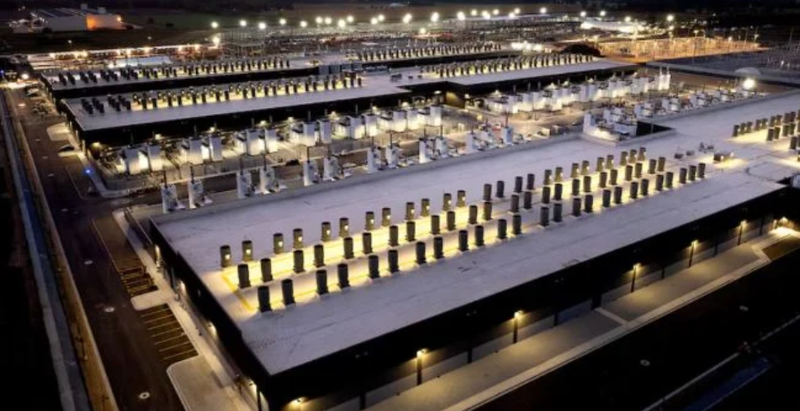
The spread of artificial intelligence (AI) is extending beyond semiconductor supply constraints and triggering a race to secure raw materials. As the global copper price continues to rise amid the AI boom, Amazon has moved to preemptively secure copper from the first U.S. copper mine to come online in a decade. With demand for copper—essential for data center power grids, cooling systems, transformers and wiring networks—surging, Big Tech’s direct involvement at the mining stage appears to be entering full swing.
Amazon Secures U.S. Copper Mine
According to major foreign media outlets, including The Wall Street Journal (WSJ), on the 11th local time, Amazon Web Services (AWS) recently signed a direct agreement to procure copper from the Johnson Camp mine near Tucson, Arizona. The deal is aimed at securing copper being mined at the site by British-Australian mining giant Rio Tinto. The contract runs for two years and is expected to supply around 14,000 tons of copper cathode. Copper cathode refers to refined, high-purity copper plates, effectively “finished copper” that can be used directly as a raw material in electrical, electronic and industrial applications.
Located roughly 100 kilometers east of Tucson, Arizona, the Johnson Camp mine had long been regarded as a low-grade mine that was effectively left idle due to weak economics. The situation changed sharply after Rio Tinto applied its bioleaching technology, Nuton. The core of the technology lies in extracting copper from sulfide ores using microorganisms, significantly reducing the need for conventional smelting and refining processes. Rio Tinto possesses proprietary technology that uses microorganisms to accelerate chemical reactions and maximize the efficiency of copper extraction from ore.
The development is being viewed as an innovation that creates new value from dormant mines once considered uneconomical under conventional methods, much like the shale revolution that reshaped the oil market. It also underscores how intense supply pressure has become, to the point where assets near the level of abandoned mines must be brought back into use. Through Nuton, Rio Tinto has sharply reduced water usage and carbon emissions compared with conventional methods. Johnson Camp is currently the lowest-carbon-intensity primary copper production facility in the United States. Copper produced there is manufactured on site in the form of cathode with purity of more than 99.99%.
Copper Prices Soar on Explosive AI and Power Grid Demand
Amazon’s copper mine agreement is a move to increase output at a time when copper demand is surging while new mine development is becoming increasingly difficult. Copper is an indispensable mineral for AI data center construction. AI data centers require far greater computing performance than conventional data centers, resulting in heavy power consumption, and vast amounts of copper are used in the wiring and cooling equipment needed to support that load. As AI servers use four to six times more power than conventional servers, they structurally require thicker and more numerous copper wires. A single data center being built by Microsoft (MS) in Chicago used 2,177 tons of copper. That is enough to make 80 Statues of Liberty weighing 27 tons each.
As a result, copper prices have been soaring. At the end of last year, copper prices surpassed $12,000 per ton, hitting an all-time high. At the end of 2024, copper prices stood at around $8,900, meaning last year’s copper price increase was roughly 35% from the previous year. Prices have shown no sign of easing this year. According to the London Metal Exchange (LME), copper prices jumped to around $14,000 per ton in January, setting another record high.
Experts believe upward pressure on copper prices is likely to persist as long as disruptions to copper mine development continue. Expanding the copper supply chain is an extremely difficult task at present. Existing mines that are more than 100 years old are aging and losing productivity, while bringing a new mine into operation in the United States takes an average of 29 years due to environmental regulations and approval procedures. Even in Chile, the largest producer, the process takes 22 years. If conflicts with local communities, Indigenous groups and environmental organizations arise during exploration, environmental impact assessment and permitting, timelines can stretch by several more years.

Copper Demand Surges as Supply Falls Far Short, Mine Disruptions Intensify
Production disruptions are also continuing under these conditions. Chile’s Chuquicamata and El Teniente mines have suffered weak output due to declining ore grades and aging facilities, while Peru’s Las Bambas mine has repeatedly halted operations due to local protests and road blockades. Indonesia’s Grasberg mine, the world’s second-largest copper mine, has also faced prolonged production weakness following a landslide. Freeport-McMoRan, the world’s largest copper mining company and the owner of the mine, expects production to normalize in 2027.
Delays in copper supply are already becoming visible. In particular, transformers, switchgear and high-voltage power grid equipment have emerged as the most severe bottlenecks in the expansion of AI data centers. These devices require large amounts of copper, and as shortages worsen, delivery times for high-voltage transformers in the United States have reportedly surged from around six months in the past to as long as four years.
Analysts have also warned that 30% to 50% of AI data center projects planned in the United States this year face the risk of delays or cancellation. According to Bloomberg, of 16 gigawatts (GW) of planned data center capacity in the United States, only about 5GW has actually broken ground. The impact on the construction industry is also becoming tangible. As concerns over global wire supply disruptions widen, competition to secure power cables is already emerging in some markets.
The International Energy Agency (IEA) has projected that mines currently operating and planned projects will be able to meet only about 70% of expected copper demand in 2035. This reflects the roughly 40% decline in average copper ore grades compared with 1991. Standard & Poor’s (S&P) Global expects copper demand to reach 42 million tons by 2040, while forecasting a supply shortfall of around 10 million tons. Recycled copper production is expected to more than double over the same period to reach 10 million tons, but even after accounting for that, the market could still face an annual supply deficit of 10 million tons by 2040. That would amount to 24% of total demand.
Anne-Marie Nicholson is a fearless reporter covering international markets and global economic shifts. With a background in international relations, she provides a nuanced perspective on trade policies, foreign investments, and macroeconomic developments. Quick-witted and always on the move, she delivers hard-hitting stories that connect the dots in an ever-changing global economy.
Similar Post