"If the U.S. Door Closes, Europe Will Do" — Chinese EV Makers Intensify EU Offensive, Expanding Local Production Despite Regulatory Barriers

Oliver Griffin is a policy and tech reporter at The Economy, focusing on the intersection of artificial intelligence, government regulation, and macroeconomic strategy. Based in Dublin, Oliver has reported extensively on European Union policy shifts and their ripple effects across global markets. Prior to joining The Economy, he covered technology policy for an international think tank, producing research cited by major institutions, including the OECD and IMF. Oliver studied political economy at Trinity College Dublin and later completed a master’s in data journalism at Columbia University. His reporting blends field interviews with rigorous statistical analysis, offering readers a nuanced understanding of how policy decisions shape industries and everyday lives. Beyond his newsroom work, Oliver contributes op-eds on ethics in AI and has been a guest commentator on BBC World and CNBC Europe.
Authored On
Modified
EU unveils IAA draft tightening restrictions on Chinese EVs
Chinese automakers expand European production footprint to circumvent sanctions barriers
U.S. market effectively sealed off by mounting regulations, Europe emerges as alternative battleground
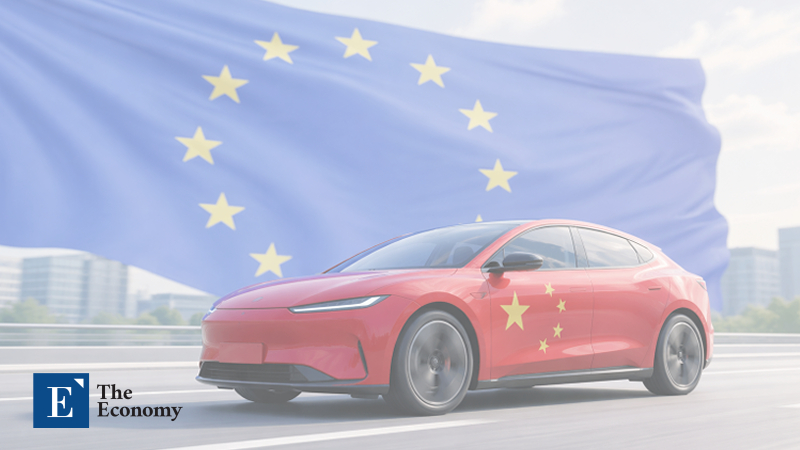
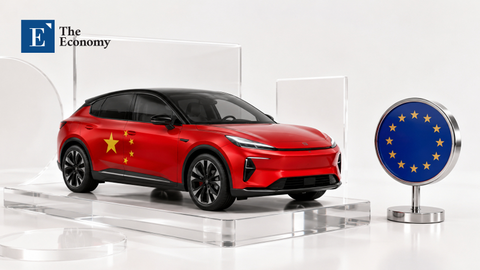
The European Union (EU) has moved to strengthen restrictions on Chinese electric vehicles (EVs). As Chinese automakers rapidly expand their footprint within the European EV market, Brussels is sharply raising entry barriers by emphasizing domestic production and employment requirements. Market observers, however, broadly contend that the practical impact of such measures will remain limited, given that Chinese EV manufacturers have recently accelerated efforts to establish production bases across Europe.
EU Pushes Back Against Chinese EV Expansion
According to the automotive industry on the 27th, the EU has recently intensified efforts to overhaul regulations aimed at reducing dependence on Chinese EVs. Chinese EV manufacturers, having encountered growth constraints in their domestic market, are increasingly flooding into Europe. Market research firm Dataforce reported that Chinese brands captured a record 7.4% share of the European auto market in September last year, with the figure estimated to have approached 10% this year.
One of the clearest symbols of the EU’s hardening stance toward Chinese EVs is the draft “Industrial Accelerator Act (IAA)” unveiled by the European Commission in March. The core objective of the proposal is to mandate minimum EU-produced component ratios and low-carbon compliance standards in public procurement and state subsidy programs covering strategic industries such as automobiles, steel, cement, aluminum, and batteries. To qualify for public procurement contracts or subsidies, EVs, plug-in hybrids, and hydrogen vehicles must be assembled within the EU, while at least 70% of non-battery components must be produced locally. In addition, at least three key battery components must also be manufactured inside the bloc.
The draft further includes foreign investment screening provisions. Under the proposal, if a single non-EU country accounts for more than 40% of global production capacity in a strategic industry, investments exceeding approximately $115 million by companies from that country would become subject to prior review. The criteria are widely interpreted as being explicitly aimed at China. Companies undergoing such scrutiny would also be required to ensure that at least 50% of their workforce consists of EU citizens while satisfying additional conditions tied to integration into European supply chains, technology transfers, and contributions to local research and development (R&D).
Strengthening Local Production Capabilities
Despite these measures, the market believes the IAA alone will be insufficient to halt the advance of Chinese EV manufacturers. Chinese companies have recently begun confronting regulatory barriers head-on by rapidly securing local production capacity throughout Europe. One example is Dongfeng, widely regarded as one of China’s three largest automakers, which announced on the 20th that it would establish a joint venture with multinational automotive group Stellantis in Europe to expand local cooperation. Stellantis agreed to provide access to its Rennes plant in France and open its European distribution network in exchange for Dongfeng’s next-generation vehicle technologies.
Stellantis had previously established a joint venture with Chinese EV maker Leapmotor in 2023 and is currently discussing plans to manufacture Leapmotor’s electric SUV “B10” at its Zaragoza facility in Spain. Hongqi, the premium brand under China FAW Group, is also reportedly reviewing a proposal to share the same plant with Leapmotor. BYD and Xpeng, meanwhile, are in negotiations to acquire Volkswagen’s Dresden factory in Germany, which ceased operations last year.
Chery Automobile, China’s largest vehicle exporter, is also pursuing a joint investment with Spanish automaker Ebro to secure a former Nissan assembly plant in Barcelona. The company aims to produce 200,000 vehicles annually at the facility by 2029. During the launch event for its Omoda and Jaecoo brands in France last month, Chery stated that it preferred utilizing existing production capacity rather than making massive greenfield investments in new plants, adding that it hoped to announce new partnership agreements within the coming months. The company also disclosed that it has been conducting confidential discussions with multiple European automakers while identifying France as one of its potential production candidates.
U.S. Intensifies Blockade Against Chinese EV Imports
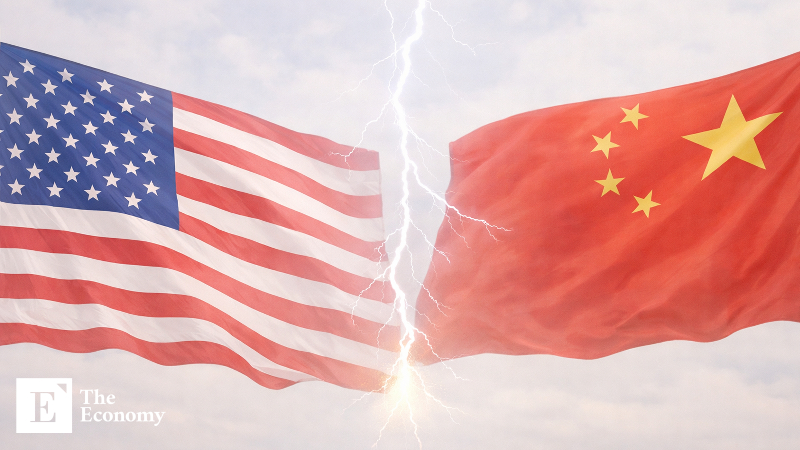
The growing focus of Chinese EV manufacturers on Europe stems largely from the fact that access to the U.S. market — once viewed as a core battleground — has effectively become restricted. The United States has steadily escalated sanctions against Chinese EVs since the first Donald Trump administration. The starting point came in 2018, when Washington imposed an additional 25% tariff on Chinese vehicles under Section 301 of the Trade Act. The restrictive stance intensified significantly following passage of the Inflation Reduction Act (IRA) in 2022.
The IRA was designed to provide tax credits of up to $7,500 for EVs that are finally assembled in North America and meet battery supply chain requirements centered on the United States or countries holding free trade agreements (FTAs) with Washington. The measure has been widely interpreted as part of a broader effort to reduce reliance on Chinese batteries and critical minerals.
In May 2024, the U.S. government announced that tariffs on Chinese EVs would be raised from 25% to 100%. The measures covered approximately $18 billion worth of Chinese imports, while tariffs on lithium-ion batteries, battery components, critical minerals, semiconductors, and solar cells were also increased. In September of the same year, Washington introduced additional regulations classifying Chinese connected vehicles and software as national security threats, citing concerns that technologies such as cameras, GPS systems, Bluetooth functions, and cellular communication features could facilitate the transfer of Americans’ data to China. The policy eventually evolved into the “Connected Vehicles Final Rule” issued by the Bureau of Industry and Security (BIS) under the U.S. Department of Commerce in January last year before formally taking effect in March of the same year.
Hostility toward Chinese EVs within the United States has also persisted. During a speech at the Detroit Economic Club in January, President Trump remarked that it would be “a great thing” if Chinese automakers built factories in the United States and hired American workers, signaling a comparatively conciliatory tone. Political and industry reactions, however, remained overwhelmingly hostile. Democratic Senator Elissa Slotkin recently warned Trump during a forum in Detroit not to “make a bad deal,” urging that Chinese-branded vehicles should never be allowed into U.S. dealership networks. Domestic automakers, dealers, and parts industry groups also submitted opinions to the U.S. administration in March arguing that China’s attempts to dominate the automotive industry pose direct threats to America’s global competitiveness, national security, and industrial base. For Chinese automakers, the United States has effectively become a market overwhelmed by political and security risks. Against this backdrop, the EU — which still permits conditional market access — is emerging as an attractive alternative for expanding global influence.
Oliver Griffin is a policy and tech reporter at The Economy, focusing on the intersection of artificial intelligence, government regulation, and macroeconomic strategy. Based in Dublin, Oliver has reported extensively on European Union policy shifts and their ripple effects across global markets. Prior to joining The Economy, he covered technology policy for an international think tank, producing research cited by major institutions, including the OECD and IMF. Oliver studied political economy at Trinity College Dublin and later completed a master’s in data journalism at Columbia University. His reporting blends field interviews with rigorous statistical analysis, offering readers a nuanced understanding of how policy decisions shape industries and everyday lives. Beyond his newsroom work, Oliver contributes op-eds on ethics in AI and has been a guest commentator on BBC World and CNBC Europe.
Similar Post