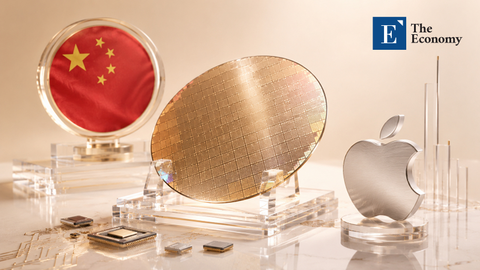
U.S. Government Begins Direct Backing of Quantum Firms as U.S.-China Quantum Computing Rivalry Intensifies

Siobhán Delaney is a Dublin-based writer for The Economy, focusing on culture, education, and international affairs. With a background in media and communication from University College Dublin, she contributes to cross-regional coverage and translation-based commentary. Her work emphasizes clarity and balance, especially in contexts shaped by cultural difference and policy translation.
Authored On
Modified
Trump-style industrial policy expands into quantum sector with subsidies and equity stakes
Washington counters China’s long-term quantum R&D drive
Escalating battle for dominance in a technology set to define future national competitiveness
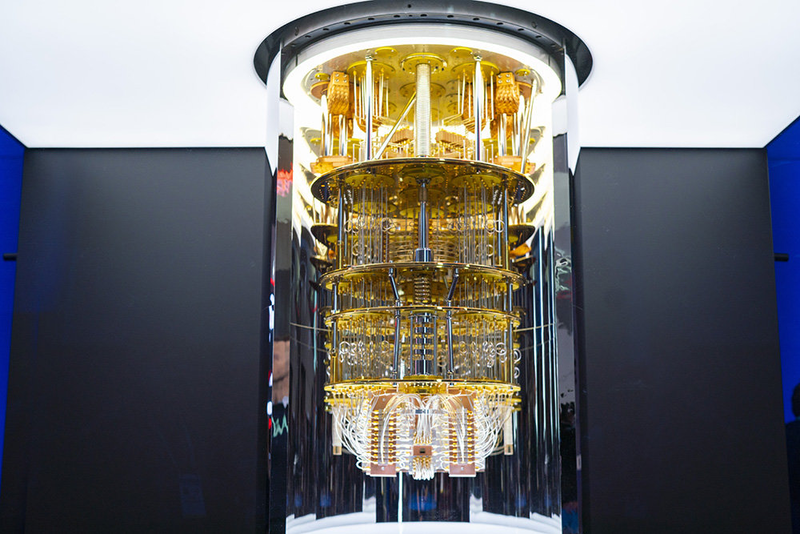
The U.S. government has begun pouring massive funding into the quantum computing sector, widely regarded as a next-generation strategic industry, in a bid to strengthen technological competitiveness. As China accelerates the construction of a national quantum ecosystem through state-led investment and expanded research and development (R&D), Washington is responding with aggressive capital injections aimed at securing technological superiority. With quantum technologies increasingly viewed as core infrastructure capable of reshaping competition across finance, defense, communications, and energy industries, the U.S.-China rivalry is expanding into a prolonged hegemonic struggle centered on future industrial order and national security leadership.
U.S. Commerce Department Injects $2 Billion, Takes Direct Equity Stakes in Quantum Firms
According to The Wall Street Journal (WSJ) on May 27 local time, the U.S. Department of Commerce announced agreements to provide a combined $2 billion in subsidies to nine quantum computing companies. The funding will be distributed through resources allocated under the CHIPS and Science Act enacted in 2022, with the structure involving the U.S. government acquiring minority, non-controlling equity stakes in the companies. The move extends the so-called “Intel-style state-led industrial support” model previously seen in the Trump administration’s acquisition of Intel shares and investments in rare-earth mining companies such as Vulcan Elements and MP Materials. The strategy aims to encourage private capital inflows by allowing the government to share risk while guaranteeing policy certainty.
IBM emerged as the largest beneficiary of the initiative, securing a preliminary agreement worth $1 billion, equivalent to roughly half of the total funding package. Specific equity ratios, however, have not yet been disclosed. In a statement, IBM said, “The quantum industry could generate up to $850 billion in economic value by 2040,” adding that the sector would contribute to U.S. economic growth and national security enhancement.
Semiconductor manufacturer GlobalFoundries will receive $375 million in funding in exchange for transferring roughly a 1% equity stake to the government. D-Wave Quantum will also receive $100 million through a full-equity investment structure by the government. Other beneficiaries include Rigetti Computing, Infleqtion, and Diraq. These companies are expected to focus on resolving key commercialization bottlenecks such as error-rate reduction, ultra-fast readout technologies, optical loss minimization, and cooling-system integration. The Trump administration is also placing emphasis on securing domestic production infrastructure alongside R&D efforts. The goal is to establish core quantum computing manufacturing capabilities within the United States in response to supply-chain instability and technology leakage risks.
China’s Long-Term Bet on Quantum Supremacy
The Trump administration’s large-scale investment push into quantum computing is widely interpreted as part of a broader strategy to secure leadership in the next generation of critical technologies following artificial intelligence (AI), amid intensifying U.S.-China technological rivalry. China has spent nearly a decade steadily expanding state support for quantum computing, a field viewed as capable of transforming the foundations of security, energy, finance, and biotechnology industries. Concerns are growing in Washington that a reversal in the competitive landscape could eventually undermine national security itself.
China has already committed approximately $15 billion in government spending to quantum technologies, treating the sector as a core pillar of global scientific and technological competition. A long-term investment structure linking national research institutes, local governments, universities, and private corporations has become a central feature of China’s quantum ecosystem. In its “15th Five-Year Plan” unveiled in March this year, the Chinese government designated quantum technology as one of seven future strategic industries, elevating it to a national priority. Beijing plans to further expand industrial applications into quantum communication networks, quantum cryptography, and quantum sensing.
China has also accelerated the expansion of dedicated investment vehicles for the quantum industry. According to the National Development and Reform Commission (NDRC), Beijing allocated approximately $17 billion in quantum-focused funding through the National Venture Guidance Fund. The capital has been distributed across three major advanced industrial clusters, including the Beijing-Tianjin-Hebei region, the Yangtze River Delta, and the Guangdong-Hong Kong-Macau Greater Bay Area (GBA), with investment priorities focused on quantum computing, quantum sensing, quantum communications, and commercialized equipment development.
The Yangtze River Delta has reportedly specialized in quantum communications and industrial applications, the Guangdong region in commercial quantum products and startup incubation, and the Beijing region in quantum computing and precision sensing technologies. China has effectively built a state-level quantum industrial ecosystem by combining central government funding with local government financing, state capital, and private investment. Investment growth has accelerated sharply. First-quarter investment in China’s quantum technology sector this year has already surpassed total investment recorded during the entirety of last year. China’s quantum computing industry investment reached approximately $6.4 billion last year, while the number of related companies surged from 93 in 2023 to 153 last year.
China’s quantum achievements are also continuing to emerge. The Chinese Academy of Sciences unveiled the photon-based quantum computer “Jiuzhang 4.0,” claiming computational performance vastly exceeding conventional supercomputers. In superconducting systems, China has also introduced high-performance quantum processors such as “Zuchongzhi 3.0.” Meanwhile, Origin Quantum, spun off from the University of Science and Technology of China (USTC), is currently operating “Origin Wukong,” a 72-qubit commercial processor that reportedly recorded more than 20 million cloud-access sessions from 145 countries during its first year after launch. Although debates continue over technological verification and real-world general-purpose usability, analysts say it is increasingly evident that China is pursuing quantum leadership through a massive investment framework integrating state research institutions, universities, and corporations.

Quantum Computing Emerges as a Game-Changer for Future Industries
Behind the U.S. and China’s concentration of national resources into quantum computing lies the growing possibility of a breakdown in the cryptographic systems underpinning the current digital order. Once large-scale fault-tolerant quantum computers become commercially viable, existing RSA- and ECC-based public-key cryptographic systems used in financial transactions, government communications, military intelligence, and cloud security could face fundamental threats. The U.S. National Institute of Standards and Technology (NIST)’s confirmation of three post-quantum cryptography (PQC) standards in 2024 underscored how the issue has evolved from a long-term research topic into a tangible national security challenge. Transitioning cryptographic systems will require far more than simple software updates, demanding the reconstruction of financial networks, telecommunications systems, defense infrastructure, and industrial control systems.
Intelligence agencies across major nations are particularly wary of the “Harvest Now, Decrypt Later” strategy. Under this approach, encrypted confidential data that cannot currently be deciphered is collected and stored in advance, with the expectation that future quantum computing capabilities will eventually allow decryption of diplomatic documents, military intelligence, financial records, and intellectual property materials. As a result, the race for quantum computing dominance is simultaneously becoming a competition over protecting current national secrets. This concern explains why the U.S. National Security Agency (NSA) has urged operators of national security systems to begin preparing early transitions to quantum-resistant algorithms.
The technology’s economic impact is also driving rapid investment expansion in both countries. Global consulting firm McKinsey projects the quantum technology market could grow to as much as $97 billion by 2035, with quantum computing accounting for up to $72 billion of that figure. The chemical, pharmaceutical, financial, and mobility sectors are expected to experience some of the earliest and most significant benefits from quantum computing adoption. Analysts believe quantum computing could expose the limitations of existing supercomputing systems in highly complex combinatorial problems such as drug discovery, battery-material design, portfolio optimization, and logistics route calculations.
The strategic value of quantum technologies in defense is also significant. Quantum sensors are viewed as transformative technologies capable of enhancing the precision of surveillance and reconnaissance systems through submarine detection, gravity and magnetic field measurement, precision navigation, and underground structure exploration. Quantum communications are likewise attracting attention as core technologies for ultra-secure networks and eavesdropping detection. Quantum computing itself is increasingly expected to expand into cryptanalysis, satellite orbit calculations, battlefield simulations, and weapons-system optimization, positioning the technology as a next-generation pillar of military and national security capabilities.
From a supply-chain perspective, quantum computing is also deeply tied to advanced manufacturing competition. Although technological approaches differ between superconducting qubits, ion traps, and photonic quantum computing systems, all require highly sophisticated manufacturing capabilities involving cryogenic equipment, precision control chips, high-quality wafers, lasers, optical components, and signal-processing devices. This dynamic also explains why the United States is allocating funding to IBM and GlobalFoundries to support quantum-dedicated foundries and manufacturing infrastructure. Leadership in algorithms and research papers alone will not determine dominance. Long-term competitiveness will ultimately hinge on the ability to build stable manufacturing ecosystems capable of producing commercial quantum hardware at scale.
Siobhán Delaney is a Dublin-based writer for The Economy, focusing on culture, education, and international affairs. With a background in media and communication from University College Dublin, she contributes to cross-regional coverage and translation-based commentary. Her work emphasizes clarity and balance, especially in contexts shaped by cultural difference and policy translation.
Similar Post