Asia’s Coal Phaseout Clock Rewinds as Energy Supplies Falter, Long-Term Energy Strategies Recast Amid Rising Coal Dependence

Authored On
Modified
A Shock Even Greater Than 2022: One-Fifth of LNG Supply Vanishes
South Korea and Japan Ease Coal Power Restrictions, Taiwan Restarts Coal-Fired Generation
Short-Term Coal Expansion May Ultimately Accelerate Structural Energy Reform
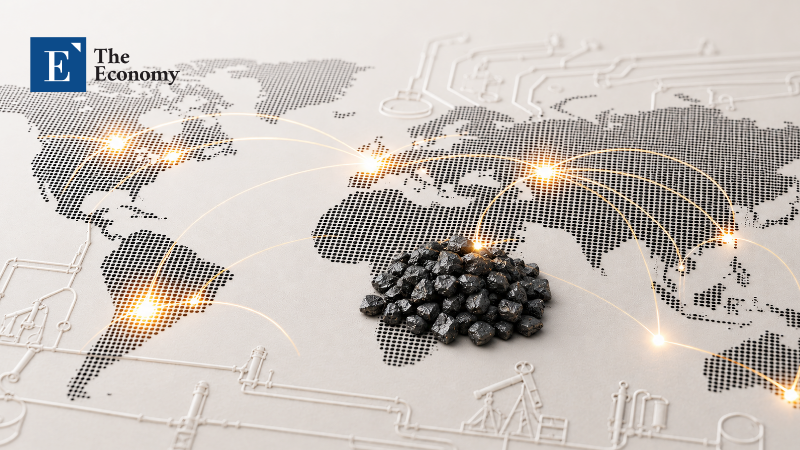
The energy shock triggered by the Iran war is reshaping Asia’s power landscape. As concerns mount over a potential blockade of the Strait of Hormuz and disruptions to Qatar’s liquefied natural gas (LNG) exports, countries across Asia are once again expanding coal-fired power generation. Taiwan has resumed purchases of coal-generated electricity, while China has begun increasing investment in coal chemicals. South Korea and Japan are also easing coal power regulations and shifting toward emergency power security frameworks. Analysts say the crisis could ultimately become a catalyst for restructuring the region’s heavy dependence on imported fossil fuels.
Middle East-Driven LNG Shock Revives Coal Across Asia
According to Bloomberg on the 26th (local time), Taiwan Power Co., the state-owned electricity supplier, has been purchasing coal-fired electricity from the Mailiao power plant since last month. Taiwan, home to some of the world’s leading semiconductor companies, relies on LNG for roughly half of its electricity generation. Last year alone, about one-third of its LNG imports came from Qatar. However, the Iran war disrupted supply chains through the shutdown of Qatar’s largest LNG export terminal and fears of a Strait of Hormuz closure. Taiwan has secured LNG supplies through May and finalized contracts covering roughly half of June demand, but additional procurement costs are expected to reach billions of dollars. The move is therefore viewed as an effort both to address LNG supply risks and to mitigate the impact of soaring gas prices on electricity rates.
China has chosen a strategy focused on changing how coal is used. China Shenhua Energy, the country’s largest listed coal producer, is reducing coal output by 0.6% this year while redirecting investment toward facilities that convert coal into olefins — the core feedstock for plastics, textiles, and solvents — rather than burning it for power. The company plans to double annual production capacity to 1.4 million tons by next year. The shift reflects changes in the feedstock market. Olefins are typically produced using naphtha or liquefied petroleum gas (LPG) derived from crude oil, but disruptions in the Strait of Hormuz have tightened those markets, sharply boosting the competitiveness of coal, of which China has abundant domestic reserves. China International Capital Corporation (CICC) said coal’s profit margin advantage over oil in chemical production has reached its highest level since 2015.
South Asia faces similar conditions. Bangladesh has increased coal-fired generation and coal-based electricity imports since March while implementing gas rationing measures. Pakistan has avoided the kind of massive blackouts experienced during the 2022 Ukraine war thanks to expanded solar capacity installed since then, but it is simultaneously increasing domestic coal-fired generation and suppressing demand. India is also absorbing the shock by increasing coal imports while reducing industrial gas consumption.
In Southeast Asia, governments are openly formalizing fuel-switching policies. Philippine Energy Secretary Sharon Garin told Reuters that the Philippines plans to temporarily increase coal-fired generation amid mounting energy pressures. Without government intervention, electricity rates in the Philippines could rise by roughly 16% next month. In response, Manila is seeking stable coal supplies from Indonesia. The move marks a reversal for the Philippines, where coal-fired generation had declined last year for the first time in nearly two decades. Vietnam’s state-run utility EVN has entered negotiations for additional coal imports to conserve LNG, while Thailand has increased utilization rates at its largest coal-fired power plant and raised biofuel blending ratios from 7% to 10%.
South Korea and Japan Ease Coal Restrictions
South Korea and Japan are likewise confronting the reality that maintaining aggressive coal phaseout policies has become increasingly difficult. According to Korea Customs Service trade data, South Korea imported 8.82 million tons and 9.08 million tons of coal in March and April, respectively, up 26.3% and 27.2% year over year. Combined imports for March and April marked the highest level in three years since March-April 2023, when the aftershocks of the Russia-Ukraine war were still reverberating.
It is highly unusual for coal imports during the spring months of March and April to reach levels typically seen in early winter. Coal imports generally rise during summer and winter when heating and cooling demand increases, then decline during spring and autumn. The surge reflects growing demand for coal as an alternative energy source amid tightening LNG supplies caused by the Strait of Hormuz crisis and force majeure declarations from Qatar, one of the world’s largest LNG producers. LNG imports in March fell 10.2% year over year, followed by a steeper 14.6% decline in April.
In response, the South Korean government lifted the seasonal 80% operating cap imposed on coal-fired power plants for air quality protection. On March 24, President Lee Jae-myung, chairing the 11th Cabinet meeting, instructed officials to “review adjustments since it is unclear how conditions may evolve” regarding three coal-fired units — Hadong Unit 1, Boryeong Unit 5, and Taean Unit 2 — that had been scheduled for closure beginning in June this year. The government also decided to increase nuclear power generation to offset LNG supply volatility. Coal is viewed as a relatively accessible short-term substitute for fuel shortages because South Korea can leverage existing generation infrastructure and operational expertise.
The same pattern is emerging in Japan, whose industrial and energy structure closely resembles South Korea’s. Tokyo is preparing emergency measures to raise operating rates at coal-fired power plants. More than 90% of Japan’s crude oil imports come from the Middle East, with roughly 70% passing through the Strait of Hormuz. According to local reports from NHK and Nikkei, the Japanese government plans to suspend operating restrictions on thermal power plants for one year beginning April 1 in order to respond to the energy shock. While Japan is aggressively pursuing crude oil imports through multiple channels, officials appear to be simultaneously relying on coal-fired generation as a contingency measure.
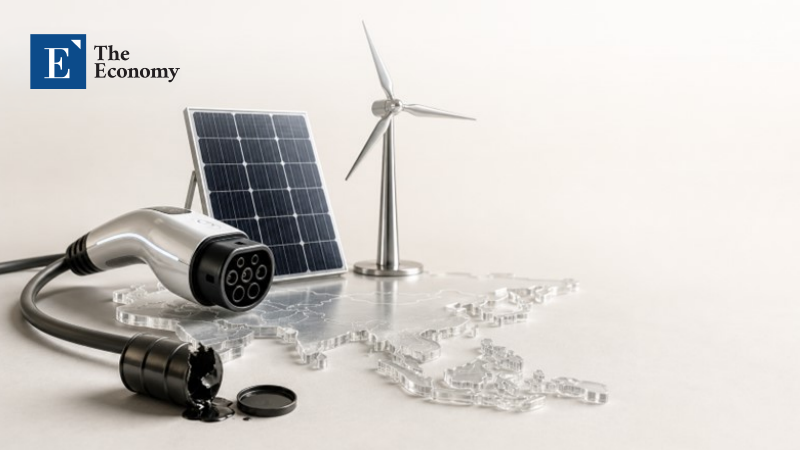
Coal Revival Coincides With Intensifying Push for Energy Independence
Still, some analysts caution against interpreting the current return to coal as a lasting trend. Instead, they argue the shock caused by dependence on Middle Eastern energy supplies could ultimately accelerate renewable energy expansion, electric vehicle adoption, and nuclear power restructuring. International energy economists increasingly interpret the crisis not as a failure of the energy transition itself, but as exposure of the vulnerabilities within an incomplete transition framework.
In particular, LNG’s failure to function as a “bridge fuel” is amplifying policy disruptions. Asian countries had long viewed LNG as a transitional fuel between coal reduction and renewable expansion. But once Middle Eastern supply chains faltered, LNG prices surged within a short period, destabilizing entire energy systems in countries heavily dependent on imports. The war has starkly exposed the structural weakness of LNG-centered transition strategies.
Governments worldwide are already shifting policy direction rapidly. The European Union, while maintaining renewable expansion policies launched after the Russia-Ukraine war, is simultaneously redefining energy security by dramatically increasing investment in strategic raw materials and grid stability. Asian countries are likewise recalibrating policy priorities away from simple carbon reduction metrics toward broader supply-chain resilience.
The renewable energy expansion trend, in particular, is strengthening rather than weakening after the crisis. China is accelerating construction of massive solar and wind complexes in its western inland regions while simultaneously investing in ultra-high-voltage (UHV) transmission networks. India has shortened permitting procedures for battery energy storage systems (ESS) linked to solar projects, and Vietnam is revisiting offshore wind expansion plans to reduce LNG dependence. While coal consumption is rising in the short term, the long-term strategic direction is increasingly focused on reducing reliance on imported fossil fuels.
The reassessment of nuclear power is also becoming more pronounced. Japan is accelerating reactor restart procedures that had stalled after the Fukushima disaster, while South Korea is speeding up discussions surrounding new reactor construction and lifespan extensions. Policymakers increasingly argue that without stable baseload power supplies, renewable expansion itself could exacerbate supply instability. Indeed, during the current Middle East crisis, France — where nuclear power accounts for a large share of electricity generation — has experienced relatively limited power price volatility.
The electric vehicle and energy storage sectors are also increasingly taking on the characteristics of strategic security industries. What were once primarily viewed through the lens of carbon neutrality and environmental policy are now increasingly regarded as strategic assets capable of reducing dependence on imported fuels. According to BloombergNEF (BNEF), investment in ESS across major Asian economies has surged since the outbreak of the Iran war in late February, while grid-stabilization ESS projects are also expanding sharply. The trend is seen as an effort to simultaneously address intermittency and storage challenges, two of the most vulnerable aspects of renewable energy expansion.
- Previous Quad Activates Four-Pronged Strategy to Contain China, Expanding U.S. Indo-Pacific Strategy From Security Alliance to Economic and Technological Bloc
- Next “Global Stagflation Looms” Middle East-Driven Energy Shock Intensifies Low-Growth, High-Inflation Pressures as Governments Scramble for Countermeasures
Similar Post