Taiwan’s Security Guarantee Is Now a Test of Deterrence, Not Sympathy

Working across research, policy, and data-driven analysis, the Editorial Board ensures that published pieces reflect a consistent institutional perspective grounded in quantitative reasoning and long-term structural assessment.
Authored On
Modified
Taiwan fears the US may hesitate in a crisis
That doubt could weaken deterrence before war begins
Clearer allied planning is needed to prevent China from misreading silence
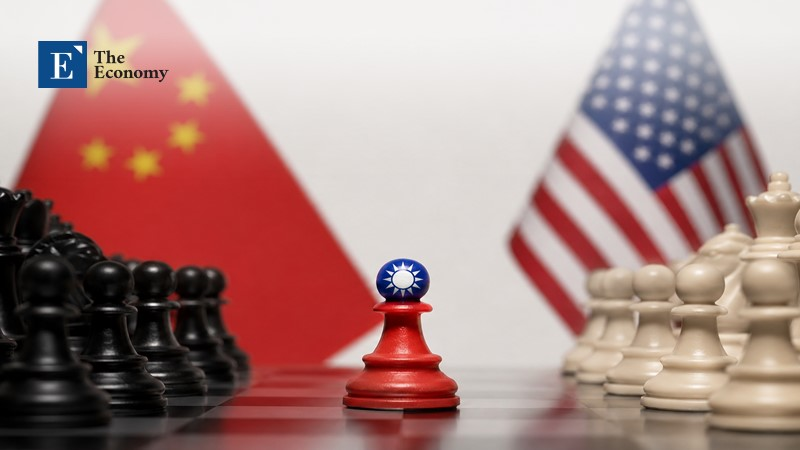
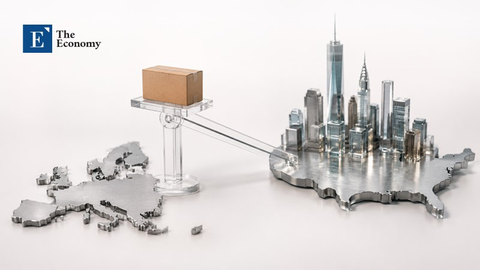
More than twenty-three million people live in Taiwan. Their security now depends on a question that should not be left to guesswork: if China launches an attack, will America and its allies respond quickly enough to make a difference? Washington might not fight. The danger is not only that Washington might hesitate. The greater danger is that Beijing, Taipei, Tokyo, Seoul and Washington may all read the same silence differently. America's security guarantee to Taiwan has always depended on a fine line between clarity and ambiguity. But when the latter gets too broad, it stops deterring and starts inviting the test. The Taiwanese are not simply emotional; this is strategic. By losing the Taiwan security guarantee, Washington risks undermining domestic morale, alliance planning and China's cost-benefit calculus all at once.
Taiwan’s Fear Is a Deterrence Problem
The real problem here is not that Taiwan wants war it doesn't. The real issue is: does Taiwan still believe the network around it has the will, the weaponry and the political will to stop war? In the past, Taiwan was viewed primarily as an American issue: about strategic ambiguity, arms sales, naval deployments and red lines. But now it's time for a more expansive question: how does Taiwanese society view the crossfire of American reluctance, Japanese caution, South Korean distance and Chinese coercion? Deterrence is not just a message being sent to Beijing, but a message being received in Taipei as well. If Taiwan's voters start to believe they will be left behind, domestic politics could change even before a single shot is fired.
Taiwan is a different case from all other East Asian democracies. South Korea depends on American intervention because the alliance is a formal one, US soldiers are stationed there, and a war plan is an integral part of national defense. It does not normally depend on Japan and Taiwan to fight alongside it. Japan, thanks to its strategic position, navy, andUS alliance, is less vulnerable to direct invasion than Taiwan. The danger for the island is that citizens of Taiwan might begin to see that there will be little that the United States and Japan can do, while South Korea remains committed to the Korean Peninsula. Under those circumstances, engaging with Beijing might begin to appear more secure than opposing it.
While natural, Taiwan's expectation of such extensive allied help is also perilous. Japan has compelling reasons to react to any attack on Taiwan-its southernmost islands are potentially within striking distance of the Taiwan Strait, and any US intervention would almost inevitably involve the United States using bases in Japan. A Chinese triumph would be extremely disruptive to Japan's strategic situation. But any intervention would face significant legal, political and military obstacles. South Korea's scenario is more difficult still. Its foremost priority is its northern neighbor, North Korea; it may cooperate with the United States by providing basing rights or logistical support, but fighting over Taiwan would put South Korea at risk from both the North and the Chinese. The implication is that while Taiwan's hopes for a widespread allied response are not necessarily unreasonable, they may be irresponsible if they depend on them and do not recognize the importance of ensuring sufficient self-sufficiency.
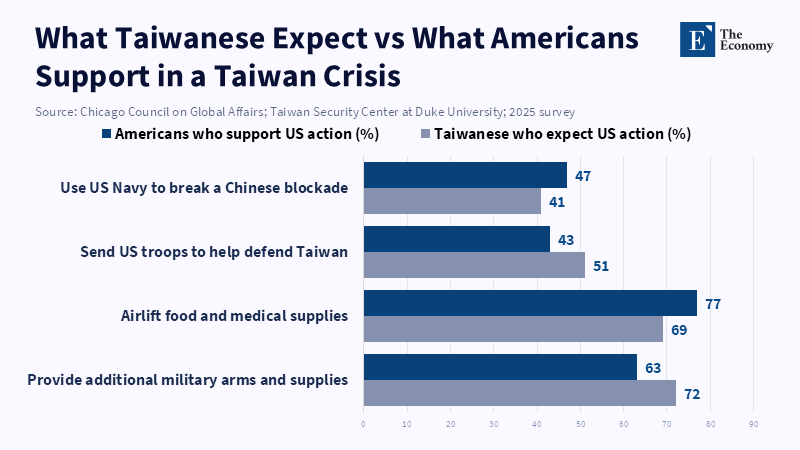
Skepticism in Taiwanese society has also eroded the island's security guarantee. A recent survey found that most Taiwanese are skeptical about the possibility of US intervention in a war. A 2025 Taiwan Public Opinion Foundation survey revealed more negativity than positivity in the question "Would Donald Trump prevent a Chinese invasion?" A second survey, the 2025 Taiwan National Security Studies Survey questioned Taiwanese voters about US response- troops, weapons, non-military aid, or nothing-in a series of hypothetical situations. While such polls have no inherent predictive value, they are not meant to be, as an indication that the Taiwanese have already begun to contemplate abandonment- an integral aspect of deterrence theory.
Ambiguity Works Only When Power Looks Ready
Ambiguity can be powerful only if supported by strength. Strategic ambiguity was never intended as a message of neutrality to Beijing; it was meant as a warning to China without giving Taiwan a free ride. While the United States made no explicit commitment to intervene, China believed that any attack would be met with a major American response. This was the deal: at the time, American power seemed deep, American attention broad, and Chinese capacities limited. It no longer seems quite so watertight. China's military power has increased; American politics has become more transactional; and the wars in Ukraine and the Middle East have drained stockpiles and exposed the weakness of air defenses and missile manufacturing. Today, silence signals something else entirely.
The real danger is not an explicit change of policy, but a slow and persistent loss of credibility. As the US approaches arms sales as bargaining chips, as US officials suggest that the future of Taiwan may depend on a grand bargain with Beijing, the implicit security assurance is crumbling. China does not need assurance that the US will not intervene, only enough doubt to convince that force will be effective. That is the gap that carelessness opens for calamity, Chinese probing and escalation, and Taiwanese temptation.
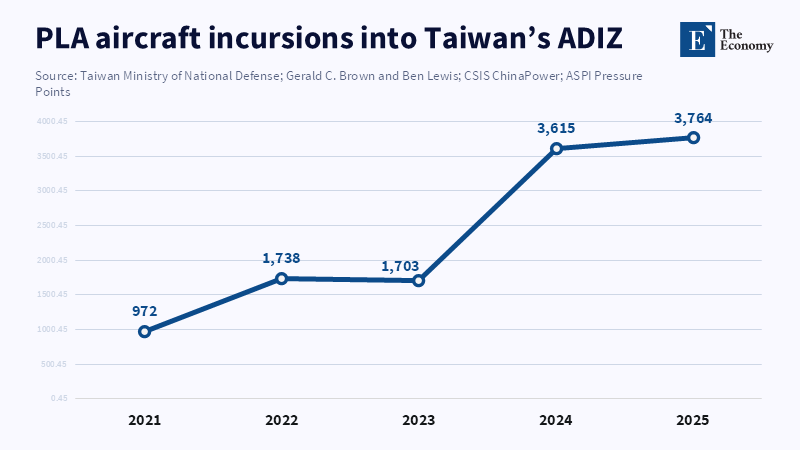
This is exacerbated by the military realities. China's defense expenditure has been rising consistently, and its military activities in the vicinity of Taiwan, violations of the median line, and gray-zone activities have escalated since 2021. This is not just symbolic; it is a means to train its forces, drain Taiwan's readiness, normalize encirclement, and test Taipei and Washington's reactions. Each incremental step moves war closer to the realm of the inevitable and makes it less of a shock. Further, the US's own capacity is not boundless. Simulation of conflict suggests the US could run out of long-range missiles and air defense interceptors after a while, with replenishment times often taking years- a challenge to America's current conflicts in Ukraine and Iran. Taiwan's security assurance must be built on actual munitions, not slogans.
That does not mean war is inevitable. China has a huge risk if it invades Taiwan. An invasion across the straits would be extremely difficult and a blockade could destroy the world economy. China would like to dominate, not wreck, the semiconductor industry of Taiwan. Deterrence fails not because an enemy is sure to win but because a leader feels the enemy is preoccupied, fragmented or slow to respond. These considerations should be weighed alongside Taiwan's internal stability and US military readiness.
Confidence Is the First Line of Defense
The security assurance must be reassuring, not paternalistic. That means no platitudes and no waiting for an out-of-the-blue decision. For a credible security assurance, everybody must feel responsible; at a minimum, Taiwan must have a say alongside outside powers. Nothing Taiwan can do will sway the US election or Japanese policymakers, but it can deepen civil defense, reserve forces, energy security, cyber defenses, port security and the faster absorption of weapons already approved for sale. Taiwan's decision to extend conscription and to envisage an increased defense budget are a positive development, but the mere increase in one's own buying power is not enough. It must buy the right kinds of weapons and build the capacity to endure in the first hours with mobile and hardened systems like drones, sea mines, decentralized networks and air defenses. Civilian agencies, schools and enterprises need to be prepared as well. Washington, Tokyo and Seoul will have to send clearer and more coordinated signals. That means not turning arms sales into negotiating chips, expediting the delivery of weapons, strengthening joint planning and clarifying interests at stake. Provocation is less problematic than the issue of perceived weakness, so finding a middle way that contains China while capping the status quo is urgent.
The most dangerous thing isn't a Chinese attack per se, but a breakdown in confidence. The threat to the island is if Chinese citizens come to believe that the US and Japan will do nothing, and South Korea will not lead, disarmament will seem the only option. An overwhelming majority of Taiwanese probably wouldn't welcome Chinese domination, but the threat of abandonment can lead to hollow-sounding compromises, so long as they seem reasonable. China's game plan is to erode Taiwanese confidence in democracy's resilience in the face of external threats; therefore, how the Taiwanese public feels is an important strategic consideration. Diminished confidence leads to a diminished ability to reform the military, fewer recruits, more disinformation, and a splintered polity-a welcome situation for Beijing.
Allied confidence in Washington is also on the line. They observe not only our policy statements but the basic pattern of our pronouncements and the tone and tenor of our remarks, and the practical delivery of support. A flippantly written-off alliance or a perceived preoccupation with other issues may send a message to China that we are weak and distractible. This would be an incentive for the Chinese to attack. The policy conclusion seems clear: deterrence in the Taiwan Strait should be based on a credible, predictable capacity and will to respond rather than personality or reactive gestures. That entails the continued and even accelerated delivery of arms, expansion of munitions inventories, clarity of allied roles, better civil defense, faster industrial output, truthfulness in the Taiwanese public, and the avoidance of overly dramatic and counterproductive words and actions. The aim is not war rhetoric but to make war so costly and uncertain that Beijing will not be willing to start it.
The guarantee of Taiwan's security is in its most serious crisis, more than by a threat of force. A guarantee is dead in the absence of public confidence. All it needs now is not panic nor despair but visible readiness. It is the stark fact that 23 million Taiwanese are trying to judge whether the democratic world is prepared before it is too late. The United States should relinquish the arrogance of whether uncertainty will do; Japan and South Korea should evolve comprehensive contingency plans for the crisis they do not want; and the Taiwanese should bolster their resilience in order to make the outside world's rescue less of an imperative. Peace in the Taiwan Strait will be earned, not preserved by silence, but by a Taiwan security guarantee so overwhelming that China cannot doubt to be a form of agreement.
The views expressed in this article are those of the author(s) and do not necessarily reflect the official position of The Economy or its affiliates.
References
Brookings Institution (2026) Trump’s dangerous Taiwan gamble. Written by Ryan Hass. Brookings Institution.
Chicago Council on Global Affairs (2025) Americans grow more supportive of aiding Taiwan in a China crisis. Chicago: Chicago Council on Global Affairs.
Choi, H.E., de Marchi, S., Gallop, M. and Minhas, S. (2026) ‘Could a distracted US cast Asia Pacific allies adrift?’, East Asia Forum, 15 May.
CSIS ChinaPower (2025) Tracking China’s military activity around Taiwan. Washington, DC: Center for Strategic and International Studies.
Duke University Taiwan Security Center (2025) Taiwan National Security Studies Survey 2025. Durham, NC: Duke University.
Hass, R. (2026) ‘Trump’s dangerous Taiwan gamble’, Brookings Institution, 16 May.
Reuters (2026) ‘Taiwan won’t be sacrificed, US arms sales a commitment, president responds to Trump’. Written by Ben Blanchard and Yimou Lee. Reuters.
Reuters (2026) ‘Xi tells Trump that mishandling of Taiwan could lead to “dangerous” place’. Written by Simon Lewis, Kathrin Hille and Greg Torode. Reuters.
Taiwan Ministry of National Defense (2025) ROC National Defense Report 2025. Taipei: Ministry of National Defense.
Taiwan Public Opinion Foundation (2025) October 2025 Public Opinion Poll. Taipei: Taiwan Public Opinion Foundation.
Working across research, policy, and data-driven analysis, the Editorial Board ensures that published pieces reflect a consistent institutional perspective grounded in quantitative reasoning and long-term structural assessment.