Trump’s Military Operation Against Iran Raises U.S.–China Tensions, Leaving Beijing Trapped in an “Energy or Tariffs” Dilemma

Authored On
Modified
Trump Launches Military Operation Against Iran, Casting Shadow Over U.S.–China Summit
Beijing Maintains Cautious Stance, Avoiding Direct Clash With Washington Holding the “Tariff Card”
Potential Collapse of Iranian Regime Threatens China’s Oil Supply Chain, Raising Risk of Economic Shock
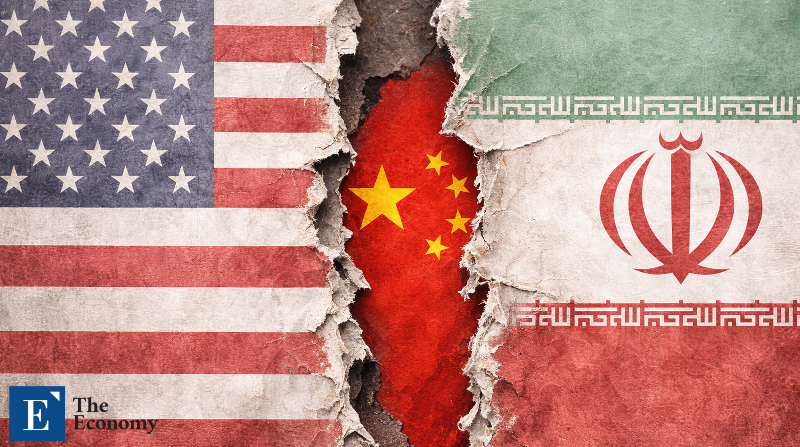
As U.S. President Donald Trump has carried out large-scale military operations against Iran and Venezuela, analysts say uncertainty surrounding U.S.–China relations is intensifying across multiple fronts. Iran and Venezuela are both close partners of Beijing and key sources of crude oil supply for China. Nevertheless, China has refrained from unveiling any meaningful “retaliatory” measures, wary of further deterioration in diplomatic ties with Washington.
U.S.–China Summit Overshadowed by Washington’s Military Moves
On March 2 (local time), foreign media outlets including Bloomberg and the Hong Kong-based South China Morning Post (SCMP) reported that the upcoming U.S.–China summit scheduled for early April—set to take place for the first time in nine years since 2017—could unfold under an awkward atmosphere. The United States has undertaken aggressive military operations against two of China’s core partners, including efforts to remove Venezuelan President Nicolás Maduro from power and an operation that resulted in the death of Iran’s Supreme Leader Ayatollah Seyyed Ali Khamenei.
David Arase, a professor of international politics at the Johns Hopkins–Nanjing Center for Chinese and American Studies, told SCMP that Chinese President Xi Jinping might find it “awkward” to welcome Trump following the successive attacks on Venezuela and Iran. However, he added that China must above all limit the downside risks in its relationship with the United States. “Even if there is no new breakthrough, this visit could still help stabilize relations with a mercurial U.S. president and make them more predictable,” he said.
George Chen, a partner at Washington-based consulting firm The Asia Group, also told Bloomberg that it would be difficult for Xi to greet Trump in a cheerful and relaxed atmosphere while pretending that everything is normal. “Investors will need to recalibrate their expectations about what Trump can achieve during his visit to China,” Chen said, adding that the Iran crisis could further deepen China’s ties with Russia.
Beijing’s Conservative Response
China, however, has maintained a cautious posture rather than responding aggressively to Washington’s moves. State-run media outlets including Xinhua News Agency and China Central Television (CCTV) have delivered hundreds of real-time breaking news updates since the escalation of the U.S.–Iran military confrontation, quoting official statements and foreign reports. Yet instead of unleashing criticism against Washington, they have largely focused on relaying factual developments. Given the gravity of the situation, this restraint is widely seen as unusual.
The Chinese government’s official stance has also remained notably conservative. In a statement issued on the evening of February 28, China’s Foreign Ministry spokesperson said, “Iran’s sovereignty, security, and territorial integrity must be respected,” adding that “military operations should cease immediately and dialogue and negotiations must resume to safeguard peace and stability in the Middle East.” Even after Trump announced that Supreme Leader Khamenei had been killed, Beijing refrained from mentioning the claim directly and reiterated only its general principles.
China issued a stronger statement only on the evening of March 1, condemning the attack on Iran’s supreme leader as “a serious violation of Iran’s sovereignty and security.” The statement did not explicitly name the United States or Israel. No substantive countermeasures were announced at the government level.
China’s reluctance to escalate tensions is widely interpreted as a strategic effort to avoid direct confrontation with Washington. China’s economic growth has slowed sharply since the second half of last year. Analysts expect the country’s economic pressures to intensify further this year as weak domestic demand and a prolonged property downturn continue to weigh on growth. In such circumstances, a renewed tariff war with the United States would deliver a severe blow to China’s economy. Beijing may also be closely observing the scale of U.S. military power demonstrated during the latest operations. While China has rapidly modernized its armed forces in recent years, confronting the United States head-on remains a formidable challenge.
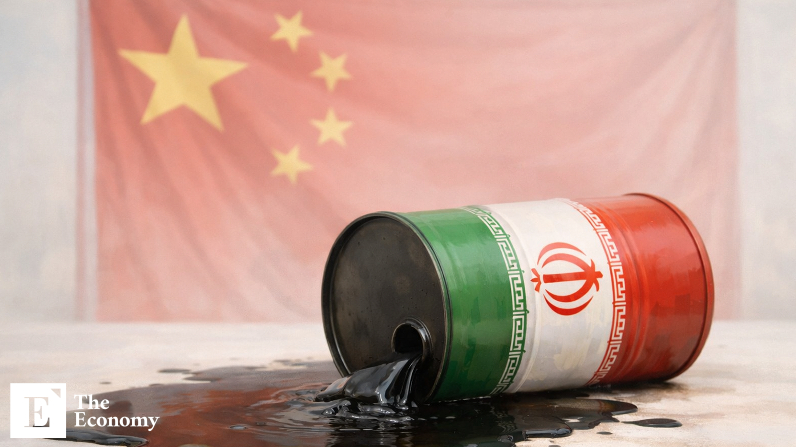
Risk of Losing Iranian Oil Supply
Another major concern is that the collapse of the Iranian regime itself could inflict significant economic damage on China. The country risks losing a key channel for securing low-cost energy supplies from the Middle East. According to data from energy analytics firms Kpler and TankerTrackers, Iran’s average daily crude shipments last year reached as much as 2.13 million barrels per day. This marked the highest level since the Trump administration withdrew from the Joint Comprehensive Plan of Action (JCPOA) in 2018 and reimposed sanctions, and represented an increase of roughly 5 percent compared with 2024.
China’s demand has been the primary driver of the surge in Iranian oil production. As the world’s largest crude importer, China has purchased large volumes of heavily discounted Iranian oil despite Western sanctions, using it as a key engine of economic growth. Data from Kpler show that China purchased more than 80 percent of Iran’s crude exports last year. During the same period, China imported an average of 1.38 million barrels of Iranian oil per day, accounting for about 13.4 percent of the country’s total seaborne crude imports of 10.27 million barrels per day.
The main buyers of Iranian crude in China are the so-called “teapot” refineries located in Shandong province. These independent refiners account for roughly one-quarter of China’s total refining capacity and have long been attracted by steep discounts on Iranian oil. The crude purchased by these refiners is reportedly labeled by traders as originating from major transshipment hubs such as Malaysia or Indonesia. In fact, Chinese customs data have recorded no crude shipments originating from Iran since July 2022.
Similar Post