"Cutting Arms Imports, Expanding Military Spending" China’s Drive for Military Self-Reliance Heightens Tensions Across Asia and Oceania, While Doubts Over Chinese Weapons Performance Persist

Authored On
Modified
China’s Push for Military Self-Reliance Gains Momentum, Arms Imports Contract Sharply
Asia and Oceania Accelerate Rearmament
Chinese-Made Weapons Remain Mired in Combat-Performance Controversies, Sustaining Doubts Over Military Capabilities
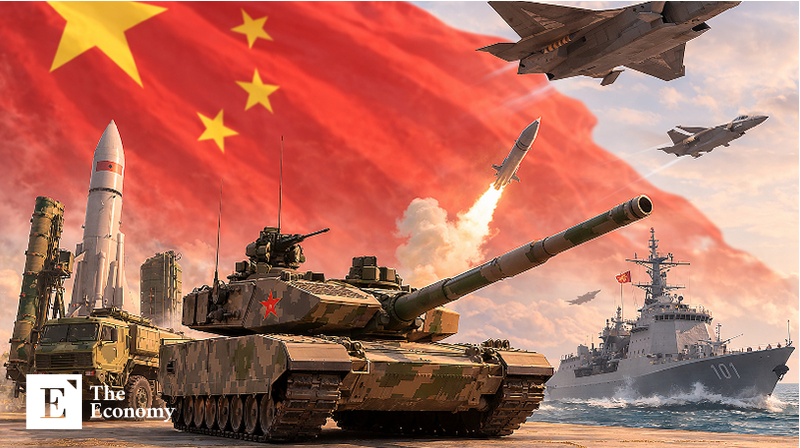
China is accelerating its push for military self-reliance. As its indigenous weapons-production capabilities strengthen, arms imports are falling while defense spending continues to rise. In response, countries across Asia and Oceania are steadily expanding their military outlays and moving to build countervailing defense frameworks. Yet skepticism over China’s military capabilities remains firmly entrenched, given the long list of cases in which Chinese-made weapons failed to perform as intended in actual combat.
China Moves to Bolster Indigenous Military Power
According to a report released on March 12 by the Stockholm International Peace Research Institute (SIPRI), China’s arms imports in 2021–2025 plunged 72% from the previous five-year period of 2016–2020. As a result, China fell to 21st place among the world’s major arms importers. It marks the first time since 1991–1995 that China has dropped out of the top 10 arms importers.
SIPRI assessed that China’s import contraction stemmed from its expanding development of weapons systems based on domestic technology. China is rapidly reducing its dependence on Russia, historically a key supplier of major weapons systems, in core military equipment fields including helicopters and aircraft engines, while ramping up domestic production at speed. Russia still accounts for 66% of China’s imported weapons, but its export capacity has diminished since the outbreak of the war in Ukraine as Moscow has prioritized domestic defense manufacturing.
Having reduced arms imports, China is now seeking to expand its military strength through massive investment in military modernization. Zhang Youxia, vice chairman of the Chinese Communist Party’s Central Military Commission, stressed in March last year the need to reinforce integrated operational capabilities and to lay the groundwork for national defense and military modernization during the 15th Five-Year Plan period of 2026–2030. In line with that policy direction, China’s defense budget for this year was expanded 7% from a year earlier to about $277.7 billion. The country has now maintained annual growth in the 7% range for five consecutive years since 2022.
Asia and Oceania Begin Their Response
Countries across Asia and Oceania are stepping up military expansion in response to China’s growing military strength. According to the SIPRI report, Japan’s arms imports in 2021–2025 rose 76% from the previous five-year period, while next year’s defense budget has been set at a record-high roughly $56.8 billion and is currently under deliberation in parliament. The report said Japan’s Ministry of Defense is accelerating efforts to build counterstrike capabilities as the security environment surrounding the country deteriorates rapidly, driven in part by the increase in Chinese military activity.
Over the same period, India accounted for 8.2% of global arms imports, ranking second in the world behind Ukraine. SIPRI concluded that India’s large-scale arms imports were rooted in tensions with China and Pakistan. India, China and Pakistan have in fact continued to cycle through a string of conflicts, ranging from sporadic clashes along the India-China border to the armed confrontation between India and Pakistan that broke out in May last year. India’s total arms imports during the period, however, still declined 4%. That decline is being read as a signal that India’s own weapons design and manufacturing capabilities are improving, lowering its dependence on foreign arms.
Taiwan also expanded arms imports by 54% to counter China’s threat of forcible unification. Although it ranked only 34th globally with a 0.8% share of worldwide imports, Taipei is concentrating on building deterrence through asymmetric capabilities. In that regard, Liang Wen-chieh, deputy minister and spokesperson of Taiwan’s Mainland Affairs Council, said in November last year that “China’s annual defense spending is 11 times that of Taiwan,” adding that “many international think tanks and scholars have questioned China’s official figures, and when converted on a purchasing power parity basis, it may already have surpassed the United States.” He also stressed that “we cannot keep pace at the same speed, but we must not stop striving to narrow the gap as much as possible.”
The Underwhelming Performance of Chinese Weapons
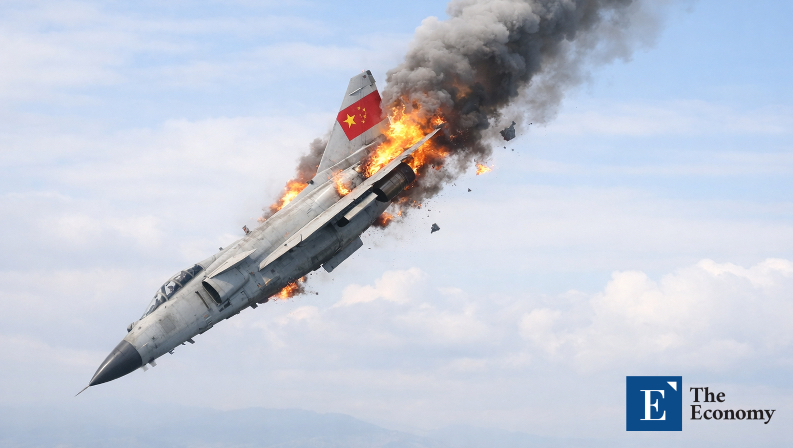
Even so, doubts over China’s march toward military self-reliance have not fully dissipated in some quarters. Much of that stems from the collapse in international confidence in Chinese-made weapons. Chinese weapons have become a byword for uncertainty across real-world battlefields. In December last year, during a border conflict between Thailand and Cambodia, the barrel of a Chinese-made VT4 tank exploded in combat, seriously injuring crew members. Chinese frigates exported to Pakistan also suffered persistent problems involving missile targeting and radar operation. Those issues were compounded by engine failures, sharply reducing operational availability.
Chinese-made laser weapons exported to Saudi Arabia also showed a critical flaw: their performance deteriorated sharply in desert conditions. They functioned without issue in laboratory settings, but proved effectively useless in actual combat environments. Post-sale support has also remained inadequate. Chinese trainer aircraft introduced in Bangladesh were involved in multiple crashes, one of which caused numerous civilian casualties. The cause of the crash was traced to recurring component defects and assembly-quality problems. Chinese drones acquired by Iraq faced a similar fate. Multiple aircraft crashed, while the remaining units were left idle because of parts shortages.
Even during the recent U.S. military operation against Venezuela, questions were raised over the effectiveness of Russian- and Chinese-made air defense systems. Venezuela is widely regarded as the Latin American country that has purchased the largest volume of weapons from Russia and China. According to reports published in January by military analysis outlets Breaking Defense and Defense Express, Russia’s S-300VM and Buk-M2 surface-to-air missile systems, along with China’s JYL-1 and JY-27 radars, may have lost their operational functionality in the early phase of the campaign due to the combined application of U.S. electronic warfare and cyber warfare. If that assessment is correct, those weapons and systems were effectively neutralized before they could perform any meaningful battlefield role.
Similar Post