[Hormuz Deployment] Backing an Ally Could Mean Confronting the Entire Middle East? Israel Factor Blocks Military Support

Authored On
Modified
Hezbollah’s Entry Expands the Scope of the Conflict
Military Involvement Risks Deteriorating Relations with the Middle East
Participation Could Extend Into U.S.–China Rivalry
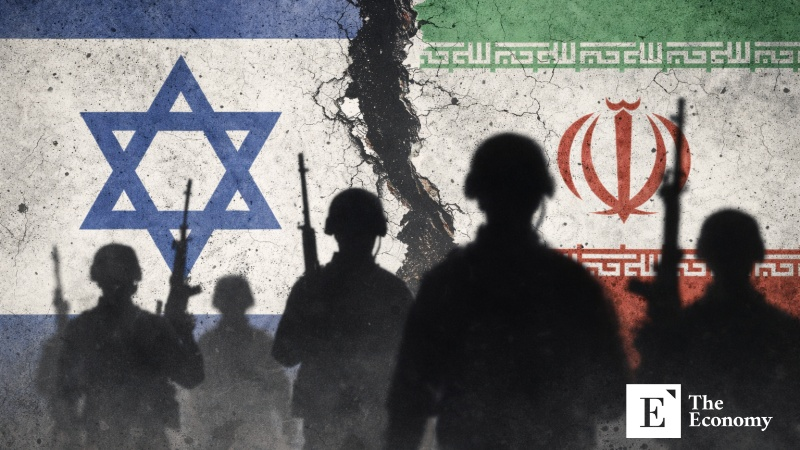
As U.S. President Donald Trump intensifies pressure on allies including Korea and Japan to provide military support in the Middle East conflict, most countries have maintained a restrained stance, drawing attention to the underlying reasons. While tensions in the Strait of Hormuz may appear to center on a confrontation between the United States and Iran, the actual core of the battlefield has shifted toward a proxy conflict between Israel and Iran.
As a result, military involvement by other countries risks being interpreted as direct support for a particular side. Combined with widespread anti-Israel sentiment across the Arab world and strategic competition involving China, major powers face increasing difficulty in making military commitments.
Signs of Escalation Into a Broader Middle East Conflict
On the 16th (local time), Israel’s Ministry of Defense announced the launch of a ground operation in southern Lebanon. The region, bordering northern Israel, is widely regarded as a base of operations for Hezbollah, the Iran-backed Shiite militant group that is part of the so-called “Axis of Resistance.” Hezbollah declared its participation in the conflict on the 2nd of this month following the death of Iran’s Supreme Leader Ayatollah Ali Khamenei in an Israeli airstrike. Israel’s Ministry of Defense stated that “residents of Lebanon will not be able to return to the area until the threat from Hezbollah is completely eliminated,” adding that “operations are being conducted with a prolonged campaign in mind.”
Hezbollah is estimated to have a force of around 60,000 fighters and possesses approximately 10,000 weapons, including ballistic missiles, drones, and rockets. Based on these capabilities, Hezbollah carried out a large-scale drone attack on Israel last week. In response to hundreds of incoming drones, Israel launched operations focused on the “complete destruction” of the adversary. Israel Defense Forces spokesperson Lt. Col. Nadav Shoshani stated that “Hezbollah is seeking to expand its operations in Lebanon” and that “hundreds of fighters from its elite Radwan unit are expected to be deployed.” This indicates that the conflict has evolved beyond state-to-state confrontation into a multilayered engagement involving non-state armed groups.
Israel’s military strategy is also unfolding under the premise of expanding multiple fronts. Defense Minister Israel Katz indicated that the current operation would proceed in a manner similar to military campaigns in Gaza. Israel already controls more than half of Gaza and has deployed troops in parts of Syria and the West Bank. The decision to deploy ground forces into southern Lebanon reflects the assessment that airpower alone is insufficient to eliminate entrenched militant groups such as Hezbollah. Israel attempted a similar approach in Lebanon in 1982 but failed to achieve its objectives.
On the ground, the conflict is increasingly resembling a prolonged war of attrition. Even in the third week of the war, Hezbollah has maintained its operational capabilities, launching more than 200 rockets and missiles and continuing daily attacks involving dozens of projectiles since the 16th. This effectively nullifies the ceasefire agreement between Israel and Lebanon reached in November 2024 (reference timing based on the original article). Israel, in turn, has expanded its airstrikes beyond southern Beirut suburbs to include urban centers and coastal tourist areas. These developments indicate that the central axis of the conflict has shifted away from a U.S.–Iran confrontation toward a proxy war between Israel and Iran.
Rising Burden of Aligning With Israel
This dynamic explains why U.S. allies asked to provide military support have adopted a cautious stance. Participation could be perceived as siding with Israel, which is widely regarded as an adversary across much of the Arab world. Since its founding in 1948, Israel has fought multiple wars with Egypt, Jordan, Syria, and Lebanon over the Palestinian issue. Although peace treaties were signed with Egypt in 1979 and Jordan in 1994, relations with many Arab states remain strained.
The relationship between Iran and Israel is central to understanding the current conflict. Prior to the 1979 Islamic Revolution, the two countries maintained close cooperation, including oil trade and military collaboration. However, after the revolution, Iran’s Supreme Leader Ruhollah Khomeini severed all official ties, labeling Israel as “an enemy of Islam” and “a small Satan dependent on the great Satan, the United States.” Since then, Iran has supported armed groups such as Hezbollah and Hamas, while Israel has continued efforts to counter Iran’s nuclear and military activities.
The Gaza war that began in October 2023 further deteriorated relations between Israel and the Arab world. As civilian casualties in Palestine increased due to Israeli military operations, anti-Israel sentiment intensified across the region, accompanied by diplomatic responses. Jordan recalled its ambassador to Israel in protest, while Egypt warned through official channels that “the influx of Gaza residents could jeopardize a peace treaty that has been maintained for decades.” Israeli ambassadors stationed in Bahrain, Morocco, and Egypt also returned home.
Changes in relations with the United Arab Emirates (UAE) underscore the economic implications. In 2022, prior to the Gaza war, UAE–Israel trade reached $2.5 billion, but public opinion and diplomatic conditions deteriorated rapidly afterward. UAE Ambassador to the United Nations Lana Nusseibeh sharply criticized Israel’s actions in Gaza at the International Court of Justice, stating that “all Arab leaders must reconsider how they respond to Israel.” This broader regional sentiment imposes direct constraints on countries concerned about damaging diplomatic and economic ties with Middle Eastern nations.
China Adopts a Wait-and-See Strategy
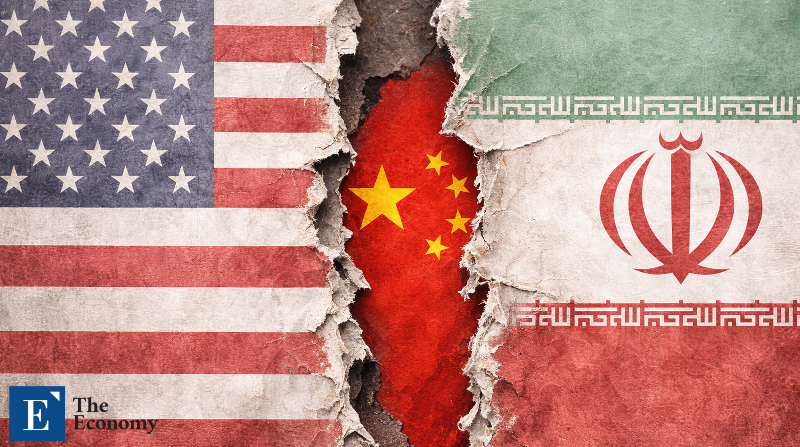
China’s position is another key factor. Beijing has expanded its influence in the Middle East through its relationship with Iran, exemplified by its mediation of the normalization of ties between Saudi Arabia and Iran in March 2023. This development, which restored relations between leading Sunni and Shia powers, marked a major diplomatic turning point in the region. At the same time, China purchases roughly 90% of Iran’s oil exports and has reportedly provided technical support in the development of Iran’s nuclear facilities. These military and economic ties extend beyond cooperation into strategic alignment.
As a result, U.S. allies cannot view potential naval deployments to the Strait of Hormuz solely within the context of a Middle East conflict. Any intervention against Iran risks directly clashing with China’s strategic interests. In this context, China has refrained from military involvement while signaling its stance diplomatically, stating that “military means will not bring peace,” a comment widely interpreted as indirect criticism of U.S. actions. This reflects an approach aimed at securing strategic advantages without direct engagement and suggests that allied military participation could be drawn into broader U.S.–China competition.
Experts assess that China is willing to tolerate a certain level of disruption if it contributes to weakening U.S. global leadership. Michael Cunningham, a senior fellow at the Stimson Center, noted that “China is also facing difficulties from energy supply disruptions, but it believes it can endure instability longer than the United States.” This implies that Beijing has limited incentive to stabilize the situation in the near term. Consequently, the range of options available to U.S. allies becomes even narrower. If they yield to U.S. pressure and engage militarily, they risk simultaneously provoking tensions with China, which maintains close ties with Iran.
Similar Post