Germany Opens a $124 Billion ‘Security Wallet,’ Sending Valuations Higher for the Country’s Big Three Defense Contractors

Matthew Reuter is a senior economic correspondent at The Economy, where he covers global financial markets, emerging technologies, and cross-border trade dynamics. With over a decade of experience reporting from major financial hubs—including London, New York, and Hong Kong—Matthew has developed a reputation for breaking complex economic stories into sharp, accessible narratives. Before joining The Economy, he worked at a leading European financial daily, where his investigative reporting on post-crisis banking reforms earned him recognition from the European Press Association. A graduate of the London School of Economics, Matthew holds dual degrees in economics and international relations. He is particularly interested in how data science and AI are reshaping market analysis and policymaking, often blending quantitative insights into his articles. Outside journalism, Matthew frequently moderates panels at global finance summits and guest lectures on financial journalism at top universities.
Authored On
Modified
Defense Budget Expansion Driven by Security Paradigm Shift
Massive Procurement Orders Directly Translate into Backlogs for Defense ‘Big Three’
Expectation of Rapid Structural Upgrading Across Germany’s Industrial Ecosystem
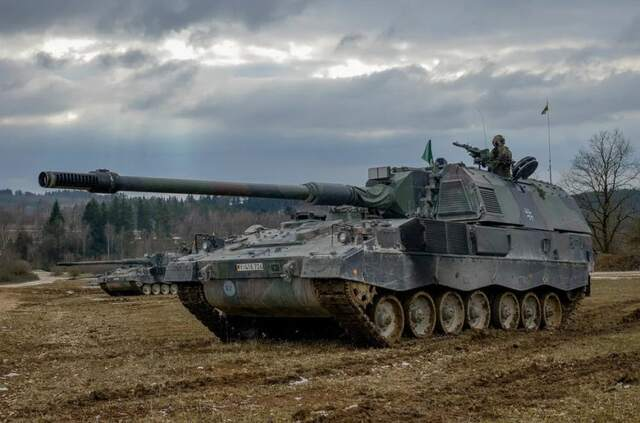
The combined order backlog of Germany’s defense ‘Big Three’ has surpassed USD 161 billion, securing at least eight years’ worth of work. The German government’s aggressive military expansion is translating directly into large-scale contracts, accelerating both production capacity expansion and industrial restructuring. This trajectory is emerging as a central driver reshaping supply chains and manufacturing structures across the broader German economy.
Rheinmetall·KNDS·TKMS Post Record Financial Performance
According to the Stockholm International Peace Research Institute (SIPRI) on the 17th (local time), Germany’s three major defense firms—Rheinmetall, KNDS, and TKMS (Thyssenkrupp Marine Systems)—are recording historic financial performance as key beneficiaries of a shifting geopolitical era. Rheinmetall, Germany’s largest defense contractor, saw revenue surge from EUR 6.41 billion (USD 7.05 billion) and operating profit of EUR 750 million (USD 830 million) in 2022 to revenue of EUR 9.75 billion (USD 10.73 billion) and operating profit of EUR 1.48 billion (USD 1.63 billion) in 2024. Preliminary results for 2025 project revenue of EUR 12.7 billion (USD 13.97 billion) and operating profit approaching EUR 2 billion (USD 2.2 billion). Its order backlog, in particular, expanded nearly threefold within three years—from EUR 26.6 billion to EUR 80 billion (USD 88 billion)—equivalent to roughly eight years of workload.
KNDS, which is likely to be listed on the Frankfurt and Paris stock exchanges within the year, recorded revenue of EUR 3.17 billion (USD 3.49 billion) and operating profit of EUR 390 million (USD 430 million) in 2022, rising to revenue of EUR 3.8 billion (USD 4.18 billion) and operating profit of EUR 500 million (USD 550 million) in 2024. Last year’s revenue is estimated at EUR 4.5 billion (USD 4.95 billion), with operating profit exceeding EUR 500 million. With concentrated demand from joint European procurement projects such as the Leopard 2A8, its order backlog expanded from EUR 15.1 billion to over EUR 25 billion (USD 27.5 billion) by 2025.
TKMS, currently competing with Hanwha Ocean in Canada with its Type 212 submarines, has also achieved a turnaround in performance. Revenue rose from EUR 1.8 billion (USD 1.98 billion) and operating profit of EUR 60 million (USD 66 million) in 2022 to EUR 2.2 billion (USD 2.42 billion) and EUR 130 million (USD 143 million) in 2024. Supported by steady submarine orders, its backlog expanded by more than 60%, from EUR 11.6 billion (USD 12.8 billion) in 2023 to EUR 18.7 billion (USD 20.6 billion) in 2025. On the back of this performance improvement, TKMS was listed on the Frankfurt Stock Exchange in October last year.
Germany Accelerates Rearmament, Defense Spending to Reach 3.5% of GDP
The strong performance of German defense firms reflects a direct transmission of the government’s sharply increased defense spending into large-scale procurement contracts. For roughly 80 years after World War II, Germany maintained a cautious stance toward military expansion, constrained by historical burdens as a former aggressor state and under the security umbrella of the United States. This posture shifted decisively following Russia’s full-scale invasion of Ukraine in February 2022. Then-Chancellor Olaf Scholz of the center-left Social Democratic Party (SPD) declared in a parliamentary speech three days after the outbreak of war that “Russia’s invasion marks a turning point (Zeitenwende) in European history,” announcing a special fund of EUR 100 billion (USD 110 billion) for military reform.
Germany’s march toward rearmament is accelerating further under the Friedrich Merz era. According to the federal government’s 2026 defense budget plan (Einzelplan 14), Germany has allocated EUR 108 billion (USD 118.8 billion) to defense—the largest figure since World War II. In March last year, the government amended the Basic Law (constitution) to remove the debt brake restriction on defense spending, which had capped fiscal deficits at 0.35% of GDP. This effectively enables unlimited defense expenditure and exempts infrastructure investment funds totaling EUR 500 billion (USD 550 billion) from debt constraints. Under current plans, Germany’s core defense spending is projected to rise from 2.4% of GDP in 2025 to approximately 3.5% by 2029. The government has signaled its intention to rebuild the military by mobilizing more than EUR 500 billion in defense funding, even through debt financing if necessary.
Germany’s defense budget framework consists of the regular federal budget (Einzelplan 14) and a special military fund (Sondervermögen). Within the regular budget alone, EUR 38.133 billion (USD 41.9 billion) has been allocated for weapons procurement—a more than 72% increase from the previous year. This reflects the concentration of large-scale production projects such as the Leopard 2A8, ammunition, and Type 212CD submarines between this year and next. An additional EUR 25.51 billion (USD 28.06 billion) will be injected from the special fund established for military expansion. The total effective defense capability enhancement budget for procurement and development reaches EUR 64 billion (USD 70.4 billion), approximately 4.6 times larger than South Korea’s 2026 defense enhancement budget of around USD 15.4 billion.
‘Return of the Bundeswehr’ Backed by Astronomical Procurement Support
Germany is also detailing procurement plans for key weapons systems in parallel with its expanded defense budget. The country is strengthening traditional capabilities centered on armored and artillery forces by expanding the acquisition of self-propelled howitzers, armored vehicles, and tanks, while simultaneously increasing ammunition production capacity and modernizing logistics systems. Notably, the European Sky Shield Initiative (ESSI), led by European nations, is emerging as a flagship project aimed at building a multilayered air defense network. With participation from multiple European countries, the initiative focuses on establishing a ground-based integrated air and missile defense system, generating broad demand across missiles, radar, and command-and-control systems.
Simultaneously, demand is rising across multiple areas, including ammunition production expansion, maintenance and overhaul of armored equipment, and procurement of advanced combat gear. Fiscal investment in defense infrastructure and logistics systems is also increasing. These investments are extending beyond military facilities to drive expansion of production capacity and the maintenance, repair, and overhaul (MRO) market, acting as a key catalyst for restructuring Germany’s defense supply chain.
These trends are already materializing on the production front. Rheinmetall and KNDS are reportedly expanding production lines for tanks, self-propelled artillery, and ammunition. Leopard 2 tank production is transitioning from a “craft-based” output of one to two units per month toward a smart factory model targeting more than 200 units annually, while 155mm shell production is expected to scale to hundreds of thousands of units per year within a few years. In the submarine sector, TKMS is rapidly increasing its backlog, positioning itself for renewed growth.
A critical factor lies in Germany’s industrial structure as a traditional manufacturing powerhouse in sectors such as automotive and shipbuilding. The country possesses the capability to rapidly maximize production by repurposing existing automotive production lines for defense manufacturing and leveraging a highly skilled workforce. Rheinmetall is also reportedly considering acquiring a Volkswagen plant in Germany to convert it into a defense production facility, reflecting a strategy aimed at simultaneously advancing industrial restructuring and defense expansion. Infrastructure and manufacturing sectors are also expected to rebound, with EUR 500 billion (USD 550 billion) in infrastructure investment driving modernization of Germany’s aging roads, railways, and energy networks, thereby generating new demand across construction and manufacturing.
According to NATO’s annual report, Germany’s defense spending in 2024 was allocated across operations and maintenance (38.6%), personnel (29.6%), major equipment including R&D (28.6%), and infrastructure (3.2%). While the share of personnel costs has steadily declined since the suspension of conscription in 2011, equipment spending has been rising in the wake of the Russia-Ukraine war. With increased defense budgets, surging demand for weapons, and continued technological development, equipment expenditure by the German Ministry of Defense is expected to maintain an upward trajectory through 2029. However, concerns are also emerging that rising defense spending could impose a fiscal burden. Germany’s government debt ratio is projected to increase from the current 65–66% of GDP to around 70% by 2029. Although still lower than that of countries such as France and Italy, concerns are growing within Germany—where fiscal discipline remains a priority—that the burden could be passed on to future generations.
Matthew Reuter is a senior economic correspondent at The Economy, where he covers global financial markets, emerging technologies, and cross-border trade dynamics. With over a decade of experience reporting from major financial hubs—including London, New York, and Hong Kong—Matthew has developed a reputation for breaking complex economic stories into sharp, accessible narratives. Before joining The Economy, he worked at a leading European financial daily, where his investigative reporting on post-crisis banking reforms earned him recognition from the European Press Association. A graduate of the London School of Economics, Matthew holds dual degrees in economics and international relations. He is particularly interested in how data science and AI are reshaping market analysis and policymaking, often blending quantitative insights into his articles. Outside journalism, Matthew frequently moderates panels at global finance summits and guest lectures on financial journalism at top universities.
Similar Post