“China Will Prioritize Domestic Farmers” — Beijing Halts Fertilizer Exports Amid Middle East War, Reviving Fears of Resource Weaponization

As one of the youngest members of the team, Tyler Hansbrough is a rising star in financial journalism. His fresh perspective and analytical approach bring a modern edge to business reporting. Whether he’s covering stock market trends or dissecting corporate earnings, his sharp insights resonate with the new generation of investors.
Authored On
Modified
China moves to restrict fertilizer exports amid Middle East-driven raw material supply shock
Global fertilizer market faces severe disruption, with some warning of renewed resource weaponization
Global supply chains remain at China’s mercy, with numerous critical minerals also under its sway
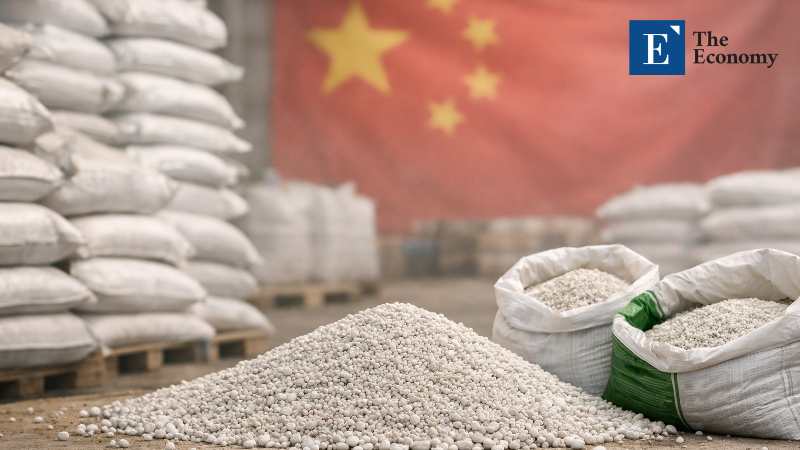
China, a pivotal pillar of the global fertilizer supply chain, is restricting fertilizer exports. With the Strait of Hormuz—an indispensable shipping artery for fertilizer feedstocks—effectively sealed off following U.S.-Israeli strikes on Iran, Beijing has moved to secure domestic supply in an effort to shield its own farming sector. Market observers note that China has previously weaponized a range of strategic resources, including diammonium phosphate (DAP), urea, and critical minerals, raising concerns that the latest measure may carry a similar character.
China’s Fertilizer Export Controls
According to Vietnamese outlet CafeVN on the 17th local time, the Chinese government has recently all but halted overseas shipments of compound fertilizers containing nitrogen and potash. The move places renewed constraints on the availability of Chinese fertilizers, following earlier export restrictions on urea. The measure is widely interpreted as an attempt to prioritize domestic farmers’ fertilizer demand at a time when the supply of key fertilizer raw materials has been destabilized by the fallout from U.S.-Israeli strikes on Iran.
The Middle East war is directly affecting China’s fertilizer supply chain because major nitrogen fertilizer producers—including Qatar, Iran, and Saudi Arabia—are heavily concentrated in the region. The Middle East is also a major source of sulfur, another critical fertilizer input. A substantial share of fertilizers and feedstocks produced there is transported to global markets through the Strait of Hormuz. With Iran having effectively closed off the waterway at this point, fertilizer-related cargo stranded near the Gulf and unable to depart is reportedly estimated at 1.1 million tons.
China is fundamentally a fertilizer exporter, yet it remains significantly dependent on the Middle East for inputs such as sulfur. A blockade of the Strait of Hormuz therefore translates directly into disruption across China’s fertilizer supply chain. In practice, major Chinese fertilizer plants that have failed to secure feedstocks on schedule now face the prospect of cutting operating rates or temporarily shutting facilities. Some Chinese farms are also reportedly considering delaying planting schedules or reducing cultivated acreage after failing to secure sufficient fertilizer supplies.
Global Fertilizer Supply Chain on Alert
The deeper concern lies in the scale of the aftershock that China’s export curbs could unleash. As of 2024, China’s total fertilizer exports stood at USD 8.5 billion, ranking second in the world. A sharp contraction in Chinese export volumes would immediately intensify the burden on farmers across the Northern Hemisphere, many of whom are approaching the spring planting season. Supply instability is expected to spread particularly rapidly across Asian and emerging markets with high dependence on Chinese fertilizer. That dynamic carries the risk of raising crop production costs and, ultimately, driving a broader upswing in global food prices.
Against this backdrop, parts of the international community have begun criticizing China’s fertilizer export controls as a form of “resource weaponization.” The charge stems from Beijing’s earlier use of its overwhelming market clout in fertilizers as strategic leverage. DAP stands as the clearest example. In late 2024, China effectively suspended DAP export customs clearance, citing surging raw material costs and the need to stabilize domestic prices. Although partial export resumptions had been expected around April of last year, actual trade normalization failed to materialize due to continued policy controls and tighter inspection procedures. By December of the same year, as price increases and supply shortages worsened, the National Development and Reform Commission (NDRC) reportedly conveyed demands to the industry to halt exports, and a policy line was set to effectively prohibit exports through August this year.
China implemented similar controls on urea during the same period. Beginning in June 2024, Beijing effectively froze customs inspections for urea and then managed the product as a strategic material for roughly a year under a domestic-first principle. Some volumes were released to the market between June and September of last year, yet total exports remained far below the historical average of 5 million tons annually. Even now, China’s urea exports have not fully normalized, and the possibility of additional tightening remains difficult to dismiss.
Mineral Resources Reduced to Strategic Weapons
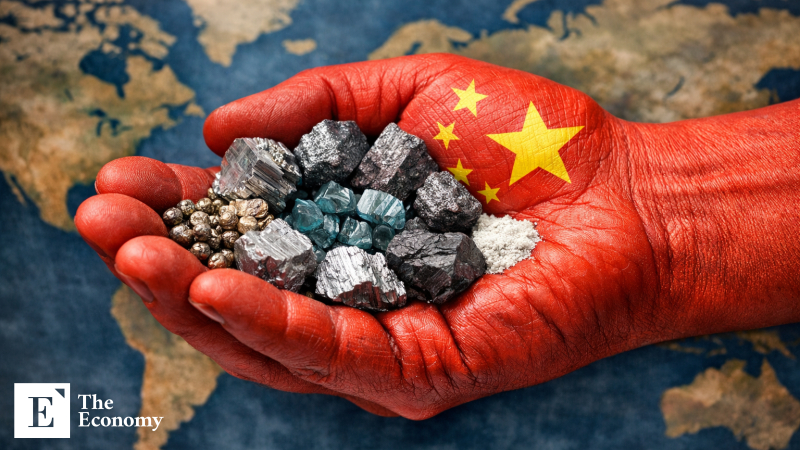
China’s use of its dominant market position to jolt global supply chains has also become a recurring feature well beyond the fertilizer market. Tungsten is a representative case. Used in tank shells, missiles, and other essential defense and advanced industrial applications, tungsten is often referred to as “the second rare earth.” China has long flooded the global market with low-cost tungsten supply, backed by massive extraction volumes and state support. According to U.S. Geological Survey (USGS) data, China accounted for nearly 79% of global tungsten output in 2024, producing 85,000 tons out of the worldwide total.
The issue is that China has been cutting mining quotas and exports since last year, citing environmental protection and deteriorating ore quality. At the same time, demand from the defense industry has surged amid military conflicts erupting across multiple regions, sending tungsten prices sharply higher. According to Fastmarkets, a UK-based commodities research firm, tungsten prices in the international market, measured against the European ammonium paratungstate (APT) benchmark, surpassed a record USD 2,250 per metric ton unit (MTU) on the 15th. The cumulative gain over roughly one year since February last year has reached 557%.
A wide range of other critical minerals is also being deployed as instruments of Chinese resource weaponization. In battery-grade graphite, including anode materials, China controls roughly 80% to 90% of the global supply chain. Precursors, the key intermediate input for cathode materials, are also produced in China at a share of around 80% to 90%, while broader supply chains encompassing nickel, cobalt, and manganese blending and refining are likewise heavily concentrated there. Rare earths, indispensable to advanced industry, present a similar picture. China currently controls 90% of the global rare earth refining and separation market, which produces oxides, and 93% of the permanent magnet manufacturing market, the terminal product in the rare earth value chain. Even rare earths mined outside China are still, in many cases, shipped to China for refining and processing before being supplied back to the rest of the world.
As one of the youngest members of the team, Tyler Hansbrough is a rising star in financial journalism. His fresh perspective and analytical approach bring a modern edge to business reporting. Whether he’s covering stock market trends or dissecting corporate earnings, his sharp insights resonate with the new generation of investors.
Similar Post