Russia’s Oil Market Reopens Amid Middle East Risk, Floating Cargoes Released as Demand Expands

Stefan Schneider brings a dynamic energy to The Economy’s tech desk. With a background in data science, he covers AI, blockchain, and emerging technologies with a skeptical yet open mind. His investigative pieces expose the reality behind tech hype, making him a must-read for business leaders navigating the digital landscape.
Authored On
Modified
U.S. Temporarily Eases Sanctions to Address Oil Prices
Supply Shortages Deepen Despite “Limited Impact” Assessment
Southeast Asia Accelerates Shifts in Energy Procurement Strategies
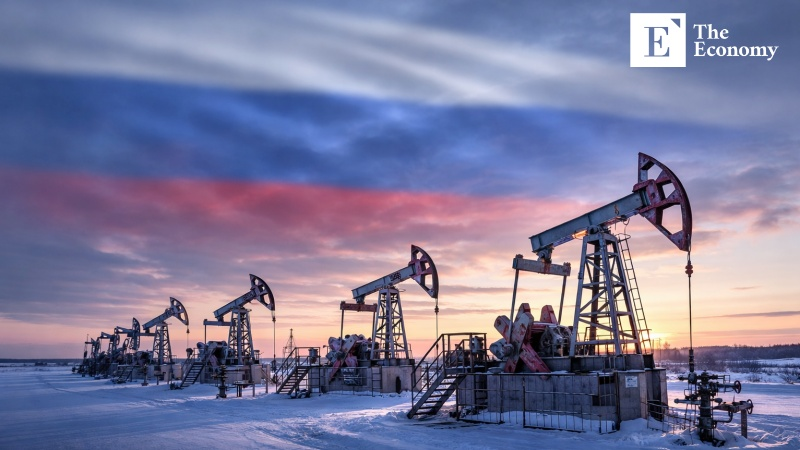
As disruptions to crude supply intensify in the aftermath of the Middle East conflict, Russian oil previously constrained by sanctions has begun to re-enter global markets. With the United States issuing a temporary easing of sanctions limited to cargoes already in transit, trading conditions have shifted, prompting renewed purchase negotiations centered on oil that had already been loaded and remained at sea. Despite skepticism over the effectiveness of the sanctions relief and criticism from some quarters, a growing number of countries are moving to secure Russian crude. In Southeast Asia in particular, efforts to diversify import sources are proceeding in parallel with measures to curb consumption.
Rising Need for Alternative Supply
Russia’s state-run TASS news agency reported that Kremlin spokesperson Dmitry Peskov said during a recent briefing, “Since the easing of U.S. sanctions, many countries have been exploring the possibility of purchasing our oil, and as a result, a broad (crude) market has reopened.” He added that the inflow of Russian oil into global markets would contribute significantly to market stabilization. Earlier, the U.S. Treasury’s Office of Foreign Assets Control (OFAC) issued a new general license permitting the sale of Russian crude oil and petroleum products that had been loaded onto vessels prior to 12:01 a.m. on the 12th, with authorization valid through April 11.
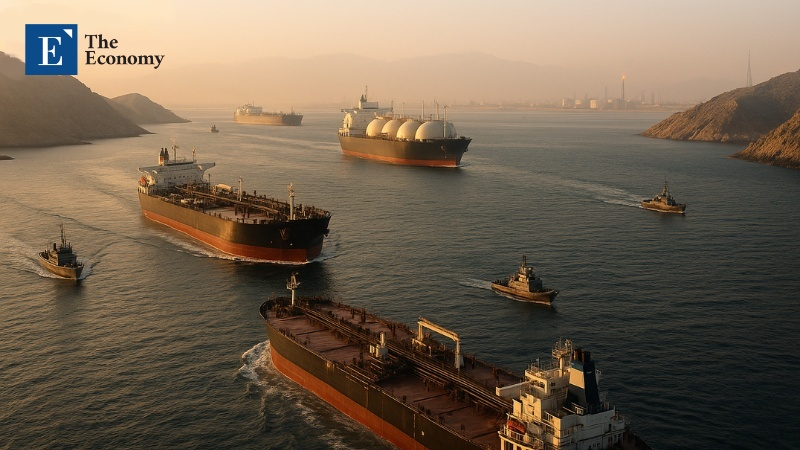
Following the issuance of the license, negotiations targeting cargoes already at sea have continued, establishing conditions for Russian oil to move into actual distribution channels. According to energy analytics firm Kpler, approximately 130 million barrels of Russian crude are currently stranded at sea, of which around 54 million barrels are positioned at key transit points between the Suez Canal and Singapore. These volumes had previously faced trading constraints due to sanctions but have now been reclassified as in-transit inventories following shipment under the revised U.S. measures.
The effects have emerged quickly. Data from the International Energy Agency (IEA) showed that Russia’s exports of crude oil and petroleum products fell to 6.6 million barrels per day in February, marking the lowest level since 2022, but subsequently rebounded. On the demand side, India, which had reduced purchases of Russian crude following tariff negotiations with the Trump administration, expanded imports to 1.8 million barrels per day. As of the 11th of this month, India’s imports of Russian crude stood at 1.5 million barrels per day, nearly 50% higher than levels seen in early February. In addition, Chinese state-owned oil companies such as Sinopec and PetroChina have begun contacting suppliers for additional purchases of Russian crude for the first time since November last year.
The temporary nature of the sanctions exemption is cited as a key limitation. U.S. Treasury Secretary Scott Bessent stated on social media platform X, “We made a bold decision to stabilize global energy markets and keep prices low,” but emphasized that “this measure is narrowly tailored and short-term, applying only to oil already in transit.” He further added, “Since the Russian government derives most of its energy revenue from taxes at the point of extraction, this easing of sanctions is unlikely to provide meaningful fiscal benefits to Russia.”
Escalating Competition Among Major Importers
At the same time, the Trump administration is also considering a temporary waiver of the Jones Act. Enacted in 1920, the Jones Act requires that cargo transported between U.S. ports be carried on U.S.-owned vessels. The U.S. government argues that waiving the law could reduce energy transportation costs and help ease surging oil prices. However, there is considerable skepticism that such measures will be sufficient to stabilize prices. In a recent report, market research firm Jefferies noted, “Historically, emergency measures such as export restrictions, Jones Act waivers, and releases from strategic petroleum reserves have been limited and temporary in nature,” adding that “they have also proven difficult to sustain politically over extended periods.”
Criticism has also mounted over the easing of sanctions on Russian oil. Democratic leadership in the U.S. Senate stated, “The global energy shock triggered by President Trump will deliver substantial benefits to Putin and help fund his war.” They continued, “We are outraged by a decision made at a time when there are allegations that Russia is supporting Iran, which is targeting Americans in the Middle East,” and emphasized, “This is not the time to align with Russia’s major oil companies.” The New York Times likewise pointed out that the move “undermines U.S. efforts to punish Russia for its invasion of Ukraine.”
President Trump appeared to respond to the criticism, stating on Truth Social, “The United States is by far the largest oil producer in the world, and the higher oil prices go, the more money we make.” He added, “As President, my far greater concern and priority is preventing the evil empire of Iran from acquiring nuclear weapons and destroying the Middle East and, ultimately, the world. I will not let that happen.” The remarks are interpreted as addressing both the Middle East situation and the U.S. energy policy response.
Amid these developments, competition to secure Russian crude is intensifying. South Korea has also moved to secure supplies. On the 18th, the Ministry of Trade, Industry and Energy stated that it is exploring the possibility of importing Russian crude oil and naphtha in coordination with companies. At the same time, the government raised its resource security crisis alert level from “interest” to “caution.” With approximately 70% of imported crude entering through the Strait of Hormuz, the effective closure of the route has made supply disruptions unavoidable. The government explained, “We plan to review options such as purchasing crude stored domestically by oil-producing countries or foreign oil companies, as well as releasing 22.46 million barrels from reserves in coordination with the IEA.”
Diverging Pace of Regional Responses
Southeast Asian countries have moved more quickly. On the 16th, Philippine Energy Secretary Raphael Lotilla announced in a statement, “We have conveyed our interest to Russia regarding the possibility of importing oil.” The Philippine National Oil Company (PNOC) is also reported to have engaged with Russian oil firms. However, specific import volumes and contract durations have yet to be finalized, with the Philippines currently awaiting a response from the Russian side. While the Philippine government stated that existing inventories are sufficient to cover demand through at least April, it also acknowledged the need for additional procurement to address supply uncertainties.
Indonesia has also initiated discussions to import Russian crude. Bahlil Lahadalia, Indonesia’s Minister of Energy and Mineral Resources, stated, “All countries are potential (sources of oil supply),” adding, “What matters to us is securing supply.” Indonesia’s crude imports have dropped sharply this month to an average of 23,000 barrels per day, down approximately 78% from 104,000 barrels per day in the previous month, as supply disruptions intensified after the very large crude carrier Pertamina Pride, carrying 2 million barrels of Saudi crude, failed to pass through the Strait of Hormuz. In response, Indonesia is also reviewing plans to procure crude from Brunei, an oil-producing nation on the island of Borneo.
Other Southeast Asian countries are likewise scrambling to respond to supply instability. Vietnam’s Deputy Minister of Industry and Trade Nguyen Hoang Long attended the Energy Security Ministerial Meeting in Tokyo on the 14th, where he met with South Korea’s Minister of Trade, Industry and Energy Kim Jeong-kwan and Japan’s Vice Minister of Economy, Trade and Industry Matsuo Takehiko to request support in securing crude resources.
Thailand, for its part, has halted exports of refined oil products to all countries except Myanmar and Laos since the 6th while simultaneously negotiating imports of Russian crude. Sri Lanka has also implemented a four-day workweek starting on the 17th and introduced fuel rationing measures, limiting automobiles to 15 liters per week and public transportation to a maximum of 200 liters per week. These cases illustrate a regional pattern in which efforts to secure crude supplies are unfolding alongside measures to restrict consumption.
Stefan Schneider brings a dynamic energy to The Economy’s tech desk. With a background in data science, he covers AI, blockchain, and emerging technologies with a skeptical yet open mind. His investigative pieces expose the reality behind tech hype, making him a must-read for business leaders navigating the digital landscape.
Similar Post