China’s Belt and Road Initiative Gains Strategic Weight, Emerging as a Tool to Reinforce Energy Security and Supply Chain Dominance

Oliver Griffin is a policy and tech reporter at The Economy, focusing on the intersection of artificial intelligence, government regulation, and macroeconomic strategy. Based in Dublin, Oliver has reported extensively on European Union policy shifts and their ripple effects across global markets. Prior to joining The Economy, he covered technology policy for an international think tank, producing research cited by major institutions, including the OECD and IMF. Oliver studied political economy at Trinity College Dublin and later completed a master’s in data journalism at Columbia University. His reporting blends field interviews with rigorous statistical analysis, offering readers a nuanced understanding of how policy decisions shape industries and everyday lives. Beyond his newsroom work, Oliver contributes op-eds on ethics in AI and has been a guest commentator on BBC World and CNBC Europe.
Authored On
Modified
BRI Investment Shifts from Infrastructure to Energy and Critical Resources
China Offsets Middle East Shock in Short Term Through Energy Self-Sufficiency
Sustained Control over Mineral Supply Chains, Foundation for a ‘Scientific Superpower’
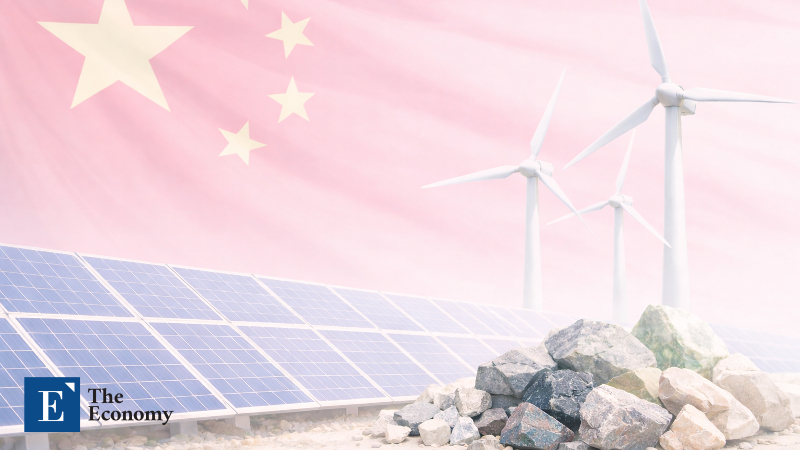
China’s flagship economic corridor initiative, the Belt and Road Initiative (BRI), is undergoing a strategic realignment in its investment focus. Capital that had long been concentrated in traditional infrastructure projects such as roads, bridges, and ports is now rapidly shifting toward strategic sectors, including energy and key mineral resources. This transition reflects a broader effort to minimize external vulnerabilities through energy self-sufficiency while expanding global influence by tightening control over critical material supply chains.
Massive Allocation of BRI Capital into the Energy Sector
According to a recent report released on the 19th (local time) by the Griffith Asia Institute (GAI) in Australia and China’s Fudan University, China’s BRI-related investment and construction contracts reached $213.5 billion last year, marking the highest level since President Xi Jinping first proposed the initiative in 2013. The energy sector accounted for the largest share, representing 40% of total investment. Total energy investment stood at $93.9 billion, of which $71.5 billion was directed toward oil and gas. Investment in renewable energy projects, including wind and solar, also reached a record $18 billion.
China’s shift in BRI investment priorities is widely interpreted as a measure to strengthen energy security. The country has consistently emphasized energy independence, steadily expanding alternative power sources such as solar, wind, hydropower, and nuclear energy. As of last year, China’s installed renewable energy capacity reached 2,304 gigawatts (GW), up 24% from the previous year, accounting for approximately 60% of total power generation capacity. Amid this expansion of renewable energy utilization, China’s demand for refined oil products, gasoline, and diesel has declined for two consecutive years through last year.
Domestic coal production capacity also remains firmly intact. China produces more than half of the world’s coal and relies on it for the majority of its power generation fuel. Oil and gas account for only about one-quarter of total energy consumption. In addition, the country benefits from a diversified crude oil supply network. Russia remains China’s largest oil supplier, maintaining a share of around 20% despite sanctions from the United States and Europe, thereby weakening the influence of Gulf producers such as Saudi Arabia and Iraq in the Chinese market.
Limited Energy Impact from Wartime Disruptions
These longstanding efforts are proving effective at a time when Iran’s blockade of the Strait of Hormuz has disrupted global oil supply chains. With an energy self-sufficiency rate of approximately 85%, China has been able to absorb short-term oil price shocks. At the same time, it continues to secure Iranian crude via third countries, maintaining wartime supply levels of roughly 1.38 million barrels per day, even as international oil prices fluctuate above $100 per barrel. The Chinese government has also taken preemptive measures to stabilize domestic prices by instructing refiners to temporarily suspend fuel exports.
Strategic petroleum reserves accumulated over years are also providing a critical buffer. Ole Hansen, Head of Commodity Strategy at Saxo Bank, noted that “China has leveraged abundant Gulf supplies to build the world’s largest strategic reserves,” estimating total stockpiles at approximately 900 million barrels, equivalent to about three months of imports. Meanwhile, trade analytics firm Kpler reported that Chinese tankers carrying more than 46 million barrels of Iranian crude are currently waiting in the South China Sea.
However, if the closure of the Strait of Hormuz persists over an extended period, China’s energy security framework is expected to face mounting constraints. Prolonged physical disruption would make it difficult to meet industrial oil demand solely through alternative supply routes and reserves. U.S. military publication War on the Rocks projected that China’s energy security would reach a critical juncture after 90 days, suggesting that Beijing could abandon its passive stance and begin exerting pressure on the United States for a ceasefire around that point.
Concerns are also rising over a prolonged stagnation in oil supply even after the war ends. Middle Eastern producers, having lost export routes due to the blockade, are steadily reducing output. Even if geopolitical risks subside, restoring production facilities and normalizing shipments to pre-war levels will take considerable time. The International Energy Agency (IEA) warned that “it could take weeks to months for production facilities to return to pre-war levels.” Bloomberg also noted that “a second surge in oil prices is likely as countries compete to replenish depleted reserves even after the conflict ends.”
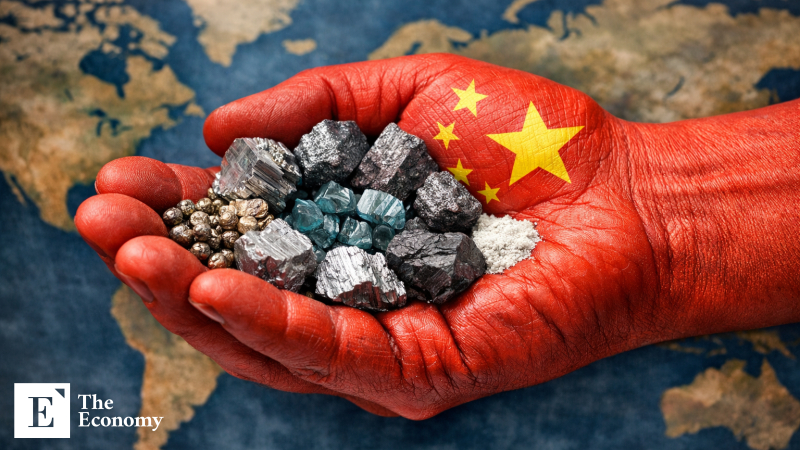
China’s Strategy to Dominate Supply Chains
China is also leveraging the BRI as a tool to secure dominance over global supply chains alongside strengthening energy security. Last year, $32.6 billion was invested in the minerals and metals sector through the BRI, including $15 billion in direct mining investments. These moves are aimed at bolstering production capacity for strategic minerals such as rare earths, lithium, and copper. As core materials for advanced manufacturing, supply disruptions in these resources could trigger widespread industrial shocks.
In parallel, China is building a framework to directly control supply and pricing of key minerals by leveraging its overwhelming market influence. This effort accelerated following the enactment of the Export Control Law in 2020, marking the formalization of resource “weaponization.” A wide range of critical minerals, including gallium and graphite, have been placed under export control. In April last year, amid escalating U.S.-China trade tensions, China also imposed restrictions on seven heavy rare earth elements, including samarium, gadolinium, terbium, and dysprosium. Since this year, export controls have expanded to silver, a critical material used across advanced industries such as solar energy, electric vehicles, and aerospace.
Enforcement is also becoming increasingly sophisticated. According to a report by the Trade Security Management Institute titled “China’s Export Control Mechanism and Response Strategies,” Chinese customs authorities issued 79 administrative enforcement actions related to export controls in the first half of last year, up 71.7% from 46 cases a year earlier. Graphite and related products accounted for the largest share at 29%, followed by rare minerals and permanent magnet materials at 7% and 6%, respectively.
Securing control over critical mineral supply chains enables China to stabilize the production base of advanced industries while facilitating the reconfiguration of value chains—from raw materials to processing and manufacturing—around its domestic ecosystem. The strategic leverage of monopolized resources as a diplomatic tool also remains a significant factor. In April last year, China restricted rare earth exports, which it overwhelmingly dominates, in retaliation for U.S. tariffs. In November of the same year, following remarks by Japanese Prime Minister Sanae Takaichi suggesting potential intervention in a Taiwan contingency, China further escalated pressure by restricting exports of dual-use civilian and military products to Japan.
Oliver Griffin is a policy and tech reporter at The Economy, focusing on the intersection of artificial intelligence, government regulation, and macroeconomic strategy. Based in Dublin, Oliver has reported extensively on European Union policy shifts and their ripple effects across global markets. Prior to joining The Economy, he covered technology policy for an international think tank, producing research cited by major institutions, including the OECD and IMF. Oliver studied political economy at Trinity College Dublin and later completed a master’s in data journalism at Columbia University. His reporting blends field interviews with rigorous statistical analysis, offering readers a nuanced understanding of how policy decisions shape industries and everyday lives. Beyond his newsroom work, Oliver contributes op-eds on ethics in AI and has been a guest commentator on BBC World and CNBC Europe.
- Previous “Did the Israel Lobby Prevail?” Trump Under Fire for Overlooking Iran’s Proposal and Launching Airstrikes, With His Inexperienced Security and Foreign Policy Judgment Coming Under Scrutiny
- Next War-driven tensions push U.S. Treasury yields sharply higher, with weakening demand shaking markets
Similar Post