“Did the Israel Lobby Prevail?” Trump Under Fire for Overlooking Iran’s Proposal and Launching Airstrikes, With His Inexperienced Security and Foreign Policy Judgment Coming Under Scrutiny

As one of the youngest members of the team, Tyler Hansbrough is a rising star in financial journalism. His fresh perspective and analytical approach bring a modern edge to business reporting. Whether he’s covering stock market trends or dissecting corporate earnings, his sharp insights resonate with the new generation of investors.
Authored On
Modified
The United States and Israel pressed ahead with strikes on Iran despite diplomatic options remaining
“Israel deceived the president,” says Trump loyalist counterterrorism chief as he resigns
Trump accused of scrambling to contain the fallout as global skepticism deepens
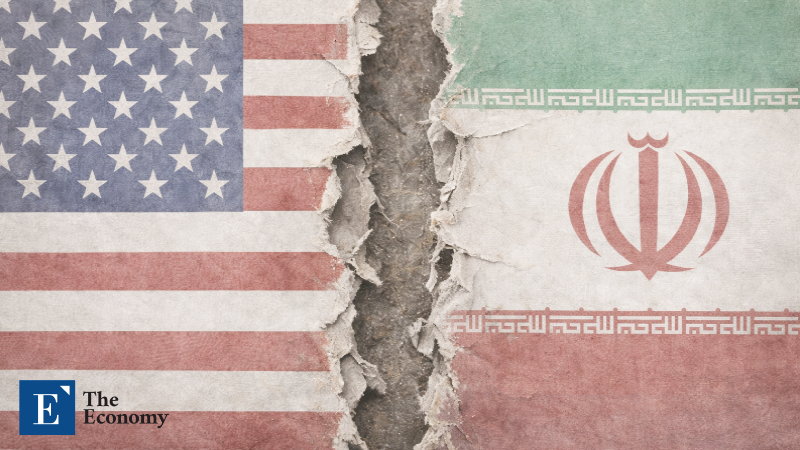
An assessment has emerged suggesting that the United States disregarded Iran’s proposed agreement immediately before the outbreak of war. The argument is that despite Iran presenting a diplomatic path, including a commitment to forgo further stockpiling of highly enriched uranium, the United States and Israel proceeded with airstrikes, setting the war in motion. Against that backdrop, some observers contend that Israeli lobbying served as the effective trigger for the war, while President Donald Trump’s deficient security judgment aggravated the crisis.
Iran’s Pre-War Willingness to Reach an Agreement
According to a report by The Guardian on the 17th, Jonathan Powell, the UK national security adviser who attended the third round of nuclear talks in Geneva on the 26th of last month, described the proposal Iran presented at the time as a “surprising and meaningful step forward.” Iran is said to have indicated its willingness, under International Atomic Energy Agency (IAEA) supervision, to dilute its 440kg stockpile of highly enriched uranium and abandon any additional stockpiling. It was an extraordinary offer to accept a permanent agreement without a “sunset clause,” which had previously served as a stumbling block in negotiations.
Economic inducements were also placed on the table. Iran reportedly signaled that, in exchange for lifting 80% of economic sanctions, it would offer US companies an opportunity to participate in its civilian nuclear program. Mediators at the time viewed the proposal as highly valuable, and the UK actively backed a diplomatic resolution, even assembling a separate advisory team out of concern over the lack of expertise within the US negotiating delegation. Yet the United States and Israel launched a sudden airstrike on the 28th of last month, just two days after the talks, and those British efforts failed to bear fruit.
The British government subsequently argued that the US attack, carried out while diplomatic channels remained viable, was “illegal and premature.” In the early stages of the war, London reportedly refused to allow the United States to use its Diego Garcia air base, granting permission only later for defensive purposes after Iran began attacking Britain’s allies in the Gulf region. More recently, the UK has maintained a lukewarm stance toward President Trump’s request for support in military operations in the Strait of Hormuz, underscoring its caution over deeper involvement.
US Officials Point to Israeli Lobbying
Some observers argue that Israeli lobbying lay behind the decision by the United States and Israel to dismiss Iran’s proposal and opt for a hardline course. That view appears to be based on a letter from Joe Kent, director of the US National Counterterrorism Center (NCTC), which was made public on the 17th. In the letter, Kent declared, “Iran was not a serious and imminent threat to the United States,” adding that he “cannot in good conscience support the ongoing war with Iran.” Kent, who won Senate confirmation in July last year and had overseen counterterrorism and counternarcotics policy, has consistently backed President Trump’s non-interventionist foreign policy since 2016, placing him among the figures regarded within the Republican Party as a “Trump loyalist.”
Kent argued that the current war stemmed from lobbying by the Israeli side. According to him, senior Israeli officials and certain US media outlets shaped public support for war through a disinformation campaign, undermining the America First line and misleading the president into believing Iran posed an “imminent threat.” He stressed that “the argument promising a quick victory was false, and it is the very same tactic Israel used when drawing the United States into the Iraq War,” adding, “I cannot support sending young soldiers into a war that offers no benefit to America and cannot justify the sacrifice.”
Responding to Kent’s claims, President Trump said, “Kent was a good person, but I always thought he was very weak on security issues,” adding, “After reading his statement, I came away thinking it was fortunate that he stepped down.” White House Press Secretary Karoline Leavitt countered that “Kent’s letter is filled with false claims,” insisting that the administration has “strong and compelling evidence” that Iran intended to strike the United States first. She added that “Iran is aggressively expanding its short-range ballistic missile arsenal in conjunction with its naval capabilities and is ultimately seeking to obtain nuclear weapons,” calling Kent’s claim that Trump was acting under foreign influence “offensive and ridiculous” given that negotiation efforts had failed.
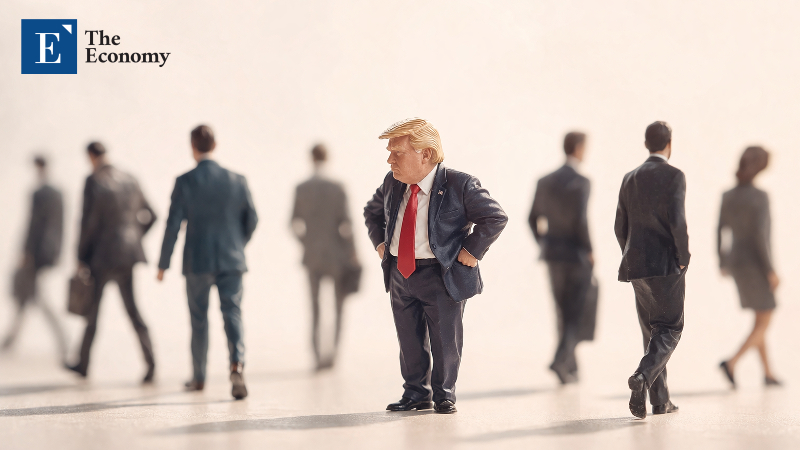
Trump’s ‘Unpredictable’ Conduct
President Trump’s impulsive and poorly grounded foreign and security decision-making is also being cited as a factor that worsened the situation. On the 14th, CNN, citing multiple government sources familiar with the matter, reported that the Pentagon and the National Security Council (NSC) had seriously underestimated the possibility that Iran could close the Strait of Hormuz. The report said Trump and his security team had failed to review the full range of possibilities, allowing the worst-case scenario to unfold. In a separate report the same day, CNN also pointed to the White House’s failure to follow normal wartime preparations in an effort to prevent leaks. It said the NSC had been drastically downsized over the past year and that government-wide views and concerns were not reflected in the decision to strike Iran.
There is also a view that President Trump and his aides have been rattled by the turn of events. A hasty easing of restrictions related to Russian crude stands as a representative example supporting that assessment. On the 12th, US Treasury Secretary Scott Bessent announced a temporary suspension of sanctions on imports of Russian crude. The move was a stopgap measure aimed at stabilizing international oil prices after they surged following the closure of the Strait of Hormuz. The problem is that such a step runs counter to Washington’s professed principles in support of Ukraine and risks provoking strong backlash from European countries. That is why criticism has emerged that the Trump administration is fixated on short-term damage control, without sufficient analysis or preparation.
Washington’s abrupt request for support in military operations also fueled confusion across the globe. On the 14th, President Trump asked South Korea, China, Japan, the UK, and France to dispatch warships to defend the Strait of Hormuz. On the 15th, he also warned NATO that “if member states do not cooperate here” in the military operation in the Strait of Hormuz, they would face a “very bad future.” Even as military clashes escalated following the US-Israeli strikes and extensive damage spread across Gulf states, Trump explicitly referred to “warships,” conveying an apparent indifference to the risk of a wider war. That has fueled growing concern across the international community over whether the president fully grasps the war’s ultimate objectives and the dangers of escalation.
As one of the youngest members of the team, Tyler Hansbrough is a rising star in financial journalism. His fresh perspective and analytical approach bring a modern edge to business reporting. Whether he’s covering stock market trends or dissecting corporate earnings, his sharp insights resonate with the new generation of investors.
Similar Post