Tesla’s Bet on Humanoids Faces Strain as Mass Production Timeline Slips, Cracks Emerge in Market Confidence

Authored On
Modified
Widening gap between early mass-production expectations and reality
Reliance on external suppliers for key components, including AI chips
Core technologies such as precision tasks remain incomplete
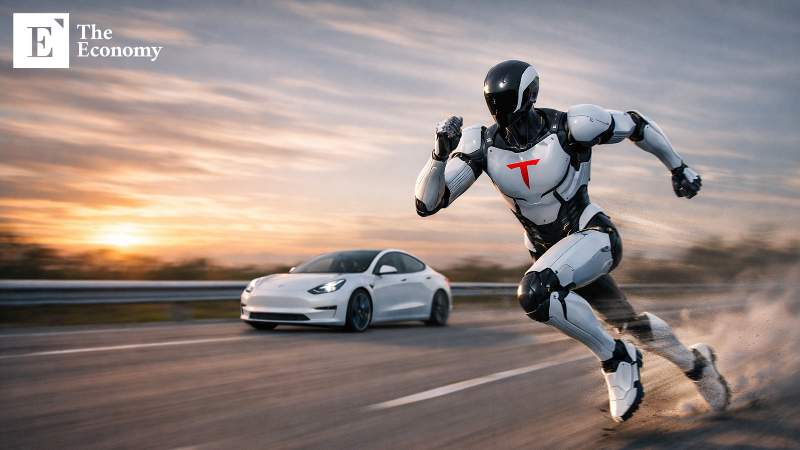
Tesla has positioned its humanoid robot “Optimus” as a next-generation growth engine and unveiled plans for large-scale mass production, but recent signs of delays in the production schedule have raised questions about the feasibility of its long-term roadmap. Amid a series of aggressive targets—including annual production of one million units and significant price reductions—a clear gap has emerged between stated ambitions and the actual pace and timing of mass production. Compounding this, uncertainties surrounding the supply schedule for key semiconductors and issues related to design completeness are increasingly clouding Tesla’s broader new business initiatives.
Possibility of “functional compromise” raised
On the 22nd, U.S. investment-focused outlet Barchart reported that warning signs have emerged for Optimus mass production within the year, putting Tesla’s next-generation growth narrative at risk. The outlet noted that “many investors had bet on Tesla’s future as an ‘AI robotics company,’ but as the likelihood of realization declines, even the trajectory of its stock price has become uncertain.” As supporting evidence, it pointed to deteriorating financial performance. Tesla’s revenue last year fell 3.8% year-over-year to $94.8 billion, while operating profit dropped 38.1% over the same period.
Previously, during its January earnings conference call, Tesla stated that it planned to unveil the third-generation Optimus within the first quarter, emphasizing that the model would be its first mass-produced humanoid robot. The new Optimus was described as having been redesigned from the ground up based on first-principles engineering, with the ability to learn new capabilities by observing human behavior. Tesla also outlined plans to scale humanoid robot production to one million units annually, signaling a business expansion premised on large-scale manufacturing.
CEO Elon Musk further fueled market expectations with a series of statements. Speaking at the World Economic Forum in Davos around the same time, he said that Optimus could potentially be sold to general consumers by 2027 and that the company aims to reduce manufacturing costs from nearly $100,000 per unit to around $20,000 over time through mass production. At a subsequent shareholder meeting, he went as far as to claim that “Optimus could end poverty,” signaling an expansive vision for its potential applications.
However, industry perspectives differ. Barchart asserted that “Tesla may have no choice but to carry out a so-called ‘functional compromise’ by deliberately lowering the robot’s intelligence at the point of mass production for the third-generation Optimus.” To address recurring challenges such as battery consumption and heat generation, the robot may be released as a simplified machine focused on repetitive tasks like moving objects on flat factory floors, rather than performing complex precision work. The outlet added that “while Tesla has promised an innovative android, it is more likely to deliver a high-priced machine with limited capabilities.”
Component supply delays affect business timelines
Supply chain risks, including those related to key semiconductors, are also adding uncertainty to Tesla’s ambitious plans. In particular, delays in the mass production schedule for Samsung Electronics’ 2-nanometer process have emerged as a critical variable, potentially affecting production plans for Tesla’s next-generation AI and autonomous driving chip, AI6. On the 13th, EV-focused publication Electrek reported that “the timeline for AI6 production could be delayed by approximately six months compared to previous expectations,” citing reports that 2-nanometer chip production at Samsung’s Taylor, Texas facility may face delays. As a result, the start of mass production for the third-generation Optimus could be pushed back to around late 2027.
Delays in semiconductor timelines are directly linked to the pace of Tesla’s broader business expansion. AI6 is a core component used in both robotaxis and humanoid robots, meaning that any delay in its mass production would force simultaneous adjustments to the commercialization timelines of both businesses. Tesla is currently restructuring its business model away from traditional electric vehicles toward robotics and autonomous driving, making the timing of securing key semiconductors a prerequisite for executing its overall strategy. This creates a structure in which component supply delays directly translate into delays in business timelines.
Past experience reinforces these concerns. Tesla previously encountered setbacks in the mass production of its earlier-generation AI5 chip. Although the company announced last year that it had completed the AI5 design, it soon reversed that claim, and the timeline for transitioning to the next-generation chip has since been repeatedly postponed. Electrek noted that “Tesla has repeatedly set aggressive timelines for commercializing new semiconductors only to delay them,” describing the pattern as recurring. As the gap between announced timelines and actual production continues to widen, questions are being raised about the credibility of Tesla’s broader new business schedules.
Design complexity and physical constraints come into focus
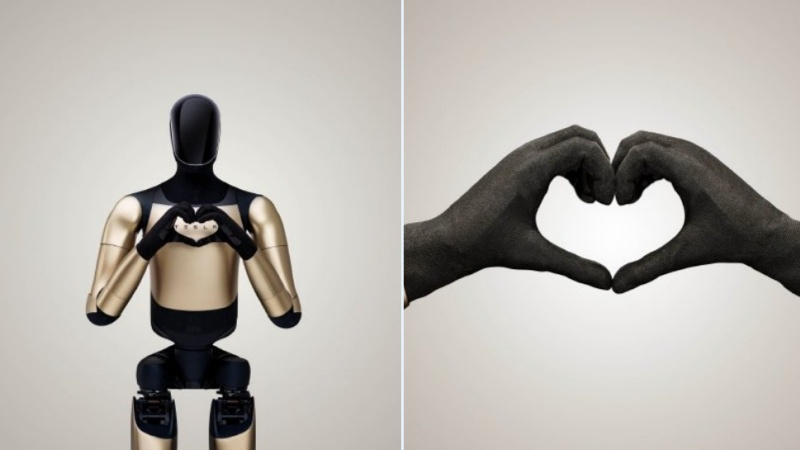
More recently, shortcomings in design and overall technological maturity have also come to light, exposing internal limitations within Tesla. The most immediate bottleneck lies in the hardware complexity required to implement core humanoid movements. Musk himself acknowledged that “the robot hand and forearm are the most difficult engineering challenges.” The human hand consists of a complex structure with more than 27 degrees of freedom, and replicating this in a robot requires achieving both precision and durability within a system comprising over 10,000 components. Unlike the electric vehicle industry, where standardized components and processes have already been established, humanoid robots still lack stable standards for key mechanisms such as hands, arms, and joint actuation systems.
These design challenges are compounded by the immaturity of the component ecosystem. At present, there are effectively no off-the-shelf actuators or power control systems suitable for Optimus. This explains why Tesla has opted to design motors and gearboxes from scratch. The issue, however, is that such an approach does not easily translate into scalable mass production or robust quality verification systems. In the absence of standardized components, any design modification leads directly to changes in production conditions, which in turn disrupt the entire validation process.
Physical constraints imposed by the laws of physics are also evident. Moravec’s paradox, which highlights how tasks simple for humans—such as sitting on a sofa—become computationally complex for robots, underscores why general-purpose humanoids remain a significant challenge. To perform real-time physical computations at a human level, robots generate heat on the order of several kilowatts, and without proper management, rising internal temperatures can lead to structural deformation and operational failures. Battery limitations further compound the issue. A humanoid-sized platform can accommodate a battery capacity of only about 3 kWh, meaning that under high-performance computing and motor operation conditions, actual runtime could fall below one hour.
These limitations are already reflected in production targets and organizational operations. According to internal sources, Tesla produced only a few hundred units of Optimus over the past year, falling far short of its initial target of 10,000 units and revealing manufacturing bottlenecks. The prototypes deployed in factories have reportedly achieved only about half the efficiency of human workers, and warnings are growing that overly aggressive mass production could lead to recall costs and operational disruptions. Adding to these concerns, Milan Kovac, the vice president overseeing the project, abruptly resigned in June last year, further intensifying doubts about the continuity of Tesla’s humanoid mass production plans.
Similar Post