"Trump Has Upended the Established Order" — Global Shift Toward Self-Reliance Gains Momentum, Iran Talks Emerge as Inflection Point for Trumpian Diplomacy

As one of the youngest members of the team, Tyler Hansbrough is a rising star in financial journalism. His fresh perspective and analytical approach bring a modern edge to business reporting. Whether he’s covering stock market trends or dissecting corporate earnings, his sharp insights resonate with the new generation of investors.
Authored On
Modified
Canadian Prime Minister Mark Carney reiterates opposition to the Trump administration
Global community distances itself from the U.S., accelerating self-reliance strategies
Trump’s hardline, unilateral diplomacy places U.S.-Iran ceasefire talks at the center of geopolitical recalibration
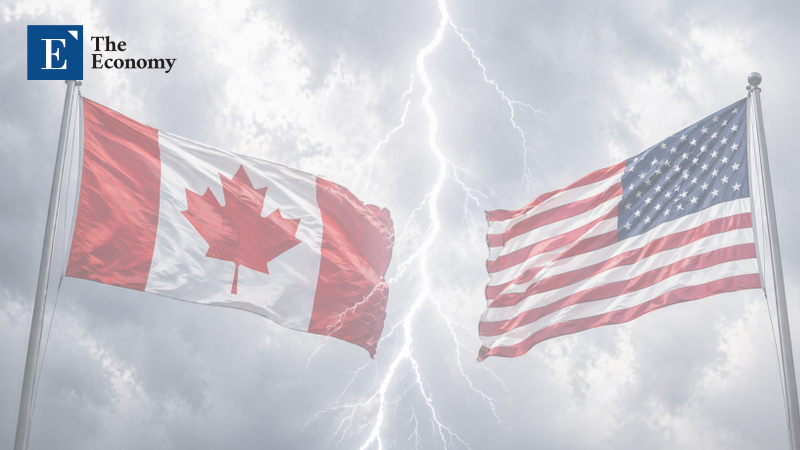
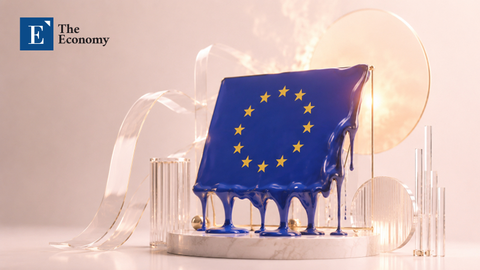
Canadian Prime Minister Mark Carney has signaled his intent to recalibrate the country’s economic framework with the United States. As the Donald Trump administration disrupts the existing international order through its America-first and protectionist agenda, resistance from major economies is intensifying. Experts, however, are increasingly questioning the sustainability of Trump’s confrontational diplomatic posture, which has provoked widespread global backlash. The trajectory of U.S. foreign policy may shift significantly depending on whether ceasefire negotiations with Iran reach a resolution.
Frozen U.S.-Canada Relations
According to reports from Newsweek and the Associated Press on April 20 (local time), Carney stated in a video address released on April 19 that “the United States has changed, and Canada must respond accordingly,” adding that “many of Canada’s traditional strengths, once rooted in close ties with the U.S., have now become vulnerabilities that must be corrected.” As global politics transition into a phase defined by strategic self-reliance, Carney emphasized the need to move beyond a U.S.-centric framework and restructure Canada’s economic and security posture through broader international engagement. “We cannot secure our future by ignoring clear realities or underestimating tangible threats,” he said, underscoring that Canada would not downplay the challenges it faces.
This is not the first time Carney has addressed the rapidly shifting geopolitical landscape. In January, during a speech at the World Economic Forum (WEF) in Davos, he remarked, “Canada does not prosper because of the United States, but because it is Canada,” in a statement widely interpreted as targeting Trump. He characterized the current global order as a “rupture,” cautioning that nostalgia for the past offers no viable strategy. He further added, “Middle powers must come together—if we are not at the table, we will be on the menu,” signaling the need to abandon reliance on the U.S.-led order and instead forge a coordinated anti-Trump alignment.
The deterioration in bilateral relations stems from multiple factors. The United States’ expansion of tariffs and its intensified resource nationalism in energy and commodities have reignited trade tensions. Simultaneously, growing pressure over defense cost-sharing and the modernization of the North American Aerospace Defense Command (NORAD), along with diverging approaches toward China, have further eroded policy coordination. Notably, in January, when Carney visited China and received a high-profile welcome from President Xi Jinping while announcing plans to expand comprehensive economic cooperation, Trump responded on his social media platform Truth Social by referring to Carney as a “governor,” warning that “if Governor Carney turns Canada into a transshipment hub for Chinese exports to the U.S., a 100% tariff will be imposed on all products immediately.” The remark echoed Trump’s recurring rhetoric portraying Canada as a de facto 51st state.
Global ‘Anti-Trump’ Alignment
Beyond Canada, several members of the Five Eyes intelligence alliance—including the United States, the United Kingdom, Canada, Australia, and New Zealand—are increasingly expressing dissatisfaction with Washington. Policy unpredictability under the Trump administration has undermined trust within alliances, creating visible fractures in long-standing intelligence and security cooperation frameworks. In January, the United Kingdom took the extraordinary step of suspending intelligence-sharing with the U.S. after determining that a recent American anti-narcotics military operation in the Caribbean may have violated international law. More recently, London publicly criticized U.S. airstrikes on Iran as a strategic miscalculation that exacerbates global security risks, while declining to participate militarily. Australia has similarly drawn a clear line, resisting U.S. requests and pressure to support military operations in the Middle East.
Discontent is mounting across the broader international community. At the “Defending Democracy” summit held in Barcelona, Spain, on April 20, a wave of criticism directed at President Trump emerged. The summit, a forum of progressive and left-leaning governments focused on issues such as inequality, multilateralism, diversity, and nonviolence, took on the character of a de facto anti-U.S. coalition amid escalating geopolitical tensions following U.S. military actions against Venezuela and Iran.
During the meeting, world leaders delivered remarks widely interpreted as implicit critiques of Trump and his policies. Brazilian President Luiz Inácio Lula da Silva stated, “We are gathered here to prevent the global regression of democracy,” warning that “failure to do so could give rise to another Hitler.” Spanish Prime Minister Pedro Sánchez declared that “forces exploiting democracy and the mental health of young people for profit must be dismantled,” while South African President Cyril Ramaphosa described the current era as “one defined by invasion, war, conflict, and destruction.” International media noted that these statements reflect growing concern over the consolidation and rise of hardline right-wing movements following the launch of Trump’s second administration.
U.S.-Iran Negotiations as a Geopolitical Pivot
Concrete efforts to mitigate risks emanating from the United States are also emerging worldwide. A growing number of countries are turning toward China in search of alternative pathways to navigate protectionist pressures. French President Emmanuel Macron visited China in December of last year, followed by visits in January from Carney, Irish Prime Minister Micheál Martin, and Finnish Prime Minister Petteri Orpo. German Chancellor Friedrich Merz traveled to China in February, while Singaporean Prime Minister Lawrence Wong and Spain’s Sánchez followed in March and April, respectively. Some analysts argue that Trump’s policies have effectively elevated Xi Jinping’s global leverage.
Among middle powers, a trend toward “self-reliant multilateralism” is becoming increasingly pronounced. Economically, Canada is seeking to diversify away from U.S.-centric trade by expanding energy and mineral export infrastructure, while the European Union (EU) is pursuing free trade agreements with India and Mercosur to broaden supply chains. This month, the United Kingdom formally initiated efforts to deepen defense and economic cooperation with the EU, signaling a strategic pivot toward alternative partnerships. Meanwhile, Poland and the Baltic states have bolstered their security by procuring South Korean tanks and self-propelled artillery, and European nations more broadly are expanding defense cooperation with Asian partners.
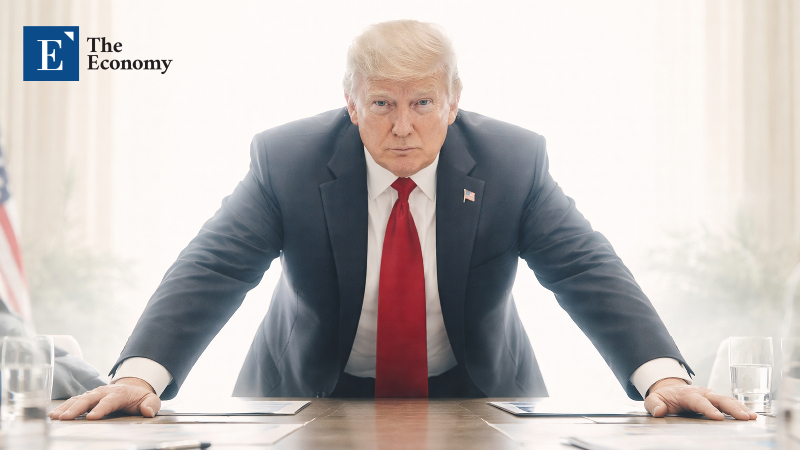
As the global geopolitical landscape undergoes rapid transformation and the United States’ position grows increasingly uncertain, experts point to ongoing ceasefire negotiations with Iran as a decisive inflection point for Trump’s foreign policy. A resolution aligned with Trump’s objectives would likely reinforce his unilateral diplomatic approach, while a compromise shaped by international pressure could usher in a more calibrated and cautious foreign policy trajectory. At present, negotiations between Washington and Tehran remain deadlocked over key issues, including nuclear program constraints, sanctions relief, and control of the Strait of Hormuz.
As one of the youngest members of the team, Tyler Hansbrough is a rising star in financial journalism. His fresh perspective and analytical approach bring a modern edge to business reporting. Whether he’s covering stock market trends or dissecting corporate earnings, his sharp insights resonate with the new generation of investors.
Similar Post