South Korea Energy Security Is Not the Same as Hormuz Panic
Keith Lee is a Professor of AI/Finance at the Gordon School of Business, part of the Swiss Institute of Artificial Intelligence (SIAI). His work focuses on AI-driven finance, quantitative modeling, and data-centric approaches to economic and financial systems. He leads research and teaching initiatives that bridge machine learning, financial mathematics, and institutional decision-making.
He also serves as a Senior Research Fellow with the GIAI Council, advising on long-term research direction and global strategy, including SIAI’s academic and institutional initiatives across Europe, Asia, and the Middle East.
Authored On
Modified
Korea faces an energy shock, not an imminent semiconductor blackout
Oil dependence matters, but Korea’s power grid is stronger than alarmist headlines suggest
The real lesson is to upgrade energy resilience, not confuse vulnerability with collapse
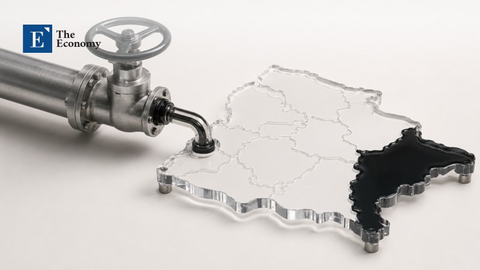
Oil can disrupt an economy without directly halting industrial production. This basic point is often overlooked in contemporary discussions. According to Seoul Economic Daily, in early March 2026, Seoul experienced a historic market crash when the KOSPI index, which had recently surpassed 6,000 points, suffered its largest single-day drop in both points and percentage terms. While the market panic was genuine, it did not indicate an imminent shutdown of South Korea’s semiconductor manufacturing. Instead, it pointed out a more specific and critical reality: South Korea’s energy seAccording to the International Energy Agency, South Korea’s electricity system faces challenges because of its isolation and lack of connections to neighboring countries, making the system susceptible to fuel price fluctuations, disruptions in shipping routes, and changing investor outlook. However, this does not mean the power infrastructure for core industries is at immediate risk of collapse. The greater policy mistake is to confuse a severe import disruption with the immediate failure of the country’s electrical system.
Oil vs. Electricity: A Critical Distinction
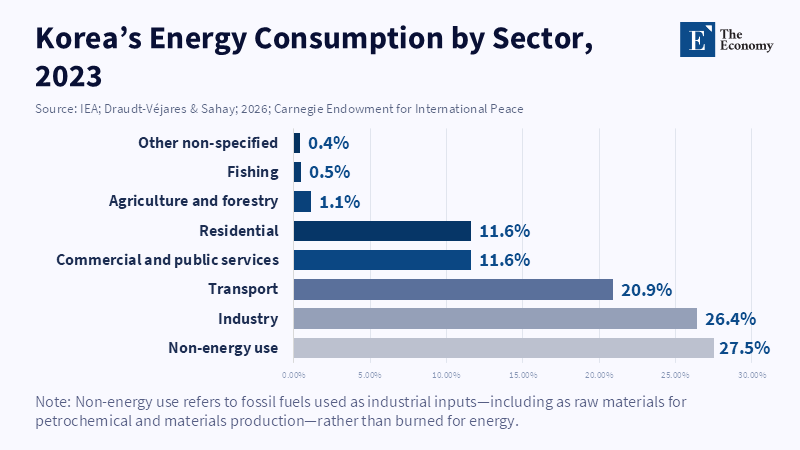
Understanding South Korea’s energy security requires distinguishing between oil and electricity. Although South Korea is heavily reliant on energy imports, and events affecting the Strait of Hormuz significantly affect crude oil and petrochemical supplies, semiconductor fabrication plants operate on electricity, not crude oil. This distinction is vital because the energy mix used for power generation differs markedly from the overall pattern of energy imports. In 2024, oil’s contribution to electricity generation was minimal (1.1%), with coal, nuclear, gas, and a growing share of renewables forming the backbone of the power system. Consequently, disruptions in crude oil supply can rapidly increase costs but still allow grid operators and the government to focus on delivering electricity to critical industrial consumers. Energy security in South Korea should therefore be framed not as a simple binary scenario of “shipping disruption equals factory shutdown” but rather as an intricate interplay of which fuels affect specific sectors, the initial points at which bottlenecks emerge, and how different economic segments can be insulated during periods of strain.
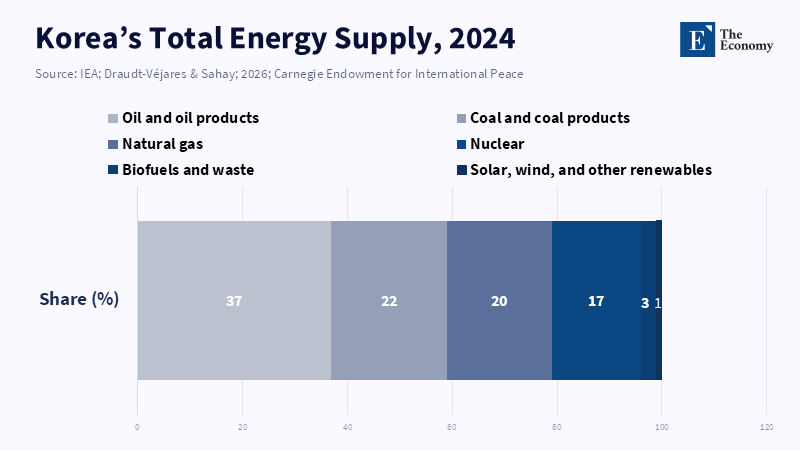
This perspective does not diminish the risks involved. According to the OECD, South Korea imports nearly all of its oil and natural gas because it has negligible domestic fossil-fuel resources, making its energy supply highly dependent on foreign imports. The government has responded by releasing a record volume of strategic oil reserves (22.46 million barrels), investigating alternative supplies for crude and naphtha, and imposing limits on naphtha exports. These measures represent proactive attempts to reduce import and price shocks before they spread more broadly across industry and society. The primary concern is therefore not overestimating risk but rather oversimplifying an intricate energy system into sensationalist narratives. While South Korea’s energy security encounters substantial pressures, these should not be mistaken for immediate system-wide power failures.
The Resilience of South Korea’s Electrical Grid
Regarding the electrical grid, South Korea’s system should not be perceived as outdated or fragile, set to collapse at the first sign of geopolitical tension. According to the International Energy Agency, demand for renewable electricity in South Korea is expected to rise sharply due to the growth of artificial intelligence and data centers. However, transmission constraints and the need to address these challenges are primarily related to future growth and investment needs, not current operational instability. The existing system reliability is of particular importance for semiconductor manufacturing, where even minor power interruptions can result in significant output losses. The data from 2024 reinforce this conclusion: nuclear power’s share increased to 31.7%, coal’s share declined to 28.1%, and nuclear capacity expanded through both reduced maintenance downtime and new reactors. Operating 26 nuclear reactors totaling approximately 26 gigawatts, with four more under construction, illustrates a substantial, domestically managed dispatchable electricity base. Analysts who jump directly from regional oil supply disruptions to semiconductor plant outages overlook this critical infrastructural element. Hence, South Korea possesses an energy system with a nuclear core that affords the government flexibility in managing fuel shocks without instant harm to industrial continuity.
The semiconductor field itself is central to South Korea’s economy, not peripheral. In 2024, semiconductor exports accounted for $141.9 billion, representing 20.8% of national exports. The rise in demand for artificial intelligence applications has additionally increased the importance of South Korean memory producers. SK Hynix controls 57% of the high-bandwidth memory market and 32% of the global DRAM market, while Samsung remains among the leading global memory producers. Within this context, the government treats power supply to semiconductor facilities not simply as one among many industrial consumers but as a component of critical macroeconomic infrastructure. Therefore, the most plausible outcome of disruptions in Gulf oil supply is not a nationwide blackout but increases in energy costs, margin pressures, supply reassessments, and intensified efforts to protect strategically important industrial sectors. South Korea’s energy security framework is thus characterized by exposure, selectivity, hierarchy, and strong industrial policy influence.
Adaptability and Crisis Response
South Korea’s energy system also shows adaptability during crises rather than rigidity. The capacity to shift between fuels, accelerate maintenance, activate reserves, and direct governmental resources suggests resilience more than fragility. For example, in March 2026, Seoul responded to energy tensions via lifting restrictions on coal generation and increasing nuclear reactor utilization to about 80%. Furthermore, despite LNG supply setbacks caused by regional conflicts, Korean officials stressed the availability of alternative sources and confirmed LNG inventories exceeding mandatory reserves. According to a report from Choi On-jung, nuclear power generation in South Korea made up 31.7% of total domestic electricity production in 2024, surpassing coal at 28.1%. While gas-fired power is still a significant part of the energy mix, greater nuclear and coal output could help offset reliance on gas in times of need, potentially changing when and how supply disruptions affect industrial sectors.
Additional LNG import data support this assessment. In 2025, Australia supplied 31.4% of South Korea’s LNG, Qatar 14.9%, the United States 9.4%, Oman 4.1%, and the United Arab Emirates 0.5%, with approximately 80% of imports contracted long-term. Seoul has also prepared alternative LNG procurement strategies from Southeast Asia, Australia, and North America. Several nuclear units were scheduled to restart during spring, a season of comparatively lower power demand, consistent with emergency plans. Details of this nature tend to be omitted in political or media discussions but are critical for informed policy analysis. While not free of challenges or cost, South Korea’s energy system is more diversified and seasonally adjustable than alarmist interpretations suggest—the distinction between being “strained” and becoming “incapacitated” rests on noticing these nuances.
Structural Vulnerabilities and the Path Forward
Nonetheless, addressing exaggerated claims should not breed complacency. Structural vulnerabilities remain. According to research from the Institute for Energy Economics and Financial Analysis, efforts to expand and modernize South Korea’s electricity grid are facing significant delays, partly due to local opposition to renewable energy sites and monetary problems at the Korea Electric Power Corporation, which obstruct progress on grid projects. Simultaneously, the importance of stable and reliable power grows as semiconductor fabrication and data center demand rise. The essential lesson is that while South Korea can sustain its semiconductor operations throughout short-term shocks, this is achieved by relying on a power system that requires accelerated investment in transmission, storage, clean firm generation, and enhanced integration of renewables. The country’s energy security is sufficiently robust to manage isolated disruptions but will incur escalating costs if exposed to recurrent or prolonged shocks without further modernization.
This situation signals the necessity for an educational recalibration. Academic programs and professional training should move beyond oversimplified supply chain narratives focused on single-point failures. More valuable instruction would emphasize the operational realities of energy systems—such as the divergence between primary energy imports and electricity generation, the deployment of reserves, the scheduling of maintenance, the complications of locating transmission infrastructure, and how governments emphasize strategic industries under duress. South Korea’s industrial policies already incorporate this all-encompassing perspective; for instance, InvestKOREA reports that the government intends to train and deploy 150,000 specialized semiconductor professionals by 2030 and supports infrastructure development in key chip manufacturing clusters. Expanding such workforce development initiatives is critical. The country requires engineers versed in both semiconductor production and grid management, policymakers capable of nuanced energy security valuation, and business leaders who can differentiate between commodity price shocks and systemic failures. Thus, energy security in South Korea transcends technical energy considerations to serve as an integral component of teaching curricula.
In conclusion, the initial statistic—that oil accounted for merely 1.1% of South Korea’s electricity in 2024, yet geopolitical concerns still triggered a substantial market downturn—illustrates a fundamental point. Market reactions can precede infrastructure failures, media narratives shall outpace system realities, and economic sectors may display varying degrees of resilience amid exposure. Therefore, assessments of South Korea’s energy security benefit from a holistic approach that avoids both undue alarm and unwarranted denial of dependence. Moving forward, policymakers ought to address nuclear maintenance, grid enhancement, energy storage, renewable energy incorporation, LNG diversification, and petrochemical feedstock security as linked elements of an overarching industrial strategy. Educational institutions bear responsibility for advancing this integrated understanding. Absent such systemic literacy, future crises risk being misinterpreted as apocalyptic events rather than signals identifying gaps in investment and state capability.
The views expressed in this article are those of the author(s) and do not necessarily reflect the official position of The Economy or its affiliates.
References
Bae, S.-y. (2026) ‘Korea exports hit record $709.7 billion in 2024; semiconductors account for 25%’, Seoul Economic Daily, 2 January.
Choi, O.-j. (2025) ‘Korea transitions to nuclear energy as coal’s dominance ends’, CHOSUNBIZ, 11 May.
Draudt-Véjares, D. and Sahay, T. (2026) ‘The Iran War Is Also Now a Semiconductor Problem’, Emissary, Carnegie Endowment for International Peace, 20 March.
Enerdata (2026) ‘South Korea bolsters energy security amid Middle East crisis’, Daily Energy & Climate News, 17 March.
International Energy Agency (2021) Korea Electricity Security Review. Paris: International Energy Agency.
International Energy Agency (2025) Korea 2025. Paris: International Energy Agency.
International Energy Agency (2026a) ‘Korea: Oil’, Countries & Regions. Paris: International Energy Agency.
International Energy Agency (2026b) ‘IEA Member countries to carry out largest ever oil stock release amid market disruptions from Middle East conflict’, Press release, 11 March. Paris: International Energy Agency.
International Energy Agency (2026c) ‘IEA confirms Member country contributions to collective action to release oil stocks in response to Middle East disruptions’, News, 19 March. Paris: International Energy Agency.
InvestKOREA (n.d.) ‘Strategy for nurturing high-tech industries by sector’, InvestKOREA.
Jin, H., Kim, J. and Chow, E. (2026) ‘South Korea flags uncertainty from Qatar LNG plant damage, but downplays supply concerns’, Reuters, 20 March.
Joo, J.-h. (2026) ‘South Korea to release record 22.46 million barrels in IEA coordinated action’, Seoul Economic Daily, 12 March.
Kim, H.M. (2025) ‘“SK hynix surpasses Samsung Electronics to take first place in DRAM market share”’, The Asia Business Daily, 9 April.
Kim, M.C. (2025) Bottlenecks to renewable energy integration in South Korea. Lakewood, OH: Institute for Energy Economics and Financial Analysis.
Kim, T.-h. (2025) ‘South Korea to boost support of semiconductor industry in the face of Trump’s tariffs’, AP News, 15 April.
Ko, J. (2025) ‘South Korea’s semiconductor industry and investment status’, InvestKOREA, 2 October.
Kumagai, T. and Lee, C. (2026) ‘South Korea sees no LNG shortages despite Middle East supply disruptions’, S&P Global Commodity Insights, 5 March.
Lee, J., Moon, Y.A. and Park, Y. (2026) ‘Korean stocks record worst day, won sinks on Iran conflict’, Reuters, 4 March.
MarketMinute (2026) ‘Black Wednesday in Seoul: KOSPI plummets 12% as Hormuz crisis shakes global markets’, Chronicle Journal, 4 March.
Orta, K. (2026) ‘The Iran Crisis Is Fueling South Korea’s Drive for Nuclear Energy’, The Diplomat, 12 March.
Schlosser, A. (2026) ‘Iran War Highlights South Korea’s Vulnerability’, Friedrich Naumann Foundation for Freedom, 13 March.
Shim, K.-s. and Lee, J. (2026) ‘South Korea to lift coal cap, boost nuclear output amid Iran crisis, ruling party says’, Reuters, 16 March.
The Straits Times (2026) ‘South Korea to speed up nuclear restart amid Middle East crisis’, 11 March.
Varadhan, S., Lee, J. and Yang, H. (2025) ‘South Korea’s nuclear power output surges as coal use plunges’, Reuters, 17 August.
World Nuclear Association (2026) ‘Nuclear power in South Korea’, World Nuclear Association.
Keith Lee is a Professor of AI/Finance at the Gordon School of Business, part of the Swiss Institute of Artificial Intelligence (SIAI). His work focuses on AI-driven finance, quantitative modeling, and data-centric approaches to economic and financial systems. He leads research and teaching initiatives that bridge machine learning, financial mathematics, and institutional decision-making.
He also serves as a Senior Research Fellow with the GIAI Council, advising on long-term research direction and global strategy, including SIAI’s academic and institutional initiatives across Europe, Asia, and the Middle East.