“Decade-Long Process in Just One Month”: U.S. Ignites ‘Nuclear Renaissance’ by Slashing Regulatory Red Tape

Niamh O’Sullivan is an Irish editor at The Economy, covering global policy and institutional reform. She studied sociology and European studies at Trinity College Dublin, and brings experience in translating academic and policy content for wider audiences. Her editorial work supports multilingual accessibility and contextual reporting.
Authored On
Modified
Approval Granted for Mass Production of Micro-Reactor ‘Nuclear Batteries’
Rising Energy Security Concerns Amid Power Shortages
Behind the Speed War: A Desperate Push to Overcome Technical Limits
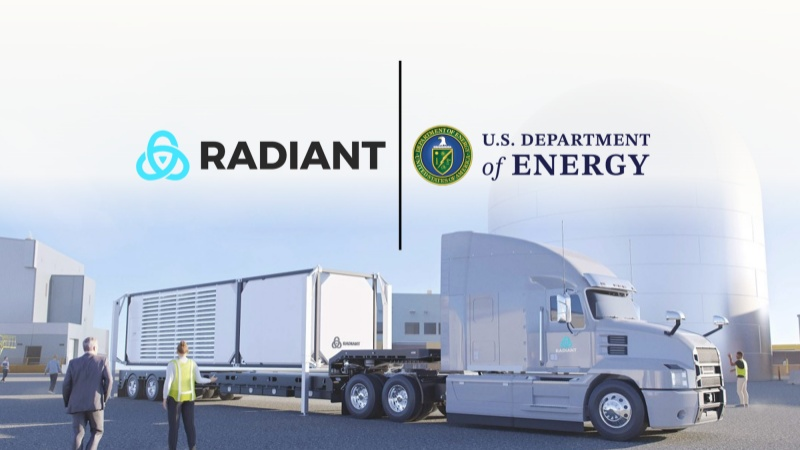
The nuclear permit and licensing process in the United States, which historically took several years or even up to a decade, has been drastically shortened to just 45 days, propelling the industry into an unprecedented "speed war." By approving the design of a micro-reactor from a domestic venture at a breakneck pace, the U.S. government has set a symbolic milestone, dismantling regulatory hurdles that have stifled the market for over 40 years.
This shift is interpreted as a total mobilization of administrative power to meet explosive electricity demand. This movement extends beyond mere procedural simplification, manifesting as a massive influx of capital and technological innovation. Significant attention is now focused on how this "Nuclear Renaissance"—fueled by deregulation and cutting-edge technology—will reshape the global energy landscape.
Accelerated Development Through Ultra-Fast Approvals
According to National Review, a U.S. economic publication, the Department of Energy (DOE) finalized the design and safety approval for "Kaleidos," a micro-reactor developed by nuclear venture Radiant, on the 15th. Kaleidos is the inaugural project to utilize the "Authorization Pathway," a fast-track route that reduced the licensing process from several years to just 45 days. This is viewed as a radical departure from the past practices of the Nuclear Regulatory Commission (NRC), where a single design approval typically cost upwards of $500 million and consumed nearly a decade.
Kaleidos is a 1.2-megawatt (MW) micro-reactor capable of providing power to approximately 1,000 households. Its primary competitive edge lies in its form as a "nuclear battery"; unlike traditional large-scale plants that require years of massive civil engineering on-site, these units are fully manufactured in factories and can be transported anywhere via truck or cargo plane. A DOE official explained the process, stating, "We have established a new standard that bypasses unnecessary administrative procedures while maintaining rigorous safety verification." Radiant plans to deploy actual commercial models in the field by 2028 based on this approval.
The acceleration of U.S. energy policy is also evident in the fuel sector. X-energy, a next-generation nuclear company backed by Amazon, has secured federal approval to produce uranium fuel for advanced reactors. This marks the first time since its founding in 1974 that the NRC has issued a license for a new fuel production facility. TRISO-X, a subsidiary of X-energy, is currently constructing its first plant in Oak Ridge, Tennessee, and this license grants authority to build two production facilities at the site. TRISO-X intends to begin the full-scale manufacture of "TRISO pellets," a triple-coated particle fuel, within the next two years.
This concentration of administrative power is also proceeding seamlessly into military applications and resource procurement. On the 15th, the Donald Trump administration utilized a U.S. Air Force C-17 transport aircraft for the first time to airlift the "Ward 250," an unfueled micro-reactor model, to Hill Air Force Base in Utah. Michael Duffy, Deputy Under Secretary of Defense for Acquisition, remarked on the operation’s significance: "Deploying nuclear energy to the times and places where it is most needed brings our forces one step closer to victory." Concurrently, the Department of the Interior is speeding up the implementation of executive orders to quadruple nuclear capacity by 2050, including the approval of uranium mine development in Utah through an expedited environmental review.
Power Shortages for 1 Million Households Pull the Trigger
The U.S. push for nuclear expansion is driven by a severe "red light" on energy security. As electricity demand surges with the dawn of the AI era, the simultaneous need to replace aging power plants has elevated the energy supply-demand imbalance to a national crisis. Concerns over declining industrial competitiveness due to power shortages have spread in regions like New York. In response, New York Governor Kathy Hochul directed the New York Power Authority (NYPA) last May to construct at least 1 gigawatt (GW) of new nuclear capacity. This 1 GW capacity, sufficient to power roughly 1 million homes, represents the largest nuclear project initiated in the U.S. since 2010.
The synergy of government financial support and private capital serves as the engine for this nuclear renaissance. The U.S. government entered into a binding agreement with major stakeholders to guarantee $80 billion in financing and licensing support for the construction of Westinghouse's large-scale reactors (AP1000). This unprecedented financial backing reflects a determination to use capital to directly overcome the schedule delays and cost overruns seen in past projects, such as the Vogtle plant in Georgia. Furthermore, through this agreement, the U.S. government secured the right to recoup 20% of profits exceeding $1.7 billion.
Nuclear construction is expanding across the nation as state participation increases. A total of 11 state governments, including New York, Indiana, Kentucky, and Tennessee, issued a statement last November supporting the "Advanced Nuclear First Mover Initiative" and began administrative procedures for new nuclear construction. Notably, the Illinois State Legislature passed a bill lifting a 30-year moratorium on new nuclear construction that had been in place since 1987. At the time, Illinois Governor J.B. Pritzker stated, "This measure will allow us to simultaneously achieve clean energy deployment and grid stability."
Supply chain strengthening strategies for fuel self-sufficiency also form a core pillar of energy security. Since signing the ban on Russian uranium imports last May, the U.S. has focused all policy capabilities on enhancing domestic uranium enrichment capacity. This is an emergency measure to fill the strategic void created by a long-term reliance on imported enriched uranium. Consequently, projects such as the Tennessee Valley Authority’s (TVA) push to deploy up to 6 GW of Small Modular Reactors (SMRs) and Bill Gates’ TerraPower constructing a natrium reactor in Wyoming have gained momentum in expanding a self-sufficient supply chain.

Technical Limits vs. Power Demand: The 'Mismatch'
Nevertheless, the prevailing view is that it will take considerable time for the American nuclear renaissance to fully materialize. Nuclear projects are inherently long-term endeavors requiring years of preliminary work. Analysis suggests that even the SMRs the DOE aims to have operational at candidate sites by the end of 2027 to meet data center demand are unlikely to reach commercialization on that schedule. James Walker, CEO of Nano Nuclear Energy, clearly pointed out the limitations of this "speed war," stating, "Large-scale SMR deployment before 2030 is unrealistic."
To overcome these hurdles, the U.S. government has partnered with private enterprises to reshape the landscape of nuclear construction. Idaho National Laboratory (INL) and NVIDIA have formed a partnership to integrate AI technology into the overall construction and operation of nuclear plants. This is a key task of the DOE's "Genesis Mission," which aims to double the speed of reactor deployment and halve the costs using AI. Through the project named "Prometheus," the plan is to drastically reduce safety evaluation periods based on "digital twin" technology, which replicates every stage from design to licensing in a virtual space.
AI agent-based workflows are gaining attention as the key to fundamentally improving the economics of nuclear power. The Prometheus system learns from decades of operational records and experimental data accumulated by INL to preemptively block errors at construction sites and maximize operational efficiency. John Josephakis, Vice President at NVIDIA, expressed confidence, saying, "By combining our AI infrastructure with INL’s expertise, we will be able to build reactors faster, more safely, and at a lower cost." Industry experts anticipate that the introduction of such automated processes could reduce nuclear plant operating costs by more than 50% compared to current levels.
In this context, the U.S. nuclear speed war can be defined as a marriage of administrative innovation (deregulation) and technological innovation (AI). Rian Bahran, a DOE official, praised the public-private partnership, stating, "The collaboration regarding AI implementation has the potential to shift the paradigm of nuclear deployment," adding that they "intend to spread this model across the industry, including reactor developers and investors." However, challenges remain, such as the level of trust regulators will place in AI-derived safety diagnoses, leading to conflicting outlooks on the timing of future commercialization.
Niamh O’Sullivan is an Irish editor at The Economy, covering global policy and institutional reform. She studied sociology and European studies at Trinity College Dublin, and brings experience in translating academic and policy content for wider audiences. Her editorial work supports multilingual accessibility and contextual reporting.
Similar Post