Memory Supercycle Shakes Market, Capacity Expansion Rush Raises Risk of Oversupply Amid China’s Pursuit

Authored On
Modified
SK Hynix, Samsung Electronics, Micron Expand CAPEX, Sounding Alarm Over Supercycle
China’s CXMT, YMTC Emerge as Alternative Suppliers, Shift Toward Price Increases
Challenge Intensifies in HBM, DDR5 Frontier Race, Though Yield and EUV Barriers Persist
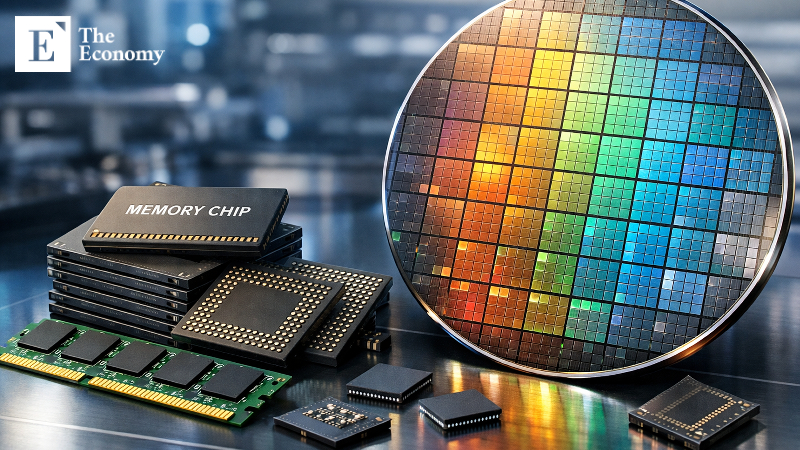
Forecasts are mounting that the memory boom rattling the global semiconductor market will prove short-lived. As major memory makers including SK Hynix, Samsung Electronics, and Micron accelerate capacity expansion, analysts warn that the industry could once again descend into a glut-driven price collapse within a few years. The technological catch-up and market share gains of Chinese memory manufacturers have also emerged as variables that cannot be discounted.
Capacity Expansion by Major Memory Makers
On the 23rd local time, U.S. investment publication Barron’s reported that the semiconductor industry and Wall Street are voicing concerns over the scale of capital expenditures by memory companies. According to analyses by leading global investment banks and market research firms, the current supply tightness in memory is expected to persist for some time. UBS projected that in the first quarter of this year, general DRAM prices would rise 62% quarter-on-quarter, while NAND prices would climb 40%. TrendForce forecast that the global memory market could surge from $551.6 billion this year to $842.7 billion next year.
The issue lies in the inherently cyclical nature of memory semiconductors, where large-scale investments executed during supply shortages frequently culminate in oversupply. Recently, memory makers have unveiled expansion plans centered on high-bandwidth memory (HBM) and server DRAM. SK Hynix is pursuing a plan to advance the operational launch of the first fab at its Yongin semiconductor cluster from May next year to early next year. The Yongin cluster represents a mega-project valued at approximately $694.4 billion, with Samsung Electronics investing $250 billion to construct six fabs and SK Hynix allocating $416.7 billion to build four fabs. The first SK Hynix fab is expected to house AI semiconductor production lines for HBM and server DRAM. In Cheongju, SK Hynix continues to bolster capacity. The M15X front-end facility is in the process of equipment installation with operations targeted for the second half of this year, while the back-end “Packaging & Test Fab (P&T7)” aims for completion by the end of next year. An advanced packaging plant is also slated for construction in Indiana.
Samsung Electronics is likewise accelerating the expansion of its production infrastructure. The company plans to commence operations at its Taylor, Texas plant this year and manufacture next-generation chips using advanced 2-nanometer and 3-nanometer processes. Pyeongtaek Line 5 (P5), currently under construction with a target start date of 2028, is projected to serve as a pivotal hub for HBM production, and depending on market conditions, the potential reactivation of Pyeongtaek Line 6 (P6) is under discussion. Pyeongtaek already operates Lines P1 through P4 as a large-scale semiconductor cluster spanning both memory and foundry production.
Micron is also constructing two DRAM fabs in Boise, Idaho, with a $50 billion investment. The first fab is scheduled to begin operations in mid-next year, while the full production lines, including the second fab, are expected to reach full capacity by the end of 2028. A new NAND fab under construction in Singapore targets first wafer output in the second half of 2028. Additionally, Micron recently announced plans to acquire Taiwanese semiconductor firm PSMC’s Tongluo P5 fab for $1.8 billion and to invest $9.6 billion in building a semiconductor plant in Hiroshima, Japan.
Pathways Open for Chinese Memory in Global Markets
China’s advance represents another factor capable of reshaping the competitive landscape. To date, Chinese memory firms such as ChangXin Memory Technologies (CXMT) and Yangtze Memory Technologies (YMTC) have supplied memory products to Lenovo, the world’s largest PC manufacturer, as well as to Chinese smartphone makers including Huawei, Xiaomi, and Oppo. Although geopolitical tensions prevented entry into Western supply chains, these companies steadily built capabilities within the domestic market. Recently, they have secured opportunities to expand overseas distribution channels. Amid persistent supply shortages, global electronics manufacturers in urgent need of alternative suppliers have begun turning to Chinese-made memory that they previously overlooked.
HP and Dell, the world’s second- and third-largest PC makers, are reviewing plans to incorporate Chinese memory into PCs sold outside the United States and are conducting quality verification tests on CXMT products. Taiwanese PC manufacturers Acer and Asus are also actively considering the adoption of Chinese DRAM, while Apple is reportedly exploring partnerships with YMTC and CXMT to strengthen its negotiating leverage on memory pricing.
With firm demand confirmed, Chinese firms have pivoted from the dumping strategies previously employed to gain market share and are now seeking to improve profitability. According to IT outlet Wccftech, on the 22nd KingBank’s DDR5 32-gigabyte memory module was listed on China’s largest e-commerce platform JD.com at approximately $500. On the same platform, a 64GB DDR5-6000 product exceeded $1,000. These prices are comparable to or slightly above the global average for premium DDR5 products. KingBank is a consumer DRAM brand built on CXMT chips.
Technological Constraints Weigh on Chinese Players
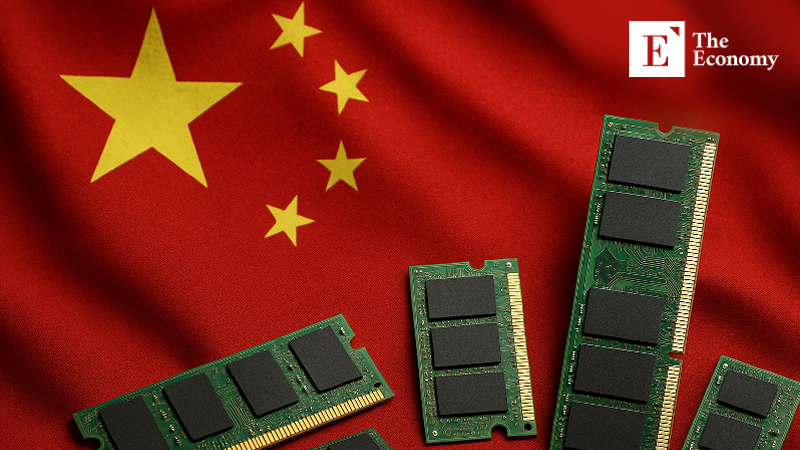
Chinese memory companies are also accelerating their technological push. CXMT plans to commence limited mass production of fifth-generation HBM (HBM3E) this year, initiating head-to-head competition with established leaders Samsung Electronics, SK Hynix, and Micron. After supplying fourth-generation HBM (HBM3) samples last year to major Chinese AI firms including Huawei, CXMT has formulated plans for HBM3E mass production within a year, approximately one year ahead of prior industry expectations of 2027. Morgan Stanley stated that CXMT is expected to begin HBM3E production in 2026, though output will likely remain limited due to the need to resolve heat dissipation challenges in HBM DRAM dies.
In addition, CXMT unveiled its self-developed DDR5 and LPDDR5X last November and is currently conducting performance tests with major clients. China’s memory sector, which had expanded influence primarily in legacy DRAM, is now entering direct competition in advanced nodes. However, yields for the latest DRAM products remain weak. Current estimates place CXMT’s DDR5 yield at around 50%, whereas achieving commercially meaningful cost competitiveness requires yields of 80% to 90%.
Market consensus holds that Chinese memory makers will struggle to close the technological gap with leading suppliers in the near term, given clear limitations stemming from the absence of extreme ultraviolet (EUV) lithography equipment. DRAM process technology typically progresses from 1x, 1y, and 1z nodes (sub-20 nanometers) to 1a, 1b, and 1c (10-nanometer-class), with the 1b node effectively unattainable without EUV. Since 2019, China has lacked access to ASML’s EUV systems due to U.S.-led export controls. This constraint poses significant hurdles for deploying advanced nodes of 1a and beyond. Indeed, CXMT’s DDR5 is estimated to be based on the 1a process, with chip sizes reportedly comparable to the initial DDR5 products released by Samsung Electronics and SK Hynix around 2021.
Similar Post