[Fed Watch] Energy Price Surge Broadens Impact, Emerging as a Key Variable for Federal Reserve Policy Decisions

Niamh O’Sullivan is an Irish editor at The Economy, covering global policy and institutional reform. She studied sociology and European studies at Trinity College Dublin, and brings experience in translating academic and policy content for wider audiences. Her editorial work supports multilingual accessibility and contextual reporting.
Authored On
Modified
“Oil Prices→Production Costs→Consumer Prices” Transmission Path
Financial Markets in Wait-and-See Mode? Prolonged War Would Force a Shift
Rate Hold Expectations Prevail, but Renewed Upward Pressure Remains Possible
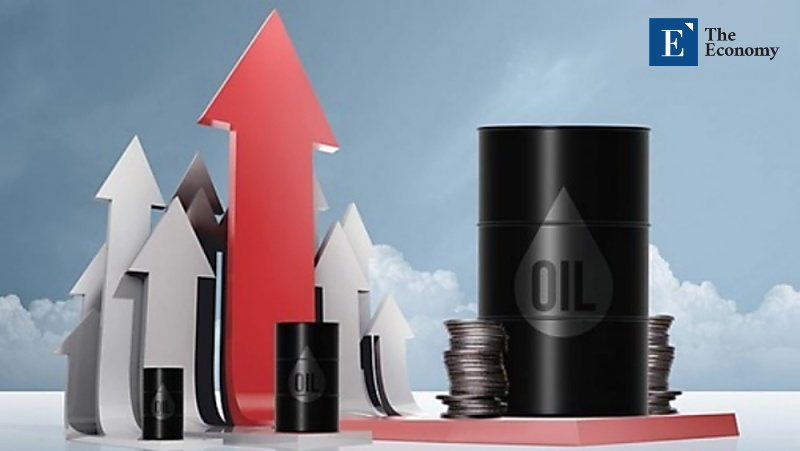
Analysis suggests that rising energy prices stemming from the war in the Middle East could exert a prolonged impact on consumer inflation. With evidence indicating that inflationary pressures can persist for as long as a year and a half, markets are increasingly wary not only of short-term shocks but also of cumulative price pressures. On the policy front, expectations are leaning toward the Federal Reserve maintaining its current interest rate stance, though there is a prevailing view that the monetary policy path could shift once energy price increases are more fully reflected in inflation data.
Rising Burden on Inflation Management Policies
According to the International Monetary Fund (IMF) on the 16th (local time), a 1% increase in energy prices in advanced economies transmits an additional 0.05 to 0.07 percentage points to consumer inflation over the following six quarters. The IMF, in its paper titled “The Energy Origins of the Global Inflation Surge,” which tracked inflation driven by energy price increases in 2021–2022, noted that while a 0.05–0.07 percentage point pass-through may appear modest at first glance, its repeated accumulation over time makes it a critical channel amplifying overall inflationary pressure.
In practice, the transmission of price increases unfolds at different speeds across industries, resulting in a more complex pattern. In energy-intensive sectors such as agriculture, manufacturing, and construction, price increases are reflected almost immediately. In contrast, in the service sector, cost pass-through is delayed, pushing the inflation peak further out. This implies that inflationary pressures continue even after the initial shock. As a result, rather than stabilizing quickly after a short-term peak, rising energy prices propagate sequentially across industries with time lags, sustaining upward pressure on the overall price level over an extended period.
The International Finance Center (IFC) also pointed to a similar dynamic. The IFC stated that “the extent to which rising energy prices feed into inflation expectations, wages, and service prices will be a key variable shaping the underlying inflation trajectory,” adding that “if shifts in price perception among consumers and businesses translate into wage increase demands, a reinforcing cycle of inflation could emerge.” It further noted that “when monetary tightening spreads across major economies, rising interest rates, increased borrowing costs, expanding fiscal deficits, and greater government bond issuance may occur in sequence,” illustrating how inflationary pressures can spill over into financial market burdens.
Data from Korea also confirm this transmission pattern. According to the National Data Agency (formerly Statistics Korea), consumer prices rose 5.1% year-over-year in 2022 following the outbreak of the Russia–Ukraine war. During that period, weakened real purchasing power due to inflation led to a 1.7% decline in food consumption expenditure, signaling a contraction in domestic demand sentiment. In 2023, city gas prices increased by 21.7%, further intensifying the cost-of-living burden. These cascading effects reaffirm that energy price shocks spread across consumption with time lags, creating sustained inflationary pressure.
“U.S. Core Inflation at 4%” Extreme Scenario Emerges
With the war that began in the Middle East on the 28th of last month now extending beyond two weeks, financial markets remain in a wait-and-see mode without a clear directional bias. However, as hostilities continue despite initial expectations of a short-lived conflict already being priced in, doubts are growing over whether that assumption will hold. Earlier, U.S. President Donald Trump stated, “Military operations against Iran were planned on a 4–6 week timeline, but they could end sooner.” If this assumption holds, asset price fluctuations are expected to remain within a limited range. Conversely, if the conflict diverges from initial plans and evolves into a prolonged war, market reactions are likely to intensify sharply.
So far, market conditions appear relatively stable compared with past shock episodes. International oil prices are hovering around $100 per barrel, remaining below inflation-adjusted levels seen during the 1979 Iranian Revolution ($179 per barrel) and immediately after the outbreak of the Russia–Ukraine war in 2022 ($130 per barrel). Equity markets have also shown no signs of panic, with the S&P 500 index fluctuating within a 3% range since the onset of the conflict. However, as the possibility of escalation into ground warfare or a prolonged conflict cannot be ruled out, the current stability is widely viewed as a reflection of latent risk rather than resilience.
The end of this month is being cited as a potential inflection point. On the 11th, member countries of the International Energy Agency (IEA) agreed to release 400 million barrels of strategic reserves. However, given that the Strait of Hormuz handles approximately 20 million barrels per day, the effect of this measure would last only about 20 days. By simple calculation, the buffer’s effectiveness could weaken around the 30th of this month. If the conflict persists beyond that point, markets would enter a phase where supply shocks must be fully absorbed. Additional risks—including attacks on large oil tankers, the downing of civilian aircraft, and strikes on key Saudi Arabian pipelines—could further amplify volatility in energy markets.
Under a prolonged conflict scenario, upward pressure on inflation and downward pressure on growth indicators are expected to intensify simultaneously. The European Union (EU) projects that if Brent crude remains around $100 per barrel and gas prices stay elevated, inflation could exceed 3%. This represents an increase of 0.7 to 1 percentage point from the baseline forecast of 2.1%, while growth could decline by up to 0.4 percentage points from 1.4%. Diane Swonk, chief economist at KPMG, also warned that “if the war continues for more than three months, oil prices could exceed $130 per barrel, and U.S. core inflation could rise to 4.1% by year-end.”
Time Lag in Energy Price Pass-Through
Markets are closely watching whether the Federal Reserve will adjust its interest rate policy at the March Federal Open Market Committee (FOMC) meeting scheduled for the 17th–18th. For now, expectations strongly favor a rate hold. As of the 16th, CME FedWatch data indicated a 99.1% probability that the Fed will keep rates unchanged at the current 3.50–3.75% range following the March FOMC meeting. The issue, however, is that these expectations are based on pre-war inflation trends. As the recent surge in energy prices becomes more fully reflected in inflation data, the policy path may shift accordingly.
According to the U.S. Department of Labor, the consumer price index (CPI) rose 2.4% year-over-year in February, while core CPI increased 2.5% year-over-year and 0.2% month-over-month. During the same period, energy prices rose 0.6% month-over-month and were up 0.5% year-over-year. Gasoline prices declined 5.6% compared with a year earlier, but natural gas and electricity prices continued to rise. In some regions, increased power demand from data centers has also contributed to upward pressure on electricity prices. With both energy and service costs rising, inflationary pressure is spreading broadly across the economy.
Since then, energy prices have entered a separate upward phase. West Texas Intermediate (WTI) futures averaged $82 per barrel in March, up approximately 26% from the February average of $65 per barrel. April delivery WTI has also been trading around $87 per barrel, indicating further upside potential. In this regard, JPMorgan Chase noted that “given the volume of crude currently blocked from reaching global markets from the Middle East, policy measures will have only a limited impact on oil prices unless safe passage through the Strait of Hormuz is ensured.”
Niamh O’Sullivan is an Irish editor at The Economy, covering global policy and institutional reform. She studied sociology and European studies at Trinity College Dublin, and brings experience in translating academic and policy content for wider audiences. Her editorial work supports multilingual accessibility and contextual reporting.
Similar Post