“Prices Surge, Growth Falters” Europe Groans Under Middle East Risk, Yet Still Shuns Russian Energy

Anne-Marie Nicholson is a fearless reporter covering international markets and global economic shifts. With a background in international relations, she provides a nuanced perspective on trade policies, foreign investments, and macroeconomic developments. Quick-witted and always on the move, she delivers hard-hitting stories that connect the dots in an ever-changing global economy.
Authored On
Modified
Soaring oil prices as the Strait of Hormuz is sealed off fuel expectations of a sharp rise in European inflation
Some countries within the bloc call for a resumption of energy trade with Russia, while the EU says it will “hold the line”
As the shock to the global economy moves toward materialization, downward pressure is also mounting on growth across Europe
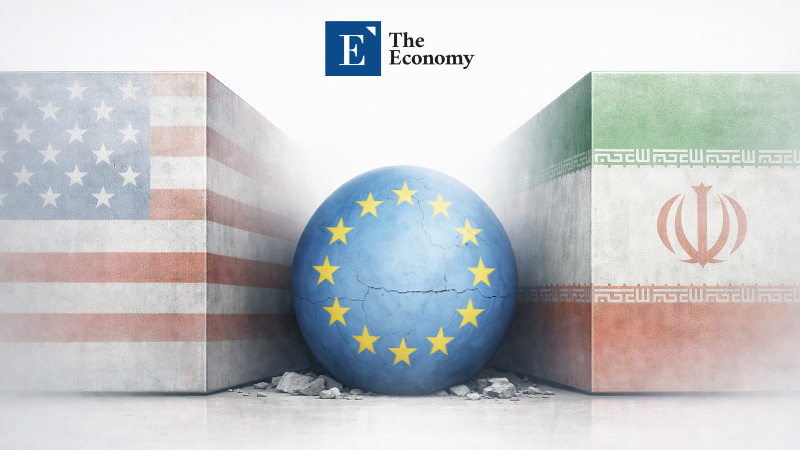
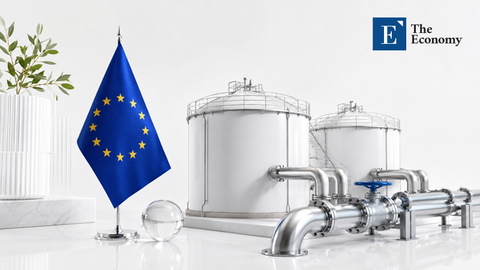
Europe’s economy has been thrown into severe turmoil by geopolitical risk emanating from the Middle East. With the Strait of Hormuz effectively blocked and energy prices soaring to extraordinary levels, the threat of rising inflation and weakening growth across European economies is rapidly coming into view. Against that backdrop, some European Union member states have begun arguing that trade with Russia should be resumed to stabilize energy prices, but the EU has shown no sign of retreating from its current policy of excluding Russian energy.
Europe Takes a Direct Hit From the Strait of Hormuz Blockade
On June 15, The Wall Street Journal warned that Middle East-driven energy risk could inflict a devastating blow on the European economy. Iran’s closure of the Strait of Hormuz has in fact triggered a global surge in energy prices, delivering a major shock to Europe, which imports more than half of its energy. On June 11, European Commission President Ursula von der Leyen said that “in just 10 days since the outbreak of war, Europe has incurred an additional $3.44 billion in fossil fuel import costs alone.”
According to Oxford Economics, the European economies most vulnerable to the energy price spike include Italy, Germany and the United Kingdom, all of which rely heavily on imported gas. Italy’s inflation rate for the fourth quarter of this year is expected to rise by more than 1 percentage point above previous forecasts, while projected inflation for the euro area as a whole and for the UK could also climb by more than 0.5 percentage point. Compounding the strain, energy-intensive companies that have lost cost competitiveness are increasingly likely to relocate production from Europe to the United States and China, raising the prospect of a full-fledged wave of deindustrialization and placing even labor markets under mounting pressure.
The policy defenses available to withstand such a crisis are also woefully inadequate. When the Russia-Ukraine war broke out four years ago, Europe was still able to cushion the shock with surplus liquidity accumulated through pandemic-era stimulus and with low borrowing costs. France alone rolled out $120.5 billion in energy support measures during 2022 and 2023. At present, however, Europe’s major economies have lost their fiscal room because of heavy debt burdens. Data from global financial institutions show Italy’s debt-to-GDP ratio has climbed to 134.9%, while France is also posting an unprecedented 113.2% of GDP. That leaves little realistic prospect of government rescue measures on a scale comparable to those seen several years ago.
Russian Energy Imports Unlikely to Resume
Even so, some European countries are arguing that imports of Russian energy should be resumed to stabilize prices. According to Brussels Times, Belgian Prime Minister Bart De Wever recently said in an interview with local outlet L’Echo that “relations with Russia should be normalized so that access to cheap energy can be restored,” adding that “that is common sense.” The EU had previously decided in June 2022 to ban imports of Russian crude oil and petroleum products, halted seaborne crude imports in December of that year, and then banned imports of refined oil products in February 2023. In January this year, the EU Council also gave final approval to a measure that would effectively phase out Russian gas imports, including pipeline gas and LNG, by 2027.
EU officials, for their part, have made clear they will not yield to pressure from member states seeking a resumption of trade. According to Politico Europe, EU Energy Commissioner Dan Jorgensen told reporters at a meeting of EU energy ministers in Brussels on June 16 that “the EU has decided that we will not import Russian energy again,” stressing that “it is critically important to maintain this course.” He added that “Europe cannot, even indirectly, help finance Russia’s brutal and illegal war.”
Jorgensen also underscored that “for too long, we depended on Russian energy, and that allowed Russian President Vladimir Putin to blackmail us and weaponize energy,” adding that “we cannot repeat the mistakes of the past.” In line with that hardline stance, the planned announcement next month of additional measures to ban Russian oil is unlikely to undergo any meaningful revision. Once implemented, the plan could fully shut down the remaining loopholes and exceptions that still allow some Russian energy to enter Europe through indirect channels.
UK, Germany and Others Face a Growth Slowdown
The problem is that if energy prices fail to stabilize under the EU’s hardline stance, Europe’s economic outlook could deteriorate rapidly. Markets are already increasingly warning that a prolonged Iran-US war would trigger a broader global economic crisis. Jeff Currie, chief strategy officer at Carlyle Group, the world’s largest private equity firm, recently told Bloomberg that “there is no policy response that can stop higher oil prices,” adding that “a paradigm shift is coming, and everything will cost more.” His assessment was that a closure of the Strait of Hormuz would damage not only oil flows, but also the global supply chain spanning gas, fertilizer, metals and petrochemicals.
Currie also said it would take months merely to restore the damage already done back to normal conditions. Referring to the International Energy Agency’s planned release of 400 million barrels from strategic reserves, he argued that “even if 400 million barrels are released, it would still take 200 days just to deliver that supply to the market,” calling it “effectively meaningless.” He further noted that during the oil shocks of the 1970s, panic buying created roughly 2 million barrels a day in additional demand. With supply disruptions already running at about 18 million barrels a day, any added hoarding demand would only worsen the situation dramatically.
European economies, lacking sufficient indigenous energy procurement capacity, are particularly exposed to such risks. Goldman Sachs has explicitly identified the UK as the country likely to suffer the heaviest blow from a war between the United States and Iran. Assuming oil prices settle at an average of $77 per barrel this year, Britain’s annual economic growth rate is projected to slow to 1.0% from the prewar level of 1.5%. Dirk Schumacher, chief economist at Germany’s KfW Bank, has estimated that if the Strait of Hormuz remains blocked for three months and oil prices hold between $120 and $150 per barrel, Germany’s GDP next year could shrink by nearly 0.5 percentage point.
Anne-Marie Nicholson is a fearless reporter covering international markets and global economic shifts. With a background in international relations, she provides a nuanced perspective on trade policies, foreign investments, and macroeconomic developments. Quick-witted and always on the move, she delivers hard-hitting stories that connect the dots in an ever-changing global economy.
- Previous Trump Presses Allies to Cooperate in ‘Military Operations in the Strait of Hormuz,’ but Partners Maintain Caution Rather Than Immediate Intervention
- Next [Hormuz Deployment] Trump Says “We Protected Them—Why Won’t They Help?”, Allies Put to the Test Amid Rising Tensions in the Strait of Hormuz
Similar Post