Dubai Under Strain as War Undermines “Tax Haven” Status, UAE Weighs Looser Residency Rules to Stem Wealth Flight

Authored On
Modified
“Ghost city”-level vacancy in residency and capital outflows
Continued war variables constrain normalization of urban functions
Weakening trust in alliances → downward pressure on investment appeal
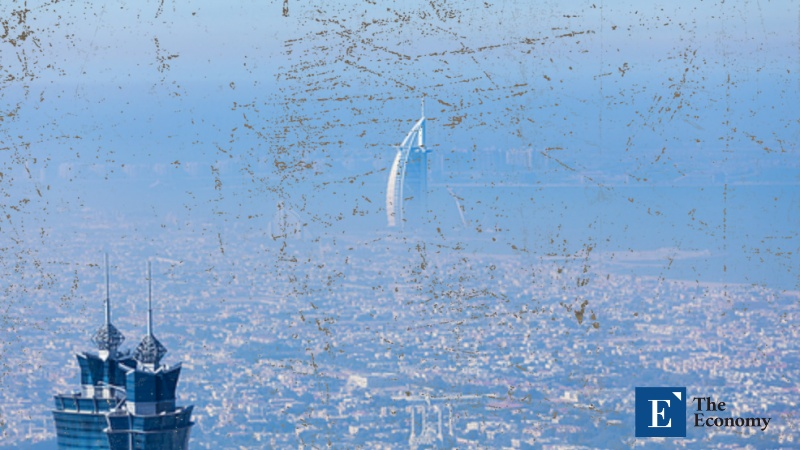
As foreign high-net-worth individuals increasingly leave Dubai in the wake of the Middle East conflict, reports indicate that the United Arab Emirates (UAE) is considering easing tax residency requirements. With tax benefits—contingent on minimum stay thresholds—now disrupted by war, concerns over capital outflows have intensified, prompting active policy discussions aimed at retention. Efforts to restore normal city operations, including airport functionality, are proceeding in parallel, but the pace of recovery remains slow amid a protracted conflict. Rising domestic unease and weakening confidence in alliances are further compounding uncertainty around investment decisions.
Review of Case-by-Case Residency Easing Measures
According to the Financial Times on the 18th, UAE authorities have recently begun internally reviewing measures to apply tax residency requirements more flexibly to foreigners whose overseas stays have lengthened since the outbreak of war. The move is intended to prevent the outflow of high-income foreign capital concentrated in Dubai. A leading option under consideration involves relaxing minimum stay requirements on a case-by-case basis after the conflict ends. Current UAE federal law stipulates that an individual must reside in the country for at least 183 days within a 12-month period, or at least 90 days if they maintain substantial ties such as employment or residence, to qualify as a tax resident.
This policy review follows visible signs of capital flight. Since the outbreak of hostilities on the 28th of last month, Dubai has experienced a rapid decline in foreign residents and tourists. With more than 90% of its population composed of foreigners, rising anxiety has directly translated into reduced residency. Foot traffic at beach bars, shopping malls, and even five-star hotels has sharply declined. A British teacher who has lived in Dubai for 16 years said, “The city’s lights went out overnight,” adding that most of his colleagues had already left in shock over the sudden conflict. As the city’s residency base weakens, its tax base is also coming under strain.
The evolving security situation has further complicated the ability of foreigners to meet residency requirements. More than two-thirds of the drones and missiles launched by Iran in response to U.S. and Israeli strikes were directed toward the UAE, with roughly 10% hitting military bases, industrial facilities, and Dubai International Airport. Although airport operations resumed on a limited basis after a temporary suspension, British Airways announced it would halt Dubai routes until at least June. With mobility itself constrained, fulfilling residency criteria has become increasingly difficult. Because UAE tax residency assessments begin at the start of each year, foreigners who left before or after the outbreak risk losing their tax benefits.
Efforts to avoid tax burdens are intersecting with the broader exodus from the city. Those unable to return to Dubai may become subject to taxation in their home countries or face the risk of double taxation if they fail to meet residency requirements in either jurisdiction. As a result, some wealthy individuals have resorted to chartering private jets to re-enter Dubai. Charles Robinson, founder of private aviation platform Enterjet, noted, “To retain tax benefits, high-net-worth individuals must meet minimum stay thresholds within the fiscal year. With commercial routes disrupted, more are seeking alternative means.”
Airspace Closures and Flight Disruptions Undermine Recovery
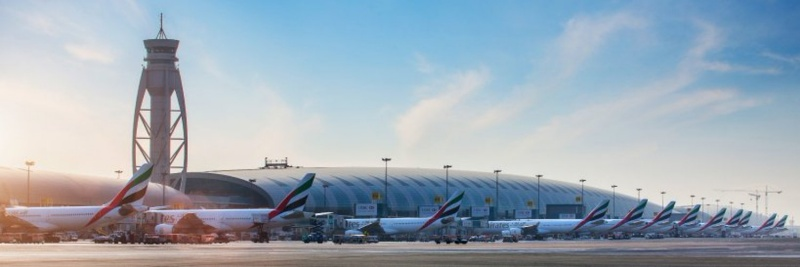
Dubai has also been working to restore broader urban functionality beyond tax policy adjustments. Dubai International Airport, which had suspended operations following Iranian attacks, partially resumed and had recovered to around 40–45% of normal flight capacity as of the 17th. CEO Paul Griffiths stated, “We have assisted more than one million passengers even after the outbreak of war,” expressing confidence in the recovery process. However, later that same day, a drone strike on a fuel tank caused a fire, forcing another suspension of flights. Repeated airspace closures and cancellations have left recovery efforts unstable.
These disruptions are directly affecting Dubai’s economic structure. Dubai International Airport handles approximately 95.2 million passengers annually, making it one of the world’s largest aviation hubs, with the aviation sector accounting for 27% of the city’s GDP. Since the outbreak of war, inbound passenger flows—including tourists and business travelers—have sharply declined. Even operating flights are largely empty, indicating a weakening demand base. The drop in long-haul demand from the United States and Europe has been particularly pronounced, reinforcing expectations that a full recovery will take considerable time.
Amid these challenges, Dubai authorities continue to project confidence, emphasizing that “Dubai remains one of the safest places on Earth.” At the same time, however, information controls have tightened. More than 25 foreigners have reportedly been arrested this month for posting war-related content on social media. Authorities have also warned that spreading information deemed to incite public panic could result in prison sentences exceeding two years and fines of at least $50,000. While leadership has repeatedly underscored its commitment to normalization through meetings with business leaders, restoring a sense of safety remains difficult as airports, ports, and tourist sites have all become potential targets.
Debate Over Policy Response Intensifies as Strategic Risks Mount
As internal instability grows, signs of strain are also emerging in external confidence. For global investors and corporations, the fact that a key financial and logistics hub in the Middle East has entered the direct impact zone of conflict represents a significant escalation in perceived risk. In the UAE, the port of Fujairah—an important oil export hub—was attacked on both the 14th and 16th, raising concerns over energy supply stability. This has also dented the “safe haven” image long associated with Dubai as a regional financial hub. Geopolitical risk is no longer a short-term variable but is increasingly embedded in broader investment considerations.
This shift is also feeding into local sentiment, extending into questions about alliance reliability. A Dubai resident said, “People here believed the United States would help, which is why they purchased U.S. weapons and allowed military bases. The sense of betrayal now is immense.” Regarding tensions around the Strait of Hormuz and the risk of prolonged conflict, the same resident added, “Many worry that the frontlines are simply expanding without delivering any meaningful stabilization.” As confidence in existing security arrangements weakens, debate over policy direction is intensifying.
The trajectory of the war itself is further fueling these concerns. On the 17th, entering its third week, Israel resumed large-scale airstrikes on Tehran, stating that it had hit more than 200 targets within 24 hours. At the same time, Israel expanded operations into southern Lebanon, claiming the destruction of over 1,700 military assets, more than 100 air defense systems, and over 120 detection systems. Iran responded by declaring that it was prepared to defend itself “for as long as it takes,” effectively signaling a prolonged conflict.
As a result, markets broadly expect that restoring Dubai’s core appeal as a “safe global hub” will take considerable time. Global capital moves based on stability and predictability, and both are now under pressure due to uncertainties surrounding alliance responses and repeated military threats. With key infrastructure and energy facilities increasingly targeted, analysts anticipate a reassessment of asset allocation strategies among corporations and investors. As signs of a prolonged conflict emerge, the capital inflow structure centered on Dubai is likely to face mounting pressure for realignment.
Similar Post