“Chinese Firms Seize 70% of the Battery Market” — Korean Battery Makers Under Siege, With Even the ESS Gambit Facing Clear Limits

Authored On
Modified
Chinese battery manufacturers surpass a 70% market share, tightening their grip on global market leadership
Korea’s three battery makers, hit by slumping market share and earnings, seek an opening through ESS
“Unable to fill the EV void any time soon” — ESS, too, faces unmistakable growth constraints
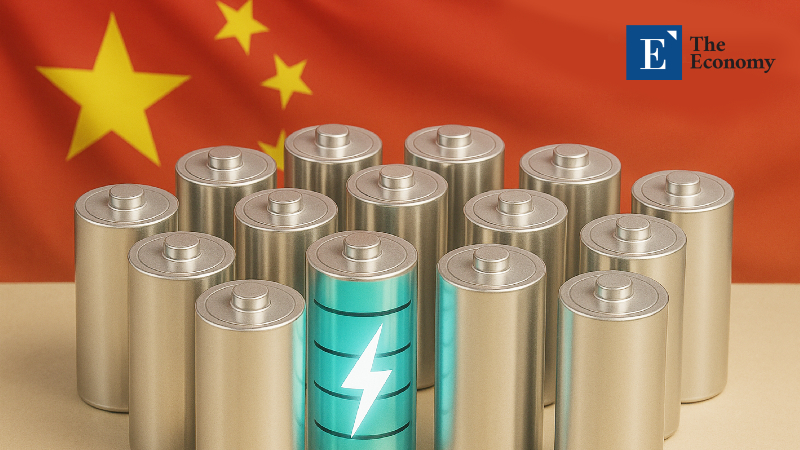
Chinese battery manufacturers are rapidly expanding their market clout. As policy shifts in the United States unsettle the standing of Korea’s three battery makers, Chinese rivals have exploited the gap to sharply widen their market share. Korean companies have identified energy storage systems (ESS) as a new breakout avenue and are pouring resources into overcoming the crisis, but the market is also raising concerns that ESS offers only limited growth headroom, making any sense of relief premature.
The Surge of Chinese Batteries
According to a March 19 report by Nikkei Asia, citing data from energy market research firm SNE Research, six of the world’s top 10 battery installation companies last year were Chinese. Contemporary Amperex Technology Co. Ltd. (CATL), which posted a 39.2% market share, successfully absorbed substantial demand from major European automakers including Volkswagen and Mercedes-Benz, underpinned by its broad product lineup. BYD cemented its No. 2 position by increasing supplies to Stellantis and Xiaomi, while later entrants such as CALB (No. 4) and Gotion (No. 5) also expanded shipments and strengthened their market presence. The combined market share of these firms reached 70.4%.
By contrast, Korean battery companies, which have concentrated on U.S.-bound investment over the past several years, are now grappling with a bruising political realignment on the ground. The second Donald Trump administration’s repeal of the EV-friendly policies pursued by former President Joe Biden has effectively put the brakes on existing plant operations and investment plans. Amid that upheaval, the combined market share of Korea’s three battery makers fell to 15.3% last year, roughly half the 2021 level, while earnings also came under severe strain. LG Energy Solution posted net profit of USD 54.0 million last year, down 76% from a year earlier. That figure amounts to less than 1% of CATL’s net profit over the same period. SK On and Samsung SDI both recorded annual losses.
That trajectory has continued into this year. SNE Research data show that total battery consumption for battery electric vehicles, plug-in hybrid vehicles (PHEVs), and hybrid electric vehicles (HEVs) registered worldwide in January reached 71.9 gigawatt-hours (GWh), up 10.7% from a year earlier. Of that total, the combined usage share of Korea’s three battery makers stood at 12%, down 4.3 percentage points from the same month a year earlier. CATL, meanwhile, posted a 45.2% share, up 5.3 percentage points over the same period, while BYD held onto second place at 13.8%, down 1.8 percentage points.
Korean Battery Industry Concentrates Firepower on ESS
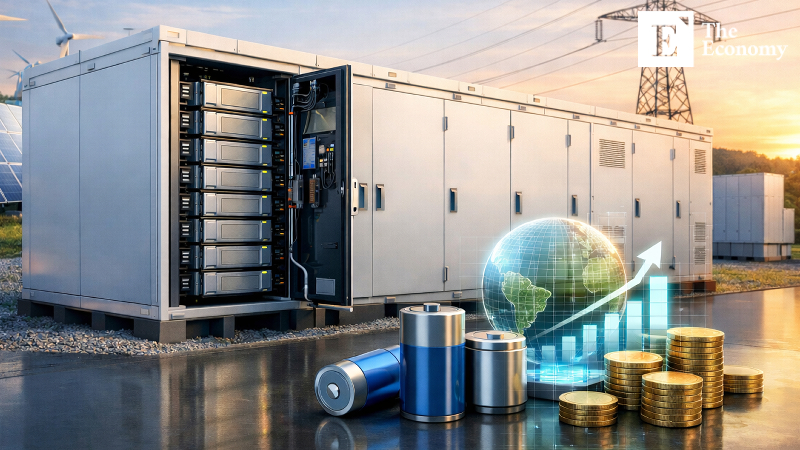
Korean battery companies, confronted with a weakening market position, have now designated ESS as a new growth engine. ESS refers to systems that store electricity in advance and deploy it when needed, and they are drawing attention as critical infrastructure for AI data centers and other facilities that must manage vast volumes of power with stability. Installing ESS at data centers allows immediate power delivery in the event of outages or voltage fluctuations, preventing server shutdowns while also smoothing loads to reduce electricity costs and enhance grid stability.
The three battery makers have been securing ESS supply contracts in succession, centered on the North American market. LG Energy Solution, for instance, signed a contract in July last year to supply LFP batteries for ESS worth USD 3.97 billion. The contract will run for three years beginning in August 2027, and while the counterparty has not been disclosed, Tesla is widely viewed within the industry as the leading candidate. SK On also entered the North American market in earnest in September last year by signing a battery supply contract for ESS with U.S. renewable energy company Flatiron Energy Development.
Samsung SDI signed a contract late last year to supply LFP batteries for ESS worth USD 1.34 billion with a U.S. energy infrastructure development and operations company. More recently, Samsung SDI America (SDIA), the company’s North American subsidiary, also signed a similar agreement with a U.S. energy specialist. The contract is worth about USD 1.00 billion, with supplies scheduled to be delivered in phases over four years from this year through 2029. In addition, Samsung SDI is reportedly in talks with multiple global clients over further supply agreements.
These companies also engaged in fierce competition in ESS bidding backed by the South Korean government. The government previously conducted first- and second-round ESS central contract market tenders last year, each worth USD 668.4 million. The first round was opened and conducted in May last year, while the second was announced in November and accepted applications through January this year. Each company is said to have pushed aggressively to secure order volume, even at minimal margins. The objective was to establish a track record of orders to support expansion into major overseas markets such as North America. As a result, Samsung SDI captured more than half the volume in the first round, while SK On did the same in the second.
Growth Constraints Tightening Around ESS
Still, some in the market argue that the limitations of ESS must not be overlooked. The criticism is that ESS will struggle to fill the gap left by EV batteries within a short timeframe. In fact, EVs account for roughly 70% to 75% of total global battery demand, while ESS represents only about 15% to 20%. That means the ESS market would need to sustain far steeper growth than it does now in order to offset the contraction in the EV market.
Another factor cited as constraining the tangible growth of related companies is the shortage of grid infrastructure in the United States, the core demand market for ESS. The U.S. is currently seeing approvals and rollouts for renewable energy and ESS projects delayed in succession due to a shortage of aging transformers and slow transmission grid expansion. In that regard, one market official said, “Everyone sees ESS as a meaningful alternative within the battery market,” while adding, “Demand for ESS from AI data centers and the like is certainly substantial, but as long as grid infrastructure remains insufficient, bottleneck issues will be impossible to avoid.”
The relative instability of ESS demand is also viewed as a problem. According to data from the U.S. Energy Information Administration (EIA), the growth rate of new ESS installations this year is projected to remain around 20%. That is less than half of last year’s 50% growth rate, based on Wood Mackenzie data. The reason the growth outlook has weakened so sharply within just one year is that, given the characteristics of fixed installations that operate over long periods once deployed, there is a high risk of a growth vacuum emerging after an initial wave of concentrated installation. Nor can the possibility of further demand volatility be ruled out should policy conditions in various countries or the investment cycle for AI data centers begin to shift.
Similar Post