[U.S.-Iran War] U.S. Weighs Ground Troop Option Targeting Kharg Island, Aiming at Iran’s Oil ‘Heart’

Authored On
Modified
Beyond airstrikes, a scenario of ‘occupation’
Focus shifts to Kharg Island’s strategic value
Ground deployment raises risk of full-scale war
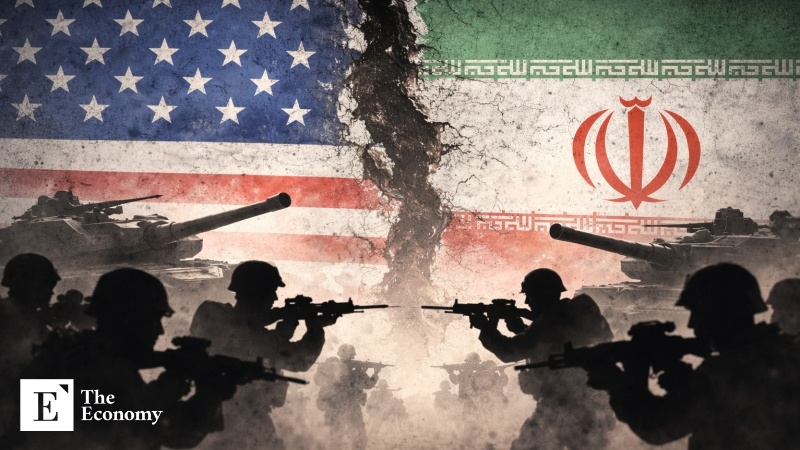
Reports indicate that the United States is considering deploying ground forces to Kharg Island, moving beyond the existing phase of airstrikes in its military operations against Iran. As military objectives—securing nuclear materials and controlling the Strait of Hormuz—converge, plans to directly seize a specific strategic point appear to be taking shape. Tensions surrounding Kharg Island, which handles roughly 90% of Iran’s oil exports, are rising, with potential implications for global energy flows. At the same time, Israel has launched a ground operation in southern Lebanon, increasing the likelihood of a prolonged conflict and a cascading expansion of battlefronts.
Objective of seizing core infrastructure
On the 18th, Reuters, citing U.S. government officials, reported that “the U.S. Department of Defense has recently begun reviewing a plan to deploy ground troops to occupy Kharg Island, Iran’s key oil-producing hub, and secure safe navigation routes in the Strait of Hormuz.” Since launching military operations against Iran on the 28th of last month, U.S. forces have conducted more than 7,800 airstrikes, focusing on neutralizing Iran’s military capabilities. However, as President Donald Trump has expressed strong determination to secure Iran’s nuclear materials and achieve full control of the Strait of Hormuz, the option of deploying ground forces has reportedly entered serious consideration as a means to that end.
Discussions surrounding Kharg Island suggest an approach premised on occupation rather than destruction. Military experts in the United States are understood to have concluded that directly controlling the island would be strategically more advantageous than destroying it, a judgment reflecting the island’s concentration of oil refining and storage facilities. With a population of roughly 8,000 and limited civilian infrastructure, the island is viewed as a location where core facilities could be seized with relatively low resistance. For this reason, the current discussion of deploying ground troops carries the character of securing a specific economic and military hub, rather than merely conducting military strikes.
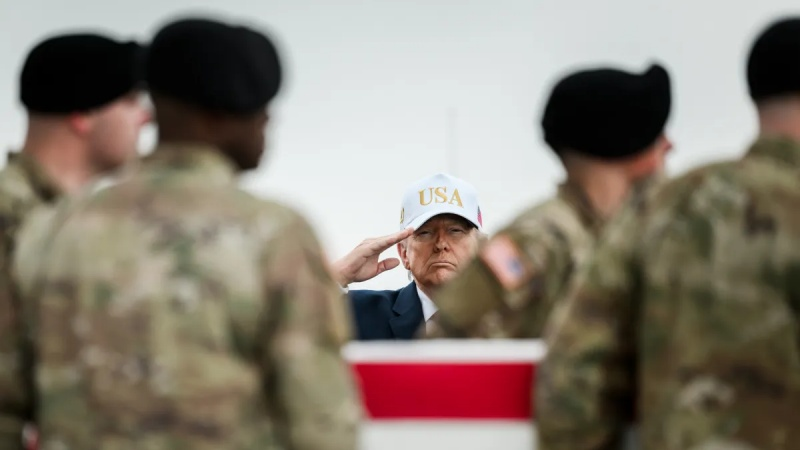
The issue is that such a scenario could impose political costs on President Trump. With 13 U.S. military fatalities and more than 200 wounded already reported in the conflict, expanding into a ground war would likely entail additional casualties. On his social media platform Truth Social, President Trump suggested the possibility of a strategic pullback, stating, “After we finish off the Iranian terror state, perhaps the countries using the Strait of Hormuz should take responsibility for it themselves.” The White House also maintained a cautious stance, saying, “The president is keeping all options available,” while adding that “no decision has been made regarding the deployment of ground forces.”
Concentration of oil refining, storage, and shipping facilities
Kharg Island, located in the northern Persian Gulf, is Iran’s primary oil export hub, situated about 28 kilometers off the mainland. The coral island, approximately 8 kilometers long and 4 to 5 kilometers wide, is not large in size but benefits from deep surrounding waters that allow ultra-large crude carriers to dock with ease. Roughly 90% of Iran’s total oil exports pass through the island en route to major Asian importers such as China and India, resulting in a high concentration of oil-related infrastructure. This combination of geographic conditions and logistics has made Kharg Island a central pillar of Iran’s export system.
Within its limited area, the island hosts large-scale terminals integrating oil refining, storage, and shipping functions. Its annual handling capacity reaches approximately 950 million barrels, with actual exports operating at around 1.5 million to 1.6 million barrels per day. A complex network of subsea pipelines channels crude from offshore fields in the Persian Gulf to the island, where it is stored, processed, and shipped abroad. Production, storage, and export are all carried out at a single location, meaning that any disruption to the island’s function would inevitably affect Iran’s broader economy.
From a military standpoint, Kharg Island is also regarded as a highly significant asset. It hosts facilities used by the Iranian navy and the Islamic Revolutionary Guard Corps, along with multiple missile storage bunkers. Its geographic position near the maritime routes connecting the Persian Gulf to the Strait of Hormuz gives it strategic value as a potential base for blockade operations in the event of conflict. Francis Galgano, an associate professor at Villanova University specializing in military geography, analyzed that “occupying or completely destroying Kharg Island would require a large-scale ground force, potentially close to 5,000 troops.”
U.S. forces previously carried out an airstrike on Kharg Island on the 13th. At the time, President Trump stated on Truth Social, “At my direction today, U.S. Central Command conducted one of the most powerful bombardments in Middle East history,” adding that “all military targets on Iran’s Kharg Island were completely destroyed.” He further noted, “Out of respect, I chose not to destroy the island’s oil infrastructure.” This reflects a strategy that distinguishes between military facilities and energy infrastructure, indicating that both the economic and military value of the site are being considered simultaneously.
Rising risks of a prolonged conflict
Assessments are divided on whether deploying ground forces constitutes a realistic option. While President Trump continues to project a hardline stance, some analysts argue that the immediate expansion into a ground war remains limited when considering actual force composition and operational readiness. According to the Center for Strategic and International Studies (CSIS), two aircraft carriers and 16 surface combatants are currently deployed near Iran. This represents the largest concentration of naval power since five carrier strike groups were mobilized at the outset of the 2003 Iraq War, but the Marine forces and logistical systems required for amphibious operations are assessed as insufficient.
Mark Cancian, a senior adviser at CSIS, and researcher Chris Park noted that “the U.S. forces currently deployed in the Middle East are sufficient for punitive airstrikes, but somewhat inadequate for conducting a large-scale ground war like the 1991 Gulf War.” Iran’s scale itself also poses a significant challenge. With a population of 93 million and a land area of 1.64 million square kilometers, Iran is three times larger than Iraq and has more than double its population, meaning that the manpower and supply burden required for occupation and control would increase sharply. Reports indicate that concerns have also been raised within the U.S. Joint Chiefs of Staff about the risk of large-scale casualties and a transition to a prolonged conflict if ground forces are deployed.
From a logistical standpoint, the burden of a prolonged war is also considerable. Charles Wald, former deputy commander of U.S. European Command, stated in an interview with Fox News that “offensive conventional munitions can be replenished, but defensive systems such as Patriot, SM-3, and Israel’s Arrow are always in short supply.” During the so-called ‘12-day war’ between Israel and Iran last year, U.S. forces reportedly expended more than 150 THAAD interceptor missiles in a short period, equivalent to roughly one-quarter of total U.S. stockpiles worldwide.
Meanwhile, on the 16th, Israel launched a ground operation in southern Lebanon against the Iran-backed militant group Hezbollah. Israeli Defense Minister Israel Katz stated that the operation would proceed “in a manner similar to military operations conducted in Gaza,” implying a scenario involving prolonged occupation of specific areas. Hezbollah has responded by launching dozens of missiles and drones daily. If the broader so-called “Axis of Resistance,” including Hezbollah, were to respond simultaneously, the conflict could expand across multiple fronts. This underpins the assessment that the decision on whether to deploy U.S. ground forces hinges on how far the United States is prepared to extend the scope of the war.
Similar Post