Japan Unveils $73 Billion Investment Package to Deflect Trump’s Troop Pressure, Using Diplomacy and Capital to Avert Military Risk

Siobhán Delaney is a Dublin-based writer for The Economy, focusing on culture, education, and international affairs. With a background in media and communication from University College Dublin, she contributes to cross-regional coverage and translation-based commentary. Her work emphasizes clarity and balance, especially in contexts shaped by cultural difference and policy translation.
Authored On
Modified
Trump Urges Japanese Deployment, Citing Reliance on the Strait
Takaichi Mounts Defense With $73 Billion U.S. Investment Package
Scale More Than Doubles From First-Round Project
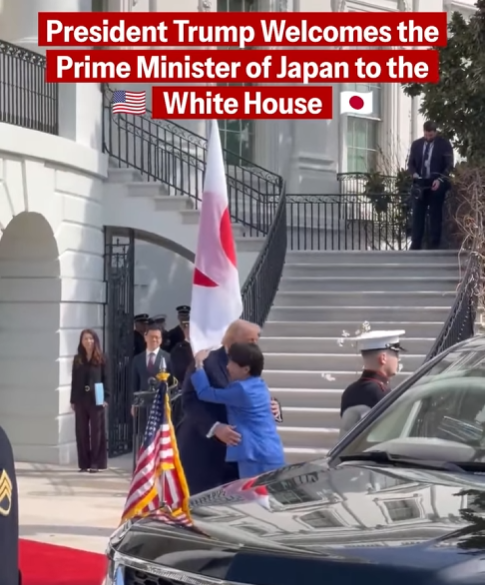
Amid mounting tensions in the Middle East, the United States has stepped up pressure on its allies for military participation, but Japan responded cautiously, invoking its legal constraints. Instead, it countered with diplomatic support and a large-scale investment package. The approach is widely seen as an attempt to prevent fissures in the alliance by keeping its distance from direct military involvement while delivering the kind of tangible gains President Donald Trump prizes.
Takaichi Sidesteps Immediate Entanglement in the Iran Crisis by Elevating Trump
According to The Washington Post (WP) on the 19th (local time), President Trump, during the U.S.-Japan summit at the White House that day, called for an expanded Japanese role in defending the Strait of Hormuz. Referring to Japan’s dependence on oil shipments through the strait and the security contribution the United States provides through U.S. Forces Japan, Trump said he expected Japan to “step up.”
Trump said, “There are currently 45,000 U.S. troops stationed in Japan, and the United States is providing enormous financial support to Japan,” adding, “Given that relationship, a more proactive response from Japan would be a natural progression, and it would not be surprising if it actually took action.” He also stressed that “more than 90% of the oil used by Japan is transported through the Strait of Hormuz, which gives it a clear reason to be involved.” He stopped short of mentioning any specific form of support, such as dispatching warships, and instead moderated his tone by using the general formulation that Japan should “step up.”
In response, Japanese Prime Minister Sanae Takaichi condemned Iran’s blockade of the Strait of Hormuz and signaled what amounted to de facto support for the United States, while remaining notably restrained on any specific support measures related to the strait issue. Referring to the escalating tensions in the Middle East, Takaichi told Trump, “I believe only you can bring peace to the world,” expressing her support. She then added, “Iran’s development of nuclear weapons must never be tolerated,” and said, “Japan strongly condemns Iran’s attacks on neighboring areas and its effective blockade of the Strait of Hormuz.”
What was discussed in the closed-door meeting that followed has not been confirmed, but at the very least, there was no public mention of what form of assistance Japan might provide with respect to the Strait of Hormuz. This is interpreted as underscoring the Japanese government’s continued caution about sending warships or Self-Defense Forces to an active combat zone under the framework of Japan’s “peace constitution,” which renounces the use of force as a means of settling international disputes.
A ‘Gift’ of Investment to the United States, More Than Twice as Large
Instead, Japan sought to placate the United States with a financial package. The move suggests Tokyo is striving to preserve the alliance by fully accommodating Trump’s economic demands for massive Japanese investment in the United States from key allies. Japan had previously finalized $36 billion in U.S. investment, and during this visit it unveiled a second-round project. In July last year, the United States and Japan agreed through trade talks that Washington would set tariffs on Japanese goods at 15%, 10 percentage points lower than originally planned, in exchange for Japan committing $550 billion in investment in the United States. Japan has since narrowed the scope while discussing concrete investment plans.
The second-round investment package, secured alongside Takaichi’s first trip to Washington as prime minister, is worth as much as $73 billion. That is more than double the size of the first-round project announced last month. The core of the second phase is the strengthening of the energy alliance, centered on Japanese investment in three projects in the United States, including small modular reactors (SMRs) and natural gas-fired power plants. The Japanese government aligned itself with Trump’s logic of preventing Iran from acquiring nuclear weapons, giving him political backing while presenting areas of cooperation in energy and investment. Takaichi said at the summit, “I have brought concrete proposals to stabilize the global energy market.”
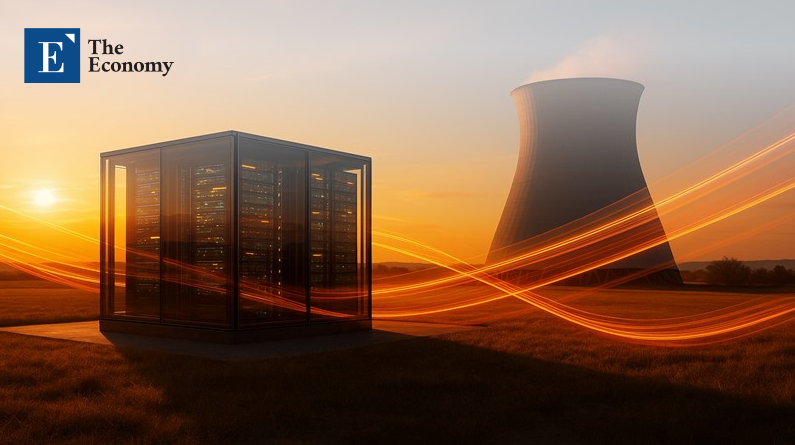
On SMRs, Hitachi of Japan and U.S. firm GE Vernova will establish a joint venture in Tennessee and elsewhere, with the Japanese side investing up to $40 billion. In a joint document, the two countries stated, “SMRs will strengthen U.S.-Japan leadership in the global technology race as a next-generation large-scale power source.”
Japan will also invest up to $33 billion to build natural gas-fired power plants in Pennsylvania ($17 billion) and Texas ($16 billion). The aim is to respond to surging electricity demand driven by artificial intelligence (AI) data centers. Japanese companies including Toshiba, Hitachi, and Mitsubishi Electric are expected to supply components and equipment for the natural gas power generation projects. The Yomiuri Shimbun interpreted the move as follows: “With the Iran situation bringing stable energy supply to the fore as a key challenge, the intention appears to be to demonstrate Japan’s proactive engagement.”
Investment in Alaska Oil Output Infrastructure and Copper Smelting Also Under Review
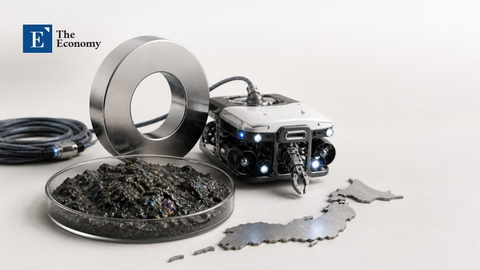
The two countries also left the door open to further cooperation. A joint document listed additional investment projects under consideration, including infrastructure to boost oil production in Alaska, large-scale reactors, advanced display plants, copper smelting facilities, and batteries for data centers. They also agreed to strengthen economic security cooperation. Japan will jointly pursue development of rare earth mud in waters near Minamitorishima and agreed to establish a joint working group for deep-sea mineral development. In addition, under the name “U.S.-Japan Critical Minerals Project,” the two countries will promote rare earth refining and copper smelting in Indiana, lithium mine development in North Carolina, and copper mine development in Arizona.
In the security domain, the two sides discussed broad-based security cooperation, including the joint development and production of missiles aimed at strengthening the deterrence and response capabilities of the U.S.-Japan alliance. For the Takaichi government, which is seeking to position Japan as a country capable of waging war, cooperation such as joint missile development with the United States appears to provide momentum for efforts to bolster Japan’s military footing in East Asia.
The two countries also agreed to maintain close coordination on China-related issues. With China in mind as it uses critical minerals such as rare earths as leverage for economic coercion, the two sides decided to formulate a “U.S.-Japan Action Plan to Strengthen Critical Minerals Supply Chain Resilience.” In her opening remarks, with sharply escalating tensions with China in mind, Takaichi said, “The security environment is extremely severe not only in the Middle East but also in the Indo-Pacific,” underscoring the need for continued U.S. engagement in East Asian security.
Taken together, this U.S.-Japan summit bore the character of a “compromise-style alliance adjustment,” with Japan responding through economic and energy cooperation while the United States pressed allies to share more of the security burden. For Japan, the posture appears to be one of maintaining caution on direct military contributions in relation to the Strait of Hormuz while presenting concrete cooperation measures in the investment and energy sectors that Trump values, thereby handing him deliverables he can promote to his political base.
Siobhán Delaney is a Dublin-based writer for The Economy, focusing on culture, education, and international affairs. With a background in media and communication from University College Dublin, she contributes to cross-regional coverage and translation-based commentary. Her work emphasizes clarity and balance, especially in contexts shaped by cultural difference and policy translation.
Similar Post