“From Patents to Mass Production” All-Solid-State Batteries Near Market Entry, with ‘Cost and Yield’ as Final Hurdles

Authored On
Modified
Patent disclosures intensify the race for technological leadership
Manufacturing costs and yield issues remain unresolved
Korea, China, and Japan compete on production and cost gaps
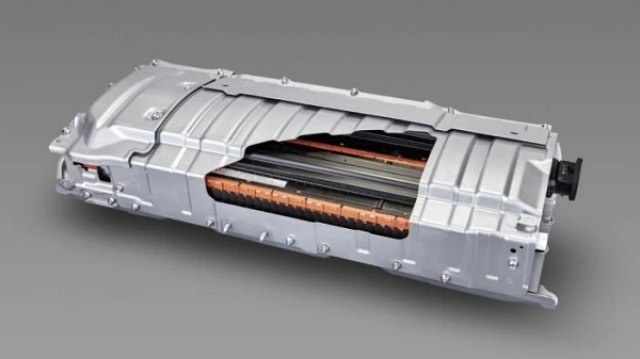
As patents related to all-solid-state batteries continue to surge worldwide, major global automakers have also begun real-world vehicle application tests, leading to assessments that the technological competition has entered a phase of preparation for commercialization. With production timelines and application cases being presented simultaneously, all-solid-state batteries are no longer viewed as a theoretical technology but as one in a development stage premised on market deployment. High costs and complex manufacturing processes remain key challenges to resolve, but China appears to be accelerating efforts to secure leadership based on large-scale investment and production expansion.
Increase in companies entering pilot production
China’s largest battery manufacturer Contemporary Amperex Technology Co. Limited (CATL) filed a patent with the World Intellectual Property Organization (WIPO) earlier this month related to “cathode sheets, all-solid-state battery cells, battery devices, and manufacturing methods.” In the patent documentation, CATL detailed material structures and operating mechanisms aimed at simultaneously ensuring the stability and performance of all-solid-state batteries. The company explained that a cathode structure utilizing fluorine-containing lithium salts and sulfide-based solid electrolytes would enhance electrolyte stability while also contributing to longer battery life and improved charging speeds.
Such disclosures suggest that all-solid-state batteries have moved into a stage focused on actual mass production. CATL has already begun pilot production of all-solid-state batteries with an energy density of around 500 Wh/kg and has reportedly advanced designs centered on scaling to 60Ah automotive cells for vehicle applications. Based on this, CATL plans to enter mass production as early as possible. Wu Kai, chief scientist at CATL, stated, “Plans to begin small-scale production in 2027 are progressing without disruption, and we expect mass production to be feasible by around 2030 at the latest.”
Global automakers have also entered the validation phase for all-solid-state batteries. Mercedes-Benz has partnered with U.S.-based solid-state battery specialist Factorial. Using the “Solstice” platform, which achieves an energy density of 450 Wh/kg—80% higher than conventional lithium-ion batteries—the companies succeeded in driving a modified EQS over 1,200 kilometers. Volkswagen has also initiated vehicle testing of all-solid-state batteries developed with its Chinese partner Gotion High-Tech, featuring an energy density of approximately 350 Wh/kg and a single-cell capacity of 70Ah. When applied to mass-produced electric vehicles, these batteries are expected to enable a driving range of up to 620 miles (1,000 km).
As development based on mass production and validation through vehicle applications proceed simultaneously, preparations for market entry are also gaining momentum. Japan’s Toyota has been jointly developing mass-production technology for sulfide-based solid electrolyte batteries with domestic refiner Idemitsu Kosan since 2023 and has recently decided to push ahead with constructing a plant for full-scale production. The two companies aim to commercialize electric vehicles equipped with all-solid-state batteries between 2027 and 2028. To achieve this, they are collaborating with Sumitomo Metal Mining to secure high-performance cathode materials, with plans to ultimately establish solid electrolyte production capacity on the order of hundreds of tons annually.
Inevitable price resistance in the early stages of mass production
The challenge lies in the accumulation of unresolved issues, including high production costs and yield management. Lithium sulfide, an essential material for manufacturing all-solid-state batteries, is traded at prices up to 60 times higher than those of raw materials used in conventional liquid electrolytes, driving up overall battery cell costs. Considering that lithium iron phosphate (LFP) batteries have dominated the electric vehicle market due to their price competitiveness, all-solid-state batteries face a structural disadvantage under the same conditions. Combined with the fact that batteries account for approximately 40% of an electric vehicle’s total cost, rising costs directly translate into higher vehicle prices, posing the greatest barrier to entry into the mass market.
Manufacturing processes are also cited as a factor complicating the transition to mass production. All-solid-state batteries require solid electrolytes and electrodes to be in perfect contact to ensure performance, necessitating specialized processes that apply strong pressure to compress internal materials. Any microscopic voids or contact defects that arise during this process directly lead to performance degradation, making it difficult to maintain consistent quality. In large-scale production, maintaining uniform quality while ensuring production speed is essential, but current technological levels are widely viewed as insufficient to simultaneously achieve both process stability and production efficiency.
As a result, experts agree that even if all-solid-state batteries enter the mass production phase, their initial applications will likely be limited to segments with lower price sensitivity. Shirley Meng, a professor at the University of Chicago, noted, “The automotive market is highly price-sensitive and conservative,” adding that “the first generation of all-solid-state batteries is likely to focus for the time being on high-end markets such as drones and humanoids, where margins are higher.” Kim Kyung-soo, a principal researcher at the Korea Electronics Technology Institute, also stated, “Ultimately, competitiveness in all-solid-state batteries comes down to price,” suggesting that achieving both cost and performance simultaneously will remain challenging even after commercialization.
Technology vs. cost, intensifying competition for leadership
Amid this landscape, China is advancing efforts to secure technological leadership and expand production simultaneously, with companies such as CATL and BYD filing more than 36% of all-solid-state battery patents each year. Huawei, a later entrant to the industry, also disclosed a patent in June last year related to the development of all-solid-state batteries with energy densities of 400–500 Wh/kg, signaling its intent to improve stability. The aggressive moves by Chinese firms share a common focus on scaling production based on labor cost advantages and government support. This suggests the possibility that leadership in terms of price and supply within the all-solid-state battery market could shift rapidly.
China is also taking steps to establish global standards. The China Automotive Technology and Research Center released a draft standard at the end of last year titled “All-Solid-State Batteries for Electric Vehicles—Part 1: Terminology and Classification,” codifying the criteria, definitions, and classification system required for recognition as all-solid-state batteries. Following the finalization of terminology in this phase, the plan is to sequentially expand the standard to include Part 2 (performance specifications), Part 3 (safety specifications), and Part 4 (lifecycle specifications). China is the first in the world to establish standards for all-solid-state batteries, and the draft is expected to be finalized after incorporating feedback from industry and academia.
Japan, under the Ministry of Economy, Trade and Industry’s battery industry strategy, has set commercialization of all-solid-state batteries by 2030 as a national strategic objective. Accordingly, government support totaling approximately Misplaced &160 million last year to $2.45 billion by 2033.
In South Korea, Samsung SDI is considered to hold the most advanced technology. The company began operating a pilot production line last year, targeting 2027 for initial mass production. LG Energy Solution and SK On plan to complete preparations for mass production around 2030. Both companies aim to enhance technological maturity and pursue a “premium strategy.” Hyundai Motor Group has also joined the race. Hyundai Motor and Kia are developing all-solid-state batteries with the goal of mass production next year, and they are reported to have succeeded in large-scale production at a pilot line established in Uiwang, Gyeonggi Province, at the end of last year.
Similar Post