Japan Resumes LNG Carrier Construction, With Break From Obsolescent Technology and Securing Skilled Labor Holding the Key to Revival

Authored On
Modified
Japan depends on imports for 98% of its LNG, making transport itself a security issue
China-Japan tensions remain elevated over remarks on a Taiwan contingency
Concern grows that vessels built in China may not be delivered
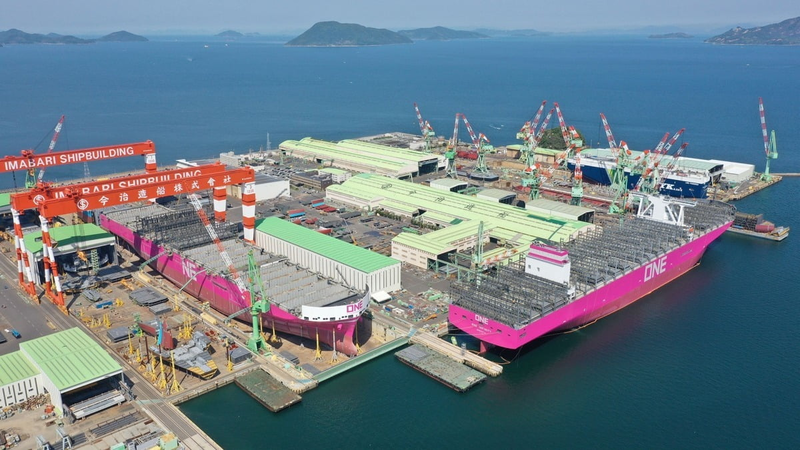
Japan, once a global shipbuilding powerhouse, is making a full-fledged return to the liquefied natural gas (LNG) carrier market after a seven-year hiatus. Having expanded its scale through a strategic merger between major domestic shipbuilders, Japan aims to reclaim leadership in the high-value-added vessel segment with sweeping government backing. Yet the outlook for rebuilding the industry remains far from smooth, as Japan lost its dominance to South Korea and China after clinging to aging technology, while the seven-year gap has compounded labor dislocation and equipment obsolescence.
LNG Carrier Construction Revisited After Seven Years, With Industry Leader Imabari Tapped
According to Kyodo News on March 20, Japan’s Ministry of Land, Infrastructure, Transport and Tourism discussed a plan at an expert meeting the previous day to resume domestic LNG carrier construction, which has been suspended since 2019. The meeting was said to have included numerous experts from the shipbuilding, shipping, and energy sectors. The push to revive LNG carrier construction forms part of the Takaiichi Sanae cabinet’s broader economic security agenda, and the leading option under discussion is for Imabari Shipbuilding, Japan’s largest shipbuilder, to build the vessels by utilizing the Koyagi plant of Oshima Shipbuilding in Nagasaki Prefecture on Kyushu.
The Koyagi plant was originally Mitsubishi Heavy Industries’ hub for LNG carriers. It was transferred to Oshima Shipbuilding in 2019 during Mitsubishi Heavy Industries’ restructuring. Although bulk carriers are currently built there, some facilities remain idle, leaving the site capable of LNG construction. Imabari Shipbuilding has been pursuing a merger with Japan Marine United, the country’s second-largest shipbuilder, since last year, and completed the acquisition process in January this year. The merger has elevated the company to the world’s fourth-largest shipbuilder, giving it greater heft to compete with South Korea’s HD Hyundai Heavy Industries and China’s CSSC.
The resumption of LNG carrier construction is part of the Japanese government’s broader plan to rebuild the shipbuilding industry. In December last year, the government unveiled a “shipbuilding industry revival roadmap,” setting a target of doubling domestic shipbuilding output to 18 million gross tons by 2035 while boosting productivity through shipyard automation and the development of smart yards.
Particularly striking is the government-backed “national shipyard” model. At the core of Japan’s shipbuilding revival project stands the government itself. Tokyo plans to invest 1 trillion yen, or about $6.26 billion, over the next decade through combined public-private funding, and is even considering establishing a state-run shipyard if necessary. The government and the shipbuilding industry are also set to contribute 380 billion yen and 350 billion yen, respectively, by 2035, with additional public funds to create a 1 trillion yen-scale shipbuilding fund. Japan’s shipbuilding sector had previously reduced the number of docks, or vessel construction facilities, from 138 to 46 through restructuring in the 1980s. The new plan reflects an intention to expand shipbuilding infrastructure once again under government leadership.
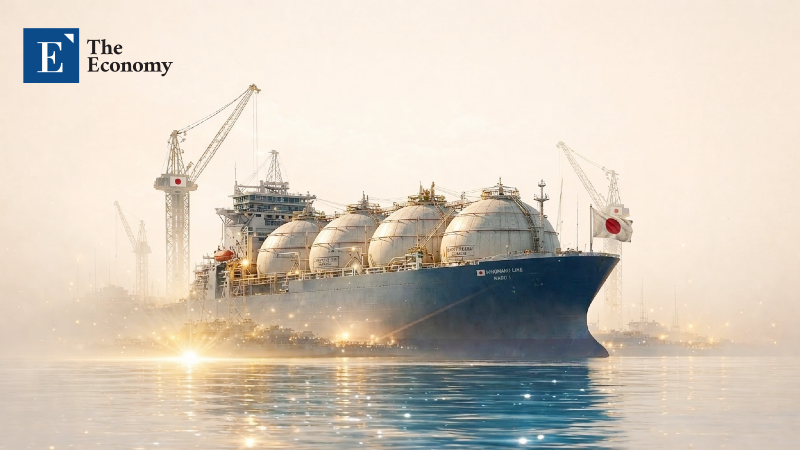
Security Above Economics, With “Domesticization” of Energy Transport Accelerating
Behind Japan’s renewed push for LNG carrier construction lies a rapidly changing international landscape. Japanese shipping companies have long placed orders for LNG carriers with South Korean and Chinese shipyards. China’s Hudong-Zhonghua Shipbuilding, for instance, secured orders for seven LNG carriers from Mitsui O.S.K. Lines under the Qatar LNG project, while some LNG carriers in projects involving Nippon Yusen and Kawasaki Kisen were also ordered from Chinese yards.
Recently, however, the rapid deterioration in relations with China has heightened concerns over relying on China for the transport of LNG, a strategic commodity. Amid China’s backlash to Prime Minister Takaiichi’s remarks suggesting intervention in a Taiwan contingency, Tokyo is increasingly wary that an inability to place LNG carrier orders with Chinese yards, or delays in the delivery of ships built there, could disrupt energy imports. For Japan, which depends on imports for roughly 97% of its oil, maritime transport constitutes the central artery of its energy supply chain. The ability to secure ships is directly tied to the country’s energy security architecture. China has already demonstrated leverage in the field of economic security by restricting rare earth exports to Japan.
Another reason Japan is fixated on securing its energy transport network is its experience during the first oil shock in 1973. After suffering a supply shock from the Middle East at that time, Japan has managed energy security as a core national policy for the past 50 years. Recent geopolitical conditions have further amplified that vulnerability. Tensions around the Strait of Hormuz have intensified amid instability in the Middle East stemming from the Iran war, while military tensions across the Taiwan Strait also persist. For Japan, which sources most of its energy from overseas, securing the stability of maritime transport routes has become an urgent task above all else.
Membrane-Type Technology and Talent Securing as the Decisive Variable
As recently as the 1980s, Japan was a shipbuilding giant that accounted for more than 60% of global output. But as the industry was reorganized into a South Korea-China duopoly, its share plunged to 11% as of last year. South Korea now dominates in quality and China in volume, leaving little room for an easy reversal. Even so, Japan’s aggressive posture is clearly drawing attention from South Korea’s shipbuilding industry. South Korea must already narrow its gap with China, which controls more than half of global shipbuilding output, and now faces the added burden of fending off Japan’s renewed challenge. Some observers say this could become a meaningful burden on the MASGA project — Make America Shipbuilding Great Again — which has been giving South Korea’s shipbuilding sector a second renaissance.
Still, whether Japan can turn its ambitious declaration into reality remains uncertain. The prevailing view is that Japan must first rebuild a shipbuilding ecosystem that has already badly eroded, and that doing so will be no easy task in a market effectively split between South Korea and China. In particular, securing skilled labor is critical in a labor-intensive industry, yet Japan’s pool of experienced shipbuilding workers has all but vanished after more than a decade of global industry stagnation since the mid-2010s.
A major factor behind this was the Japanese government’s policy failure. After misjudging the global shipbuilding outlook following the first and second oil shocks, the government embarked on sweeping rounds of restructuring in 1978-1980 and again in 1987-1988. The policy was dubbed the “shipbuilding rationalization policy.” In its wake, the number of shipbuilders shrank from around 60 to roughly 20, while half of the country’s docks were forcibly shut down. In that process, many workers with high-level expertise in design, welding, and painting lost their jobs. The government did not stop there. In 1998, it removed the word “shipbuilding” from a department name at the University of Tokyo and renamed it the Department of Environmental and Ocean Engineering. In effect, it abandoned the next generation of talent for the shipbuilding industry as well.
Japan faces clear limits not only in labor but also in technological capabilities. The country specializes in the aging Moss-type LNG cargo containment system, but the market is now led by the membrane-type system, which is better suited to larger vessels. Membrane-type systems can be built to conform to the hull’s shape, giving them superior space efficiency, but they are more vulnerable to impact and demand a higher level of engineering sophistication. South Korea’s big three shipbuilders — HD Hyundai, Hanwha Ocean, and Samsung Heavy Industries — possess overwhelming expertise in membrane-type technology. Japan, by contrast, has no track record of building LNG carriers over the past seven years, and is therefore expected to need considerable time merely to adapt to the new technological standard and rebuild credibility. Moreover, unlike China, Japan has little room to compete on price, given its higher raw material and labor costs. The assessment in the market is that Japan’s shipbuilding industry will find it difficult to acquire the capability to compete with South Korean and Chinese rivals within the next several years.
- Previous “From Patents to Mass Production” All-Solid-State Batteries Near Market Entry, with ‘Cost and Yield’ as Final Hurdles
- Next "Cargo Bound for the Middle East Ends Up in India" Maritime Order Descends Into Chaos Amid Middle East War, With Freight Rates Surging but Shipping Profitability in Doubt
Similar Post