"Cargo Bound for the Middle East Ends Up in India" Maritime Order Descends Into Chaos Amid Middle East War, With Freight Rates Surging but Shipping Profitability in Doubt

Authored On
Modified
Middle East conflict deepens turmoil across the shipping industry, with cargo indiscriminately unloaded
Seaborne freight rates soar, overturning prewar forecasts, as political variables reshape the industry landscape
"Even with higher freight rates, there is little left over" as cost pressures mount for shipping lines
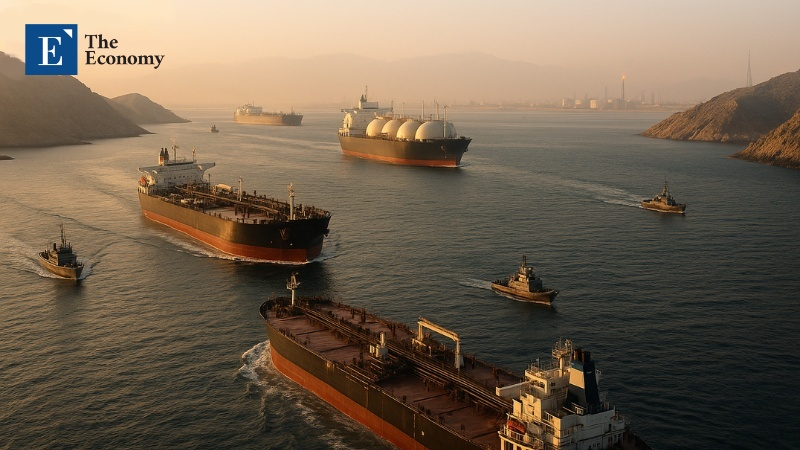
The shipping industry has descended into a lawless state amid the Middle East conflict. With passage through waters near Gulf states, including the Strait of Hormuz, effectively restricted, turmoil is intensifying as ocean freight rates soar and cargoes are unloaded at ports other than their intended destinations. Shipping lines, crushed by enormous cost pressures stemming from geopolitical risk, are finding little reason to celebrate despite the spike in freight rates.
Shipping Industry in Turmoil Amid Middle East Risk
On June 18 local time, the Financial Times reported that the Middle East war had plunged the shipping industry into chaos akin to the "Wild West." Since the outbreak of the war, Iran has effectively blockaded the Strait of Hormuz, while fears of attacks by Yemen’s Houthi rebels in the Red Sea have also curtailed passage through waters near the Gulf states. Further compounding the disruption, debris from an airstrike fell on Jebel Ali, Dubai’s main port in the United Arab Emirates, sparking a fire, underscoring how even ports once regarded as relatively safe are now facing repeated disturbances.
Against this backdrop, major global shipping companies including MSC, Maersk, CMA CGM and Hapag-Lloyd recently notified customers, citing a 19th-century rule, that "shipping lines have the right to unload containers at the nearest port, and the costs must be borne by the customer." In connection with this, David Ozard of moving company John Mason International said, “Containers bound for the Middle East are being unloaded in India, while cargo destined for Saudi Arabia is being left in the UAE, forcing companies to shoulder additional storage charges and import costs.” He added, “The current shipping environment is a complete Wild West,” and complained that “if additional fees are not paid, shipping lines suspend accounts and effectively hold cargo hostage.”
Shippers with long-term contracts are facing similar conditions. The effectively oligopolistic shipping industry is wielding disorder in the international supply chain as leverage to dominate trade networks. Among the hardest hit are European fresh produce exporters now entering the peak Middle East export season. Refrigerated containers carrying fresh produce are currently being shipped to areas near the Middle East by sea and then transported overland into Gulf states. Philippe Binard, secretary general of the European fresh produce industry association Freshfel, said, “Even if cargo arrives at Jeddah port in Saudi Arabia, securing inland transport is fiercely competitive, and in such an unstable period border customs clearance is far from easy,” adding, “Given the nature of fruit, which requires special documentation, going through revised procedures results in enormous additional costs.”
Surging Ocean Freight Rates and Secondhand Vessel Prices
Ocean freight rates to the Gulf are also rising sharply. At present, container freight rates on the Europe-Middle East route stand at about $6,000 per TEU, roughly four times the previous level of $1,500. When additional inland transport costs, storage fees, port charges and import fees are taken into account, extra expenses can approach $1,000. On top of that, rising bunker fuel prices have increased the burden of emergency fuel surcharges, while charter rates for container ships have hit their highest level since the COVID-19 pandemic amid surging vessel demand.
Prices for secondhand oil tankers are also climbing to extreme levels. Premiums have begun attaching to ships that can be deployed immediately, as opposed to new vessels that require more than three years for delivery. According to Clarkson Research, a UK-based shipbuilding and shipping market analytics firm, the price of a five-year-old, 300,000-ton very large crude carrier, or VLCC, stood at $140 million as of the sixth of this month, up 25% from $112 million in February last year. By comparison, the contract price for a newbuild VLCC of the same class was $128.5 million. On the same day, the price of a five-year-old secondhand Suezmax crude carrier, the largest class of tanker capable of transiting the Suez Canal, reached $88 million, exceeding the $87.5 million price of a newbuild.
Against this backdrop, the market is paying close attention to how geopolitical factors have completely upended the industry landscape. Until last year, various research institutions had forecast that the shipping market was moving beyond a temporary adjustment and into a fundamental downcycle. Maritime Strategies International, a UK-based shipping market analysis firm, had projected that freight rates on North American and European routes would continue to decline through 2028 due to the impact of U.S. tariffs. TradeLens, South Korea’s import-export logistics platform, had also assessed that spot ocean freight rates this year were likely to fall by as much as 25% from a year earlier, effectively reverting to pre-pandemic levels. In this regard, one shipping industry official said, “The rise in freight rates, which has overturned earlier market expectations, clearly illustrates how sensitive the shipping industry is to political variables,” adding, “The direction of the shipping market now hinges on whether the Middle East crisis becomes prolonged.”
Shipping Lines Say Meaningful Profitability Improvement Remains Difficult
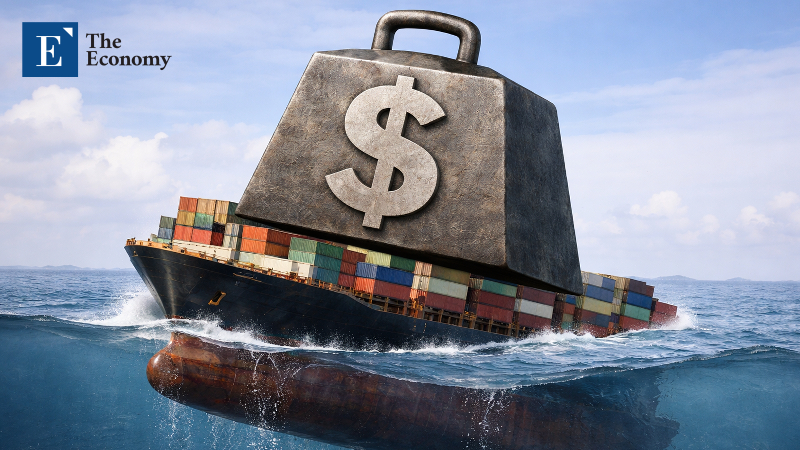
The problem is that the current rise in freight rates is failing to translate into an unambiguous boon for the shipping industry. The war has simultaneously driven up the cost burden of vessel operations. Singapore very low sulfur fuel oil, or VLSFO, which stood at $511 per ton before the Middle East crisis, had surged to $1,049 as of June 13, more than doubling. Singapore marine fuel is produced and supplied by refining Middle Eastern crude in Singapore, making it the benchmark fuel price for actual bunkering by Korean shipping companies. By contrast, during the same period, the Shanghai Containerized Freight Index, or SCFI, a key benchmark for ocean freight rates, rose only 30%, from 1,319 to 1,710.35.
Rising vessel insurance premiums are also weighing on the industry. Insurance costs imposed on ships operating through the Strait of Hormuz and vessels waiting in nearby waters have been climbing by the day. That is because global war-risk insurers invalidated existing terms after the U.S.-Israeli airstrikes on Iran late last month and demanded renegotiation under new conditions tantamount to a wartime framework. According to foreign media outlets including Bloomberg, global vessel insurance premiums currently amount to around 5% of a ship’s value. That is five times higher than in the early phase of the Iran war and many times above peacetime levels when no conflict was under way.
Operational uncertainty is also cited as a factor increasing cost burdens for shipping lines. As war-related risks spread, shipping companies around the world are increasingly shifting to detour routes. COSCO has suspended new bookings on routes calling at Gulf state ports including those in the UAE, Bahrain, Saudi Arabia, Iraq and Kuwait, while CMA CGM and Maersk have halted operations near the Strait of Hormuz and switched to alternative routes via South Africa. As sailing times lengthen in this way, fuel consumption rises, vessel turnaround deteriorates, and profitability is inevitably damaged.
Similar Post