[U.S.-Iran War] Gulf States Shift Sharply After Iran Crosses ‘Red Line,’ Pressure Mounts on U.S. Decision

Authored On
Modified
Assessment that “Iran’s military actions have deviated from international norms”
Emerging power vacuum and signs of command structure collapse
Debate expands over military options amid U.S. burden of prolonged war
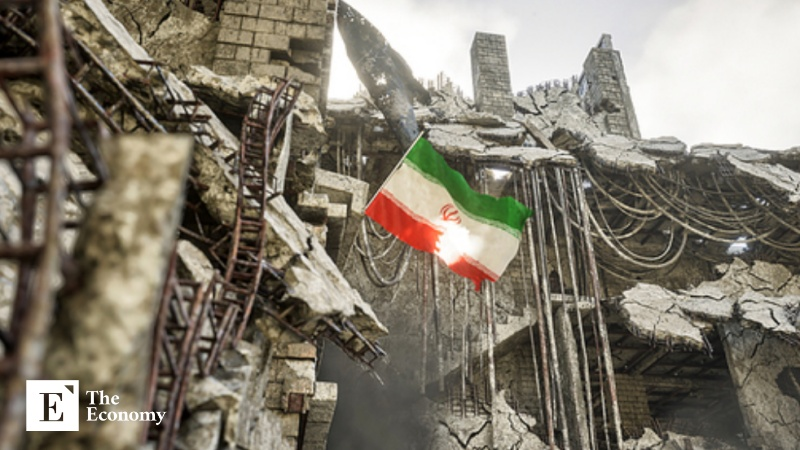
As Iran continues missile and drone attacks targeting neighboring countries in the Middle East, regional tensions have escalated sharply. With strikes increasingly extending to civilian infrastructure, Gulf states including Saudi Arabia and the United Arab Emirates (UAE) are showing signs of raising their response levels, departing from their previous diplomatic management approach. As a result, the nature of the conflict is shifting beyond a localized clash toward a broader challenge to the Iranian regime itself. At the same time, the United States is facing growing pressure in determining its level of involvement, including consideration of military options such as the occupation of Kharg Island.
Anger over civilian infrastructure damage
On the 18th, The Wall Street Journal (WSJ) reported that “Gulf states have recently begun to view the very existence of Iran’s theocratic regime as a threat,” adding that “they want the Iranian regime to be neutralized—or, if possible, completely dismantled—so that the same suffering is not repeated after the war ends.” As damage to Gulf states, including the UAE, has increased, even those countries that had previously pursued diplomatic solutions with Iran are showing signs of shifting toward a hardline response. Sultan Al Jaber, UAE Minister of Industry and Advanced Technology, stated in an interview, “Iran’s actions will drive global inflation and recession, threatening every household.”
Immediately after being attacked by the United States and Israel on the 28th of last month, Iran launched a barrage of missiles and drones toward Saudi Arabia, the UAE, Bahrain, Kuwait, and Oman. Iran claimed that it was targeting U.S. military bases in the region rather than Gulf states directly, but more than 80% of the strikes hit civilian infrastructure, including oil facilities, refineries, airports, ports, hotels, and data centers. The UAE suffered the greatest damage, with more than 2,000 drone and missile attacks since the outbreak of the war, disrupting operations at Dubai International Airport. As attacks unrelated to combat targets were repeated, criticism intensified that Iran’s actions had exceeded the scope of conventional military conflict.
In response, foreign ministers from 12 Islamic countries convened in Riyadh, Saudi Arabia, on the 19th to discuss responses to the Iran conflict. In a joint statement, they said, “Targeting civilian infrastructure such as residential areas, oil facilities, airports, and desalination plants cannot be justified under any circumstances,” and urged Iran to “immediately cease its attacks.” Saudi Foreign Minister Faisal bin Farhan Al Saud also delivered a strong message, stating, “We have the right to take military measures if we deem it necessary,” adding that “escalation will be met with escalation.”
However, even as the meeting was underway, a missile launched by Iran struck Riyadh, further fueling anger among neighboring countries. Saudi authorities stated that the ballistic missile was intercepted in midair, but Minister Faisal criticized the attack, saying, “Targeting Riyadh, where many diplomats were gathered, is the clearest signal of how Iran views diplomacy.” Mohanad Selim, a professor at the Doha Institute for Graduate Studies, also remarked, “The Iranian regime has crossed every red line,” adding that “it is now in the interest of all, including Gulf states, for the United States to bring this war to an end.”
Collapse of command structure as key figures eliminated
The deaths of top leadership figures, including the supreme leader, have intensified internal turmoil in Iran as the command structure fails to function properly. Supreme Leader Ayatollah Ali Khamenei was killed in an Israeli airstrike on his office in Tehran on the 28th of last month, along with his daughter, son-in-law, and grandson. His second son, Mojtaba Khamenei, survived the strike after stepping into the garden and was appointed as the new supreme leader ten days later. Although the leadership vacuum was filled relatively quickly, the inability to inherit the existing power structure intact left a significant gap in decision-making capacity.
Mohammad Pakpour, commander-in-chief of the Islamic Revolutionary Guard Corps (IRGC), and Abdolrahim Mousavi, chief of staff of Iran’s armed forces, were also killed at the same time as Ali Khamenei. Defense Minister Aziz Nasirzadeh, military chief of staff Mohammad Shirazi, and intelligence chief Salah Asadi were likewise killed. In addition, IRGC Aerospace Force commander Amir Ali Hajizadeh and Khatam al-Anbiya Central Headquarters commander Gholamali Rashid are believed to have died. Although Ali Larijani, secretary of the Supreme National Security Council, attempted to reorganize the leadership, he too was killed in an airstrike, leaving none of Iran’s top security officials from the outset of the war in place.
In a situation where integrated operations between military and intelligence organizations have become nearly impossible, remaining key figures are also facing direct threats. According to the WSJ, Iran’s intelligence agency Mossad contacted Iranian security commanders individually, warning, “We know not only your movements but also the names of your family members,” and adding, “If you do not side with us, you will meet the same fate as your leaders.” The U.S. State Department has also announced a “Rewards for Justice” program, offering up to $10 million in bounties for ten Iranian leaders, including Mojtaba.
Israel’s operational scope is also expanding. Recently, strikes targeted Basij headquarters and command facilities, forcing personnel to relocate, after which their movements were tracked and eliminated. Basij leader Gholamreza Soleimani was killed after moving into a forest following the destruction of the headquarters, based on civilian tip-offs. Israel subsequently targeted large gathering sites such as Azadi Stadium, eliminating hundreds of personnel at once. As Israel’s reach extends from Iran’s top leadership to lower-level organizations, the country’s control system is becoming increasingly destabilized.
Escalating Pressure for Intensified Conflict
Despite this, Iran has not relented in its determination to fight to the end, leaving the United States facing a critical decision over deploying ground forces and sustaining a prolonged war. On the 18th, Reuters reported, citing U.S. government officials, that “the U.S. Department of Defense has begun reviewing plans to deploy ground troops to occupy Kharg Island, a key Iranian oil hub, and secure safe navigation routes in the Strait of Hormuz.” Although U.S. forces have conducted more than 7,800 airstrikes since the launch of operations on the 28th of last month, they have not yet achieved control over Iran’s critical infrastructure or ensured stability in the strait. The assessment that airstrike-focused operations alone are insufficient to achieve war objectives has led to discussions of ground force deployment.
Kharg Island, through which 90% of Iran’s oil exports pass, is a critical hub. On the 13th, U.S. forces carried out airstrikes on more than 90 military facilities on the island, including mine storage depots and missile bunkers. The U.S. amphibious assault ship Tripoli, currently en route from Japan to the Middle East, is also headed for Kharg Island. Equipped with F-35B fighter jets and Osprey transport aircraft, the Tripoli is assessed to have the capability to conduct amphibious operations involving approximately 2,500 troops. As such, U.S. movements are interpreted as a military deployment aimed at fully occupying a strategic point capable of directly impacting Iran’s economy.
The possibility of expanding battlefronts is also coming into focus. On the same day, President Trump warned via social media, “If Iran recklessly attacks Qatar, we will unleash such overwhelming force that we will devastate the entire South Pars gas field beyond anything they have ever seen.” Earlier, Iran had attacked liquefied natural gas (LNG) facilities in Ras Laffan, Qatar, raising concerns that repeated strikes could disrupt the broader energy market. President Trump added, “I do not want to authorize attacks on Iran when considering the long-term impact of violence and destruction,” but emphasized again that “if necessary, I will not hesitate to act.”
- Previous "Cargo Bound for the Middle East Ends Up in India" Maritime Order Descends Into Chaos Amid Middle East War, With Freight Rates Surging but Shipping Profitability in Doubt
- Next “Did the Israel Lobby Prevail?” Trump Under Fire for Overlooking Iran’s Proposal and Launching Airstrikes, With His Inexperienced Security and Foreign Policy Judgment Coming Under Scrutiny
Similar Post