“Helpful to Allies” — U.S. Moves to Tame Oil Prices by Lifting Sanctions on Iranian and Russian Crude, Though Effect Likely Limited if War Drags On

As one of the youngest members of the team, Tyler Hansbrough is a rising star in financial journalism. His fresh perspective and analytical approach bring a modern edge to business reporting. Whether he’s covering stock market trends or dissecting corporate earnings, his sharp insights resonate with the new generation of investors.
Authored On
Modified
The U.S. argues the legitimacy of easing sanctions after temporarily allowing Iranian and Russian oil sales
Soaring global oil prices amid the Middle East conflict trigger panic across financial markets and industry worldwide
Direct U.S.-Iran confrontation intensifies, leaving the risk of a protracted war intact
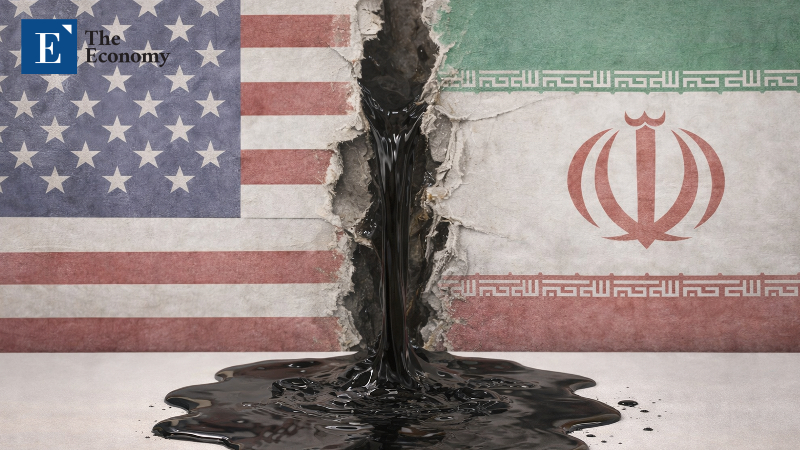
The United States has temporarily lifted sanctions on Iranian and Russian crude, and senior administration officials have stepped forward to underscore the legitimacy of the move. With international oil prices climbing by the day amid turmoil in the Middle East, Washington is arguing that crude from those countries could help stabilize markets in allied nations. Even so, if the hard-line confrontation between the U.S. and Iran extends the war, the effectiveness of sanctions relief is likely to fade progressively.
U.S. Strategy to Cushion the Oil Supply Shock
On March 22, U.S. Treasury Secretary Scott Bessent, speaking on NBC, was asked whether the temporary lifting of sanctions on Iranian crude would hand Iran $14 billion in revenue. He replied, “Iranian oil is always sold to China at a discount,” adding, “If [Iranian crude] goes to Indonesia, Japan and South Korea, our situation improves.” The remark amounted to a defense of the sanctions waiver, with Bessent arguing that Asian allies could now buy Iranian crude instead of China. He further asserted that “the $14 billion figure is exaggerated” and that “they [Iran] were getting paid by China anyway.”
Earlier, on March 20, Bessent said in a post on X, formerly Twitter, that the U.S. would announce “a limited and short-term authorization to permit the sale of Iranian oil currently stranded at sea.” A general license issued by the Treasury Department’s Office of Foreign Assets Control (OFAC) states that the sale of Iranian crude and petroleum products loaded onto vessels before 12:01 a.m. New York time on March 20 will be permitted through April 19. At the time, Bessent also stressed that “sanctioned Iranian oil is being stockpiled by China at fire-sale prices,” adding that releasing those volumes would expand global energy supply, inject roughly 140 million barrels of crude into the market, and help ease supply pressure stemming from Iran.
Beyond that, the U.S. has also temporarily authorized the transport and sale of some Russian crude. In a press release issued on March 19, OFAC said transactions related to the transport, sale and unloading of Russian crude oil and petroleum products loaded before 12:01 a.m. Eastern time on March 12 would be permitted through 12:01 a.m. on April 11. The measure is widely viewed as an attempt to allow the market to absorb Russian crude that was already moving across maritime routes.
Global Markets Caught in the War’s Aftershocks
Washington’s easing of restrictions has been driven by the upward trajectory in global oil prices. After the United States and Israel launched airstrikes on Iran late last month, the Strait of Hormuz — through which 20% of global seaborne crude flows — was effectively shut down, while multiple energy production hubs across Gulf states came under attack, disrupting supply itself. More recently, Qatar’s Ras Laffan industrial complex, a critical global liquefied natural gas production facility, sustained extensive damage in an Iranian missile strike.
Amid repeated clashes, international oil prices are tracing a steep upward curve. On March 20, West Texas Intermediate rose 2.27% from the previous session to settle at $98.32 a barrel, while Brent crude jumped 3.26% to close at $112.19. The surge has intensified inflationary pressure across the world and unleashed severe turmoil in international financial markets. In one example, the yield on Britain’s two-year gilt climbed 0.3 percentage point from the previous session to the 4.6% range on March 20. The market reacted immediately after the Bank of England held rates steady on March 19 and even withdrew its prior guidance pointing to rate cuts. The yield on the U.S. 10-year Treasury likewise rose to 4.38% intraday on March 20, while the two-year Treasury yield, which is particularly sensitive to monetary policy, advanced about 0.5 percentage point in roughly three weeks after the outbreak of war to reach the 3.9% range.
Industry, too, is groaning under the war’s aftershocks. South Korea and Japan’s petrochemical sectors are emblematic cases. According to data from logistics intelligence firm Sparta Commodities, South Korea and Japan rely on imports for two-thirds of their naphtha consumption, a core feedstock for products such as plastics. Of total naphtha imports, volumes originating from the Persian Gulf — directly exposed to the Middle East conflict — account for 60% in South Korea and 70% in Japan. In South Korea, Yeochun NCC has declared force majeure, while Lotte Chemical and LG Chem have also notified the market of potential force majeure risks. The Korea Institute for Industrial Economics and Trade has warned that the crisis could drive up production costs across South Korea’s manufacturing sector and trigger global stagflation.
Iran Answers Washington’s Ultimatum
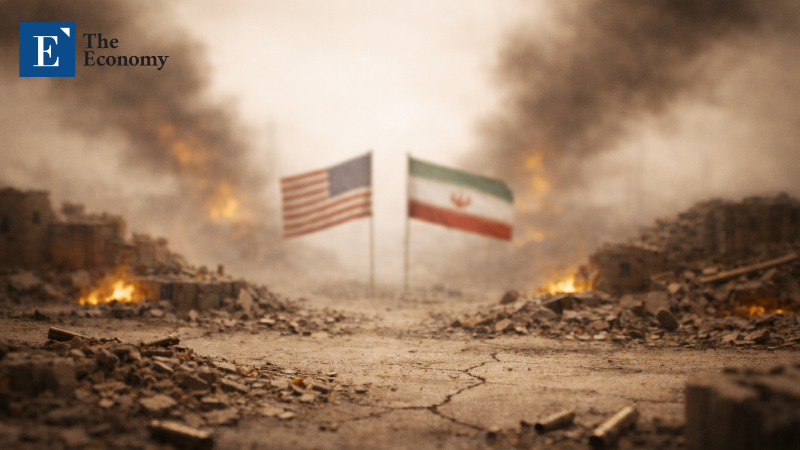
The problem is that the sanctions-relief card the U.S. has played in these circumstances cannot serve as a long-term solution. Recently, the United States and Iran have sustained a hard-line confrontation, with tensions showing no sign of easing. On March 21, President Trump wrote on his social media platform Truth Social, “If Iran does not fully reopen the Strait of Hormuz without threat within 48 hours from this moment, the United States will devastate their various power plants, starting with the largest ones.” With the conflict appearing likely to last longer than expected and no clear exit strategy in sight, the post is being interpreted as a de facto ultimatum to Iran and the beginning of a war-termination scenario.
In response, Ebrahim Zolfaqari, spokesperson for Khatam al-Anbiya Central Headquarters, which oversees the integrated command of Iran’s armed forces, said on March 22 that “if the U.S. threat against Iranian power plants is carried out, the Strait of Hormuz will be completely closed and will not reopen until the power plants are rebuilt.” An Iranian military spokesperson also warned via the semi-official Tasnim News Agency on March 22 that “Iran has now moved beyond the principle of ‘an eye for an eye’ and changed its military policy, and it will respond to any attack by hostile countries with even graver consequences.” He added that if Iran’s fuel and energy infrastructure were attacked by the enemy, “all energy, IT and desalination infrastructure in the region owned by the United States and its regime will become targets.”
If Iran ultimately refuses to comply with President Trump’s demands, the U.S. military is likely to extend the duration of the war in order to secure the operational time required for its mission. Israel’s Channel 12 reported on March 22 that White House officials had informed Israel that a military operation to reopen the Strait of Hormuz could take several weeks. U.S. authorities are also said to have stressed to the Israeli side the need for strategic coordination, while making clear that they can no longer tolerate a situation in which Iran holds the strait hostage.
As one of the youngest members of the team, Tyler Hansbrough is a rising star in financial journalism. His fresh perspective and analytical approach bring a modern edge to business reporting. Whether he’s covering stock market trends or dissecting corporate earnings, his sharp insights resonate with the new generation of investors.
Similar Post