The Ukraine shock: what the Ukraine lessons for US military really demand now

Working across research, policy, and data-driven analysis, the Editorial Board ensures that published pieces reflect a consistent institutional perspective grounded in quantitative reasoning and long-term structural assessment.
Authored On
Modified
Ukraine lessons for US military planning show that cheap drones and mass artillery now shape modern war
Deterrence today depends on industrial scale, resilient logistics, and decentralized command
Future conflicts will reward forces that combine high-end power with attrition resilience
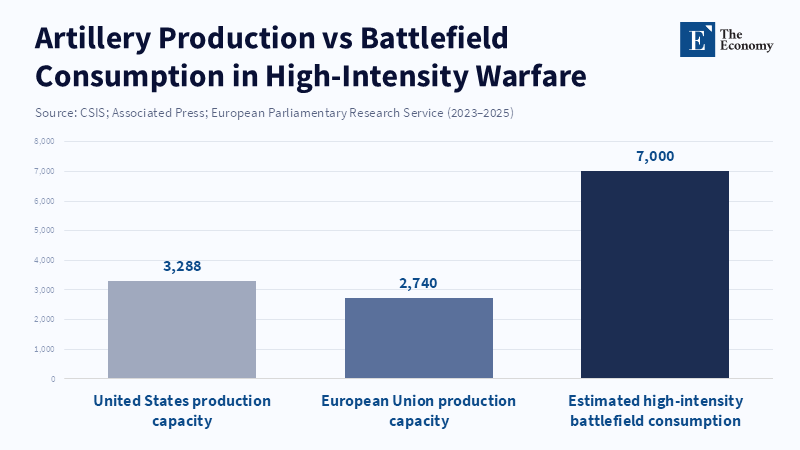
After four years of intense combat, a key fact must reshape the thinking of every American strategist: Ukrainian front-line troops are expending artillery rounds at an astonishing rate, reaching thousands of 155mm shells each day (Associated Press, 2023; Vialko, 2024; European Parliamentary Research Service, 2023). Simultaneously, inexpensive unmanned systems, produced in large quantities, are now performing strike and reconnaissance missions (Kunertova, 2024; New Strategy Center, 2024). Previously, these tasks would have required entire squadrons or even satellite resources. This combination of intense wear-and-tear with widely distributed offensive capabilities has fundamentally changed the calculations regarding force size, supply chains, and training methods (Johnson, 2024; RAND Corporation, 2025). Should the United States view this war merely as an isolated foreign affair rather than as an important testing ground for swiftly adapting battlefield approaches, it risks deploying its forces into future conflicts with serious strategic deficiencies (Pifer, 2024; Bacevich, 2024). A key policy question emerges: How do we restructure our force deployment, training programs, and industrial strategies to ensure that U.S. forces preserve their effectiveness during high-intensity battles where unmanned aerial systems, artillery strikes, and local decision-making dictate the pace?
Ukraine lessons for US military: tactical revolutions and operational logic
The most important lesson for the U.S. military isn't about one piece of gear, but about a mix of shifts in how violence is created and sustained on the field. In Ukraine, we've witnessed the fusion of affordable unmanned aerial vehicles, precise firepower, and local command that lets small teams act on their own (Institute for the Future of Conflict, n.d.; Defense.info, 2025). Together, these create a way of doing things: big, costly systems are getting easier to hurt with groups of cheap, connected tech; acting faster is beating old, slow ways of targeting; and getting supplies—especially lots of artillery—is now what limits how well ground campaigns do (Johnson, 2024; RAND Corporation, 2025). These aren't just ideas. They change how we should train, where we should be based to stay safe, and how much power the factory needs to keep things running.
This way of existing explains why armies that adapt quickly achieve big results. Ukraine's military changes, such as using pilot-view attacks and spreading out air defense and electronics, help it act quickly in battle without spending much money (Kunertova, 2024; Le Monde, 2024). Those same changes show the weakness of groups built on old-time methods, such as always being better in the air, or shooting through land without low-cost backup plans (Bacevich, 2024). For the U.S. military, it means buying should focus on weapons and technology that can be used in large numbers, along with top tech (CSIS, 2024; CSIS, 2025). We must say okay to compromises: more technology that can be lost, more sensors that can be swapped out, and more tricks done with software. We should go from “How many really pricey systems do we have?” to “How many hours can we hit hard with the weapons, sensors, and workers we have ready?”
From a fighting perspective, the main shift is how they give orders: command was shared, and everyone helped each other, rather than just orders from the top on Ukraine's lines (Institute for the Study of War, 2023). Small groups, armed with local search and firepower, aimed at targets without asking bosses far away. According to a 2023 report on the conflict in Ukraine, the combination of rapid military action and progress in digital technology has made cyber protection and the ability to communicate quickly critical for defense operations (CSIS, 2024). For the U.S. groups, we learn here that we should act on our own quicker and use cheap weapons, but not if it hurts how well we team up or work with allies (U.S. Army, 2014). The tricky part is joining it together: let people be free to act, but keep leaders in charge when needed. It should feel like layers, where we can do things cheaply and still bring out all the big guns when it counts.
Ukraine lessons for US military: global diffusion — North Korea, Israel, and the mercenary effect
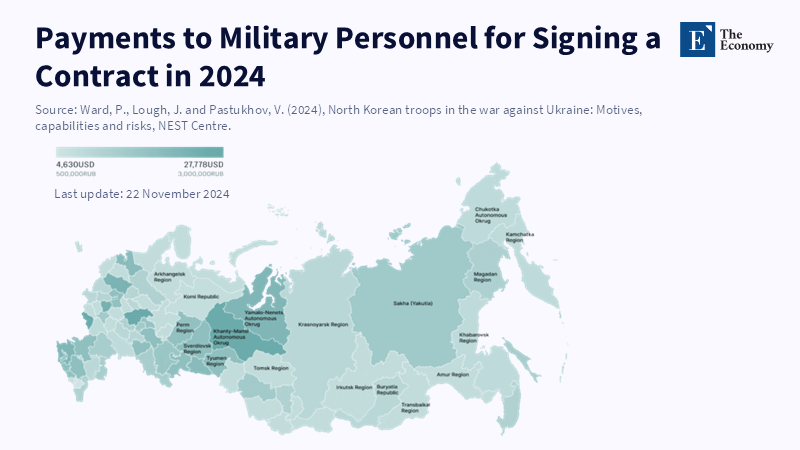
If the lessons we're learning from Ukraine stayed stuck in Kyiv, they wouldn't matter much outside of Europe. However, the things we learn in war spread quickly. North Korea, based on reports anyone can find and a regional study, is carefully observing the war—sending people and taking notes—and now changing its army to focus on lots of artillery, weapons made in large amounts, and war plans that favor high-intensity attacks where people don't mind getting hurt (Anadolu Agency, 2025; Gokce, 2025; Ward, Lough and Pastukhov, 2024). The Atlantic Council and other experts say Pyongyang is taking notes and putting what it learns into its own army growth. These changes matter because they raise the chance that other countries might start using the cheap and numerous tactics used in Ukraine, in places where the U.S. military may have to fight.
What Israel is learning is a good example from the side. The IDF's recent wars have pushed it to spend more on air defense systems, tools to shoot down planes, and AI to support battlefield decision-making (West Point Modern War Institute, 2024; Ynet News, 2024). Israel is focusing on using both high-tech weapons to stop missiles and easier, energy-based options, and integrating sensors, shooters, and citizen safety plans into a single group that makes decisions more quickly (Middle East Observer, 2025). These are defensive. They help allies and U.S. safety at home, but also point to the reality that high-tech answers can go with a lot of cheap attacks, as we see in Ukraine (Associated Press, 2025). The rule to get from this is that not every army goes the same way; instead, enemies and friends will get parts that feel right for them. The U.S. needs to consider a few factors and avoid a one-size-fits-all plan.
According to a report from Anthony Pino and Scott Pettigrew, the widespread use of drones on the battlefield has added psychological stress for soldiers. This increased experience with unmanned systems and advanced weaponry could make these battle-hardened fighters even more valuable in future small-scale conflicts and private security roles (RAND Corporation, 2025). These moves aren't hard for countries and groups to put together good fighting groups with plans from Ukraine or Russia. For people making choices in the U.S., it means we must look not only at other countries' factories but also at people—the teachers, leaders, and unmanned aerial system workers—who spread battlefield skills. Spotting and stopping this spread will require spies and talks (Institute for the Future of Conflict, n.d.).
Ukraine lessons for US military: policy choices for force design, training, and deterrence
Three policy adjustments should happen right away. First, we need to make getting supplies and weapons a permanent goal. The heavy fighting in Ukraine shows that the winner of a long war is often the party that can keep sending weapons (Associated Press, 2024a). Europe's estimates from 2023 indicate that Ukraine uses thousands of bullets a day (European Parliamentary Research Service, 2023). The United States should plan for factories capable of producing large numbers of weapons and small unmanned systems without exhausting all available resources (U.S. Department of Defense, 2024). That means regular purchases, giving factories reasons to make stuff here, and alliance plans to grow production together.
Second, training and how we set up our military should focus on issuing orders from the ground, ensuring people speak safely, and integrating cheap autonomous systems alongside regular soldiers' plans (Johnson, 2024; RAND Corporation, 2025). Training groups should work on supply issues, staying strong when electronics are attacked, and shooting fast when things are not so good. We should not just copy everything Ukraine does; instead, get the ideas that helped them change fast on the ground, such as mission command, quick supply lines, and putting search with local troops. Getting soldiers ready for that will mean changes in jobs, shooting ranges, and war games that copy high-volume, low-cost fights.
Third, we need to consider again what makes other countries scared to fight us. We used to threaten with cost if they started, by using top weapons. Now, we need to show we can keep fighting in a long, intense fight (Aydıntaşbaş et al., 2026). That means open and private investments into guns, supply lines that are hard to hurt, and friends working together. We must tell people that the U.S. can strike hard and last long in a long fight. Not showing both raises worries that our scare tactics will break down under effort.
Talking about what others might say makes our stance. Some will say, “The U.S. cannot redo industry and how it sets up short notice, and it hurts top tech.” But that is not the case. History shows that forces that keep top systems with cheap, easy-to-find guns have both the power to hurt and the long-term power (Bacevich, 2024). Another claim says that making cheap weapons more normal makes it easier to start wars. That is a worry; the answer is not to avoid those things but to include them in plans, war rules, and rules on selling them to us that would hurt us. Lastly, some will say the U.S. does not like making guns; that is a tricky thing that will ask a clear leader to implement legislative plans connected to alliance promises. Facts from allies' factories show that planning gun buys to both save money and make things last (U.S. Department of Defense, 2024).
Let's go back to what we said at first: what made a big difference in Ukraine was the daily rate of weapon use and how quickly cheap sensors and shooters could finish the job (Kunertova, 2024; Pifer, 2024). Those things are new parts of war. If U.S. defense plans do not learn from them, planners will send well-trained troops into battle without supply, order, or factory support to win. The shift is clear and hard: redo defense funds to pay for tons of weapons, change practice to put local choice and small-group search in place, and grow power that tells others we can both strike hard and last long on low power. These are not small changes. They change the difference between serious threats and hollow talk, a U.S. army that can win across the board and one that can be worn down by spread, cheap attacks. The job ahead is less about stopping systems than about building a group of forces.
References
Anadolu Agency, 2025. North Korean leader urges military industry to expand multiple rocket launcher production. 30 December.
Associated Press, 2023. NATO chief says Ukraine's ammunition use outstripping supply. 6 March.
Associated Press, 2024a. Ukraine's Zelenskyy warns of an ‘artificial deficit’ of weapons after withdrawal from Avdiivka. 17 February.
Associated Press, 2025. Ukraine's drone attack on Russian air bases is a lesson for the West on its vulnerabilities. 5 June.
Aydıntaşbaş, A., Baev, P.K., Budjeryn, M., Gordon, P.H., Grzymała-Busse, A., Hamilton, D.S., Karlin, M., Pifer, S., Sisson, M.W., Stelzenmüller, C. and Wright, T., 2026. What price for peace in Ukraine? Washington, DC: Brookings Institution.
Bacevich, A.J., 2024. The Ukraine war’s tactical revolution. Responsible Statecraft.
Center for Strategic and International Studies (CSIS), 2024. Ukraine’s future vision and current capabilities for waging AI-enabled autonomous warfare. Washington, DC: CSIS.
Center for Strategic and International Studies (CSIS), 2025. Ukraine’s future vision and current capabilities for waging AI-enabled autonomous warfare. Washington, DC: CSIS.
Defense.info, 2025. Lessons from the Russia-Ukraine frontline.
European Parliamentary Research Service, 2023. EU ammunition support to Ukraine. Brussels: European Parliament.
Gokce, S., 2025. North Korean leader urges military industry to expand multiple rocket launcher production. Anadolu Agency, 30 December.
Institute for the Future of Conflict (IFC), n.d. Pivotal lessons from the war in Ukraine.
Institute for the Study of War, 2023. Russian offensive campaign assessment. Washington, DC: ISW.
Johnson, D.E., 2024. Implications of the Russia-Ukraine war for U.S. Army force design. Santa Monica, CA: RAND Corporation.
Kunertova, D., 2024. ‘The war in Ukraine shows the game-changing effect of drones depends on the game’, Bulletin of the Atomic Scientists, 80(1), pp. 37–46.
Le Monde, 2024. Kamikaze drones attack Russian rear bases in Ukraine. 14 December.
Middle East Observer, 2025. Israel strengthens air defense with advanced technology to combat Iranian terrorism. 5 July.
New Strategy Center, 2024. Lessons learned from the war in Ukraine: The impact of drones. Bucharest: New Strategy Center.
Pifer, S., 2024. The military lessons of Russia’s war in Ukraine. Washington, DC: Brookings Institution.
RAND Corporation, 2025. The implications of the fighting in Ukraine for future U.S. strategy. Santa Monica, CA: RAND.
U.S. Army, 2014. Strong ties of trust bind allies buying U.S. weapons. 4 October.
U.S. Department of Defense, 2024. DoD announces strategy for countering unmanned systems. 5 December.
Vialko, D., 2024. Ukrainian Armed Forces used 3 million shells in 2023. RBC-Ukraine, 20 February.
Ward, P., Lough, J. and Pastukhov, V., 2024. North Korean troops in the war against Ukraine: Motives, capabilities and risks. NEST Centre.
West Point Modern War Institute, 2024. Combat-tested integrated defense: What Ukraine and Israel reveal about endurance under air attack.
Ynet News, 2024. How Israel’s battlefield experience reshaped its defense technology. 18 March.
Working across research, policy, and data-driven analysis, the Editorial Board ensures that published pieces reflect a consistent institutional perspective grounded in quantitative reasoning and long-term structural assessment.