Cheap Prices or True Competitiveness? Rethinking Chinese Exports to the EU

Working across research, policy, and data-driven analysis, the Editorial Board ensures that published pieces reflect a consistent institutional perspective grounded in quantitative reasoning and long-term structural assessment.
Authored On
Modified
Chinese exports to EU rose mainly due to price advantages, not tariff diversion
Subsidies and cost differences intensified price competition in Europe
Policy responses must address structural trade distortions
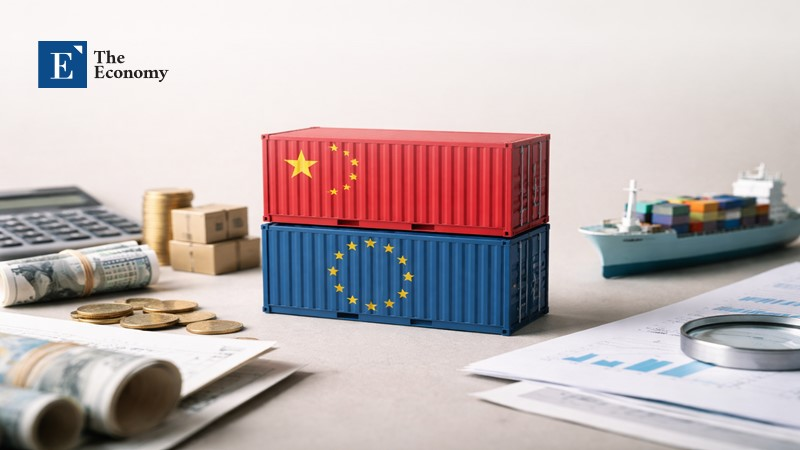
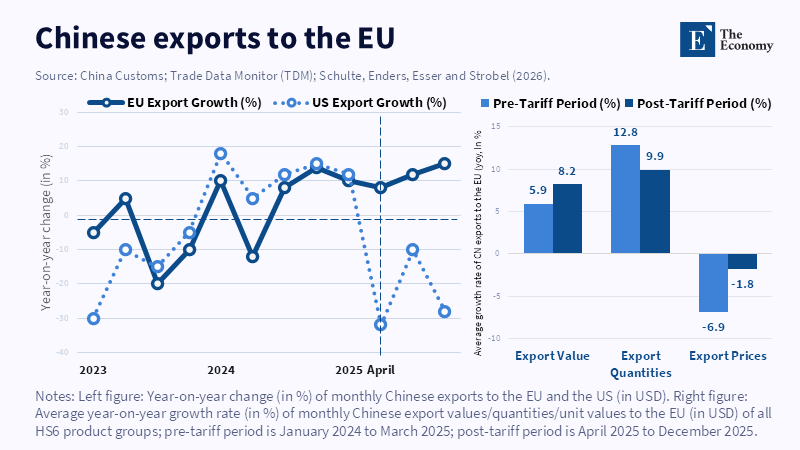
In 2025, China attained a goods trade surplus of approximately $1.19 trillion, representing an apex in contemporary economic history. The magnitude of this surplus suggests a pronounced shift in the architecture of international commerce. A common interpretation attributes this upsurge to U.S. tariffs, which curtailed China's access to its primary export destination, prompting Chinese producers to reorient their exports toward European markets. Trade figures seemingly corroborated this view, with Chinese exports to the EU growing markedly between 2023 and 2025, while shipments to the U.S. decelerated amid renewed tariff pressures. Recent academic work suggests a more in-depth understanding. Research at the product level suggests that tariff-induced trade redirection accounts for only a fraction of the amplified Chinese exports to EU markets. The research indicated that other factors appear to be at play, notably government assistance to industries, regulatory differences, and price competition. This is an important consideration for both trainers and policymakers. The policy response will be categorically different if the upswing in Chinese exports is primarily attributable to productivity and technological improvements, rather than to price advantages arising from support and inherent cost differences.
A Reconsideration of Trade Redirection in Chinese Exports to the EU
The concept that trade tariffs might change trade routes is supported by sound reasoning. When a market becomes harder to access due to taxes or regulations, exporters will seek other markets for their products. In the context of trade tensions between the U.S. and China, it seemed logical that Chinese companies would seek to expand in Europe.
A close look using hard data shows that the actual situation is more complex. Studies looking at how different product categories are affected by tariffs found solid evidence that only a relatively small number of goods were clearly redirected from the United States to the European Union. Many Chinese exports to Europe were already rising before the latest tariffs took effect. The official trade data bears this out. Statistics from Eurostat show a steady rise in Chinese exports to the EU throughout the early 2020s, including in categories not heavily impacted by U.S. tariffs. The data suggest that basic economic conditions, more than short-term policy changes, have mostly shaped the path of Chinese exports to EU markets.
Even further, China’s export sector, taken as a whole, has remained powerful despite issues in world politics. According to the International Monetary Fund, China’s share of world manufacturing exports has grown during the last 10 years, helped by its industrial strength and its important part in global supply chains. These basic strengths enable Chinese businesses to keep growing exports, even when commercial relationships with major countries are strained.
The major message is that it takes more than just redirected trade to explain the present situation: to really understand the rise of Chinese exports to the EU, experts and policymakers need to consider the full range of economic and political factors shaping world manufacturing.
The Impact of Governmental Assistance for Industries and Price-Based Competition in Chinese Exports to the EU
A primary factor influencing Chinese exports to the EU is government help to industries. Across the world, governments are providing assistance to national industries, such as money, lower taxes, and credit programs. The type and scale of these programs vary by country.
Information from the Organisation for Economic Co-operation and Development indicates that support for industries has increased significantly recently, with large amounts going to manufacturing sectors such as electronics, machinery, and environmentally friendly technology. Within China, these schemes commonly involve low-interest loans from state-owned banks, government purchasing programs, and targeted help for key industries.
These actions can change export competitiveness in subtle ways. Governmental help lowers the real cost of producing goods, allowing firms to keep prices low internationally. Even a small price edge can significantly change market share in highly competitive markets. This is especially clear in industries with similar products and small profit margins. When it comes to items such as basic machine parts or consumer electronics, buyers generally focus on price rather than brand. Because of this, exporters offering lower prices can quickly gain control of more of the market.
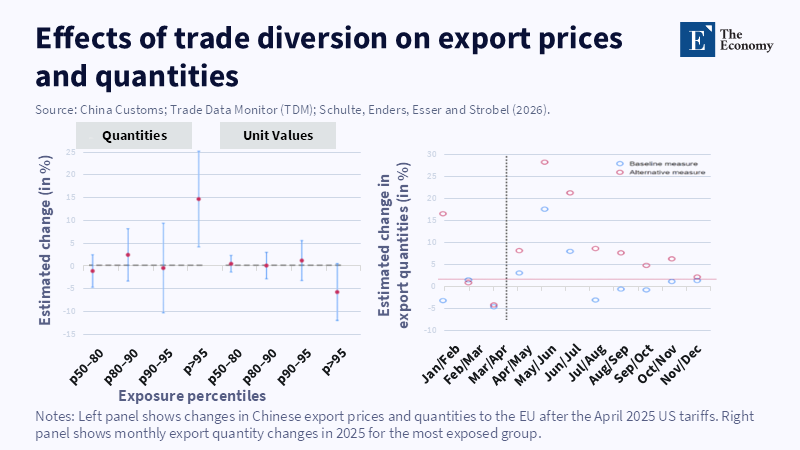
Experts studying European trade have seen that the largest growth in Chinese exports to the EU has been in these price-sensitive areas. Other areas, such as specialized engineering or high-tech, remain mostly controlled by European companies.
Another factor making price very important is China’s economic situation. Low demand in parts of the Chinese economy has pushed businesses to export more in order to maintain production. When Chinese markets do not order enough industrial goods, firms seek growth outside China. Government assistance makes this strategy work by allowing companies to earn less on each sale over a longer period. The growth of Chinese exports to EU markets reflects the results of not only technological capabilities but also the financial incentives created by governmental industrial policy.
The function of regulatory asymmetry and its effect on competitiveness within European marketskets
A second factor affecting Chinese exports to the EU is Europe's business regulations. European industries must follow many rules about the environment, worker treatment, and product safety. These rules exist for important social reasons, but can also raise production costs. For example, European manufacturers must follow strict environmental rules, pay for their carbon emissions, and have their products certified. Complying usually entails significant spending on cleaner technologies, along with administrative tasks. These requirements raise the cost to the business to make the product and increase the final prices. A product imported into Europe may not have faced the same rules when it was originally made, even though, when it arrives, it is required to meet European safety rules.
The consequence is a natural imbalance in global competition. When two products do the same job but one is far cheaper, customers often buy the cheaper option. In industries where prices are a big deal, this can immediately shift market share. Information suggests that industries facing direct price competition have been most affected by the growth in Chinese exports to the EU. On the other hand, industries where European companies have strong technological strengths have performed better.
This pattern underscores the importance of having diverse technologies. European firms continue to be world leaders in advanced engineering, aviation, and very precise manufacturing. These industries compete through new ideas and skills, not just price. The different effects across sectors show that the growth of Chinese exports to the EU is not uniform. It shows the connection between price, rules, and the specialization of technology.
Worldwide Supply Chains and the Relevance of Southeast Asia
One final factor complicating discussions of Chinese exports is the extent to which it entails changes in international supply chains. Over the last 10 years, many Chinese companies have expanded their production networks across Southeast Asia. Nations like Vietnam, Thailand, and Malaysia have become major centers for manufacturing geared toward export. These steps partially reflect the impact of trade problems between the U.S. and China. Having production outside of China lets firms lower their risk from tariffs while keeping sales to international markets.
Studies on trade in the region show that Chinese investment has significantly increased manufacturing output across Southeast Asia. These production centers often connect closely with Chinese supply chains through investments, technology sharing, and trade of parts. As a result, Chinese manufacturing now reaches far-flung places. Some items entering Europe originate in factories outside China, but they still link back to Chinese firms. This situation makes analyzing Chinese exports to the EU difficult because trade data usually records the place where goods are put together, but not who owns the production.
Even still, the rise of Chinese-supported manufacturing in Southeast Asia shows how international supply chains adjust to political pressure. Tariffs might change where goods come from, but they rarely eliminate competitive advantages built into industrial networks. For legislators and professors, this truth underscores the need to study trade in the broader context of global production, rather than focusing only on trade between two countries.
The rapid growth of Chinese exports to EU markets has several causes. Original interpretations put stress on trade redirection caused by US tariffs. The impact of sending trade somewhere is real, but research has shown it is not particularly significant. When structural elements are considered, the picture clears. Governmental assistance, price competition in similar sectors, asymmetric rules, and the path of global supply chains all contribute to Chinese exports to Europe. China's trade surplus of $1.19 trillion in 2025 shows how global manufacturing is transforming. Export growth reflects the country's industrial capacity, as well as the supporting policy system. Europe has the mission of not just reacting to higher imports but learning about the cause of the competition. Policies intended to grow technological advantage, improve transparency about subsidies, and support tough supply chains are better than trade walls alone. In the end, the conversation about Chinese exports to the EU points to the big lesson regarding modern trade policy: Global trade results from the complex interplay among industry policy, rules, economies, and supply chains. Noticing these features is a must if policies that push fairness and long-term fiscal strength get designed.
The views expressed in this article are those of the author(s) and do not necessarily reflect the official position of The Economy or its affiliates.
References
Associated Press, 2026. China’s trade surplus surges 20% to a record $1.2 trillion, even with Trump’s tariffs. The Associated Press, 13 January.
Associated Press, 2025. China’s trade surplus surges 20% to a record $1.2 trillion, even with Trump’s tariffs. AP News, 10 February.
Chen, L., 2024. Further ASEAN–China Cooperation for Joint Prosperity. Jakarta: Economic Research Institute for ASEAN and East Asia (ERIA).
European Central Bank, 2026. Global trade redirection: tracking the role of trade diversion from US tariffs in Chinese export developments. ECB Economic Bulletin, Issue 1.
Eurostat, 2025. China–EU international trade in goods statistics. Luxembourg: European Commission.
Hu, G., Zhang, X. and Zhu, T., 2024. A catalyst for China’s high-tech export competitiveness: perspective of technological innovation. Sustainability, 16(5).
International Monetary Fund, 2024. World Economic Outlook: Global Manufacturing and Trade Developments. Washington, DC: IMF.
Maxthon, 2026. The managed divergence: China–Europe trade tensions. Maxthon Blog, 28 February.
Organisation for Economic Co-operation and Development, 2025. The State of Play of Industrial Subsidies as of 2023. Paris: OECD Publishing.
Schulte, P., Enders, A., Esser, A. and Strobel, F., 2026. From tariffs to trade flows: diversion effects and China’s exports to the EU. VoxEU / CEPR Policy Portal.
Wang, Y., Li, H. and Chen, Z., 2025. The impact of trade protectionism on export enterprises: inferences from the China-US trade war. Finance Research Letters, 45.
Economy.ac, 2025. Southeast Asian manufacturing expansion and Chinese supply chains. Economy.ac Review.
Economy.ac, 2026a. Industrial subsidies and global trade competition. Economy.ac News.
Economy.ac, 2026b. EU regulation and manufacturing competitiveness. Economy.ac News.
Working across research, policy, and data-driven analysis, the Editorial Board ensures that published pieces reflect a consistent institutional perspective grounded in quantitative reasoning and long-term structural assessment.