Tariff Uncertainty and Asia’s Strategic Pivot in Global Trade

Working across research, policy, and data-driven analysis, the Editorial Board ensures that published pieces reflect a consistent institutional perspective grounded in quantitative reasoning and long-term structural assessment.
Authored On
Modified
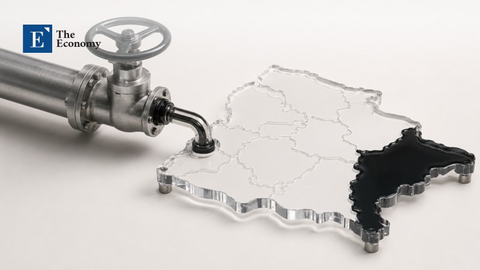
Tariff uncertainty is the real cost of U.S. trade policy
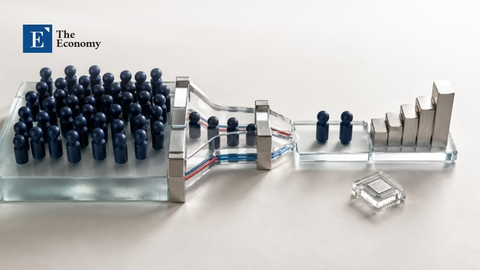
Asian economies must diversify trade partners
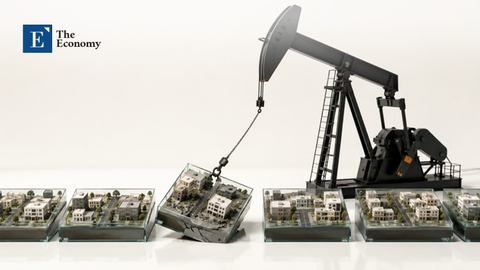
Some firms reduce risk by producing in the United States
In 2024, according to the U.S. Census Bureau, the United States' imports surpassed $3.1 trillion, attesting to its position as the world's largest consumer market. This makes it a key destination for many export-focused economies. For many years, Asian development plans relied on the idea that access to this large, stable market would continue. The most concerning aspect of the current U.S. trade policy is the unstable manner in which tariffs are implemented. Traditional tariffs are quantifiable and can be factored into business choices. Enterprises can change their distribution networks or share the costs with consumers. However, unpredictable tariffs create a more difficult challenge. If businesses can't predict whether tariffs will go up, affect additional products, or be removed through judicial challenges, they can't make plans for the future. This leads to cautious business decisions, disrupted supply chains, and changes in the flow of money. This uncertainty is changing how Asian countries approach trade. Businesses and governments need to reconsider how they handle risks, broaden their markets, and decide where to build factories.
Tariff Uncertainty and the Overlooked Costs of Trade
Typically, tariffs act as clear and measurable barriers to trade. Economists study their impact through price changes, reduced imports, and government revenue. An unstable trade policy affects how businesses expect the future to unfold more than it affects immediate price changes. When rules change without warning, companies need to consider the possibility that their access to markets might suddenly change. This creates doubt, hindering long-term investment and making it harder to increase exports.
Studies in international economics have shown that unpredictable trade policies have a real impact on business behavior. Companies in places where policies are unreliable tend to hold off on investing and avoid growing because they don't know what will happen to their access to markets. Because global supply chains are interconnected, these issues can spread through production networks, affecting everyone from suppliers to logistics companies to workers.
Because Asian economies rely so much on the U.S. market, this tariff uncertainty is especially concerning. In 2024, China's exports to the U.S. amounted to around $526 billion, accounting for a large share of its total global exports. South Korea's exports to the U.S. were over $120 billion during the same time. When a country sends so many goods to a single market, policy changes can cause major problems for entire industries.
It's not easy to make up for the demand that is lost. Studies on recent tariff disputes indicate that it's rare for exporters to quickly start selling their goods in other markets. Shifting trade usually happens only for specific types of products, not across entire economies. When businesses try to enter new markets, they face challenges related to regulations, brand recognition, and supply chain limitations.
Because of this, unstable tariffs generate hidden costs even when the tariffs themselves aren't high. To protect themselves from possible policy changes, companies need to keep their production flexible or use different suppliers. While these plans can offer some protection, they also reduce efficiency and increase operating costs. Over time, these practices may slow investment and reduce the output of export-focused firms.
How Asia is Responding to Tariff Uncertainty
Asian economies are using two main strategies to address tariff uncertainty: expanding sales to a broader range of markets and moving production closer to the U.S. Both aim to reduce the risk posed by unpredictable policy changes.
Diversification means building commercial relationships with numerous partners rather than relying on a single one. To accomplish this, many Asian governments are working to strengthen trade within their region and create new trade agreements. The Regional Comprehensive Economic Partnership, launched in 2022, is an important tool for increasing trade among Asian countries and reducing their reliance on markets outside the region. There are some restrictions to diversifying. The United States is still the world’s largest consumer market, with significant purchasing power and strong distribution networks. For many exporters, switching from U.S. demand would require years of building markets and adapting to regulatory changes.
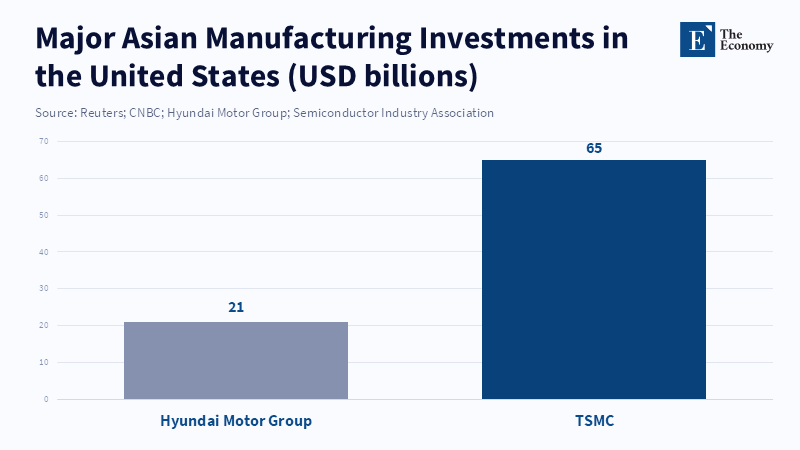
Another plan is to move production to the United States. Firms can totally avoid tariffs and reduce the risk from unstable trade laws by building factories in the U.S. market. This plan turns a potential trade issue into an investment opportunity. Recent corporate investments show this shift. Hyundai Motor Group has greatly grown its manufacturing in the United States. The company runs big production plants in Alabama and Georgia. They announced plans to invest about $21 billion in their U.S. operations, which include manufacturing equipment and supply chains. By making cars locally, Hyundai can serve the U.S. market without exporting goods that could be subject to tariffs.
The making of semiconductors shows a similar trend. Taiwan Semiconductor Manufacturing Company has promised to spend tens of billions of dollars on semiconductor factories in the United States as part of a broader shift in global chip supply chains. These investments take into account government incentives and the need to keep easy access to the U.S. market.
Moving production is expensive and difficult. Building new facilities, making supplier networks, and training local workers are all required to set up production in another country. Governments also need to think about what will happen at home when businesses move money and production to other countries. Relocating production can serve as a buffer against tariff uncertainty, even amid these challenges. Companies with production facilities in the United States gain greater stability and face less risk from unexpected policy changes.
Why Taking a Wait-and-See Approach to Policy Stability Is Not a Good Idea
Some people in charge hope that trade problems will eventually be resolved and that international trade will return to the way it was before. Still, government factors suggest that tariff uncertainty will likely remain part of international trade.
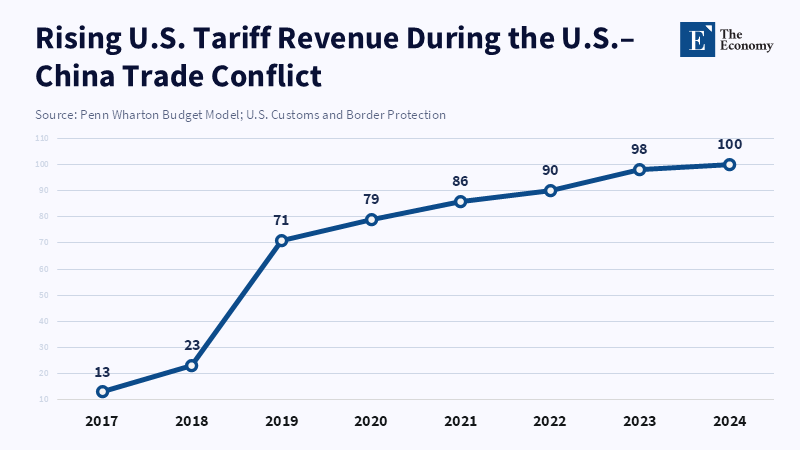
Protectionist policies frequently gain political support at home because they seem to protect local businesses and jobs. Tariffs might become hard to remove once they’re in place, even if people realize they're hurting the economy. During recent trade conflicts, the United States imposed tariffs totaling over $100 billion on imports from China, while businesses engaged in lengthy legal battles over refunds and exemptions. Because of this, policy uncertainty can be used as a method. Governments might keep the threat of tariffs to have influence in negotiations or encourage foreign businesses to invest in their country. As a result, businesses need to be ready for potential policy changes, even before tariffs are officially implemented.
Experts have said that Asian economies shouldn't assume U.S. trade policy will stabilize anytime soon. Waiting for stability could just expose exporters to constant uncertainty and problems. Instead, governments and businesses need to develop plans that work even when trade policy is unstable.
In this changing world, schools also face new challenges. Business and economics programs need to prepare students to navigate global markets shaped by both political and economic risks. Important skills for future managers include strengthening supply chains, analyzing regulations, and diversifying plans.
How to Handle Uncertainty Through Policy and Planning
Handling unpredictable tariffs requires governments, businesses, and schools to take action together. The top goal is to rely less on just one export market. Countries that trade mostly with a single destination are very likely to experience issues from policy changes.
One way to diversify is through regional economic integration. Trade agreements in Asia can open new markets and strengthen supply chain connections between neighboring countries. These deals also help businesses adjust to changes in global trade by offering reliable demand in their region.
Government policy also plays an important part. Governments can help local businesses move into more valuable industries, where demand is more varied, and where they have a better chance of succeeding because of their technology. Investment in new ideas, modern manufacturing, and job training can help economies stay competitive even when trade conditions change.
Some foreign investment might also be required. Setting up production in the United States can provide lasting stability for industries that rely heavily on the U.S. market. Nonetheless, governments need to handle these foreign investments while supporting industrial growth at home.
It's still important to strengthen international organizations. Rules for multilateral trade offer ways to resolve problems and prevent unexpected policy changes. Even if they're not perfect, these structures help keep global markets predictable. The global trading system is going into a new stage where being strong and able to adjust matters as much as being efficient. Countries that quickly adjust to tariff uncertainty will be better positioned to keep their economies growing and stable.
Tariffs are easily seen and measured. Their effects can be calculated using price changes, import volumes, and government income. But the larger changes in global trade are derived from something less obvious: unstable tariffs. If businesses can't predict future trade policies, they don't want to invest and reconsider where they will produce goods. Supply chains break apart, investment shifts to different places, and countries change their economic plans in response. Asian economies need to prepare for an environment in which trade policy is likely to change without warning. To address tariff uncertainty, measures include selling to different markets, strengthening trade partnerships in the region, and relocating production to other countries. The lesson for leaders in government and business is obvious. Waiting for things to stabilize might be the most expensive option. Countries can turn a source of instability into something manageable in global economic competition by preparing for tariff uncertainty and incorporating flexibility into their economic plans.
The views expressed in this article are those of the author(s) and do not necessarily reflect the official position of The Economy or its affiliates.
References
Anderson, M. (2026) Federal court rejects Trump administration attempt to slow tariff refund process. Associated Press.
Asian Development Bank (2024) Asian Economic Integration Report 2024. Manila: Asian Development Bank.
Asia Society Policy Institute (2024) ASEAN Caught Between China’s Export Surge and Global De-Risking. New York: Asia Society Policy Institute.
CNBC (2025) TSMC announces $100 billion investment in U.S. chip plants. CNBC.
Embassy of the People's Republic of China in the United States (2025) China's Position on Some Issues Concerning China-US Economic and Trade Relations. Washington, DC: Embassy of the People's Republic of China.
Enders, A., Esser, A., Schulte, P. and Strobel, F. (2026) From tariffs to trade flows: diversion effects and China’s exports to the European Union. CEPR / VoxEU.
Gabriel, M., Christoph, E. and Bertin, P. (2025) Tariffs and Labor Markets: The Employment Impact of the Recent Trade Conflict. arXiv preprint 2512.11578.
Handley, K. and Limão, N. (2017) ‘Policy uncertainty, trade, and welfare: theory and evidence for China and the United States’, American Economic Review, 107(9), pp. 2731–2783.
Holland, S., Shepardson, D. and Yang, H. (2025) ‘Hyundai and U.S. announce $21 billion investment and new steel plant’, Reuters.
Hyundai Motor Group (2025) Hyundai Motor Group Commits to U.S. Growth with USD 21 Billion Investment. Seoul: Hyundai Motor Group.
International Institute for Trade and Development (n.d.) The Impact of U.S. Tariff Increases on the Asian Economy. Bangkok: ITD.
Katanich, D. (2025) ‘Lengthy trade wars could cut global investment by one-tenth, warn economists’, Euronews.
Penn Wharton Budget Model (2025) Effective Tariff Rates and Revenues. Philadelphia: University of Pennsylvania.
Semiconductor Industry Association (2024) State of the U.S. Semiconductor Industry Report. Washington, DC: Semiconductor Industry Association.
Trading Economics (2026) China Exports by Country Dataset. Trading Economics.
Trading Economics (2026) South Korea Exports by Country Dataset. Trading Economics.
U.S. Census Bureau (2025) U.S. International Trade in Goods and Services Annual Report. Washington, DC: U.S. Department of Commerce.
Winters, A. (2026) ‘Asia cannot just wait for Trump to chicken out’, East Asia Forum.
East Asia Forum (2026) ‘US Supreme Court treats a symptom but the real cost of Trump’s tariffs is uncertainty’, East Asia Forum.
Working across research, policy, and data-driven analysis, the Editorial Board ensures that published pieces reflect a consistent institutional perspective grounded in quantitative reasoning and long-term structural assessment.