Predictability Over Pressure: Why the Oil Price Cap Can Stabilize Global Energy Markets

Working across research, policy, and data-driven analysis, the Editorial Board ensures that published pieces reflect a consistent institutional perspective grounded in quantitative reasoning and long-term structural assessment.
Authored On
Modified
The oil price cap reduced Russian oil revenue without cutting global supply
Oil producers adjust extraction timing based on future price expectations
The oil price cap increased volatility but did not raise global oil prices
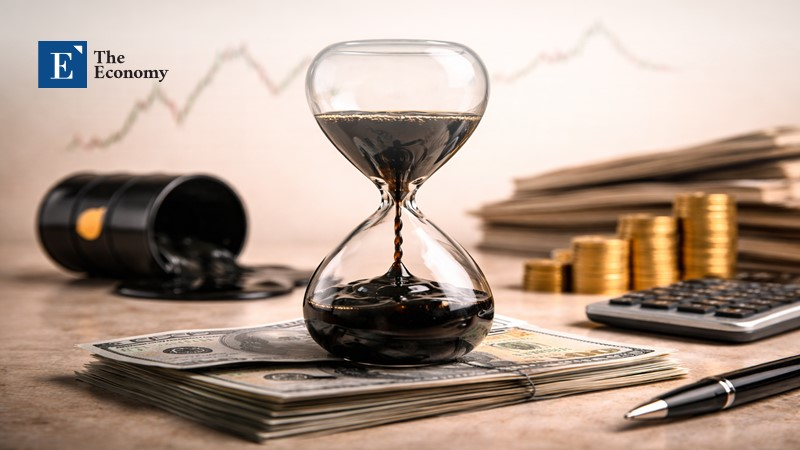
It's a common belief that the global oil market is delicate. A recent policy experiment suggests it might be tougher than most believe. According to a CNBC report, when the G7 imposed a price cap on Russian oil in December 2022, many experts anticipated a significant drop in supply due to Russia’s major role as an oil exporter, which accounted for around 10% of global oil production before its invasion of Ukraine. However, analysts told CNBC that the cap was not expected to substantially affect Russia’s oil revenues, since Asian markets were already buying Russian crude at a steep discount. It was widely expected that a sudden limit on this amount would greatly increase oil prices. That didn't happen. Prices went up briefly at the beginning of the war, then settled down, and Russian oil kept flowing into the market. Meanwhile, Russia earned less from these exports because buyers demanded lower prices and shipping costs rose. Records from international energy groups show that Russian oil exports remained close to 7 million barrels per day in 2023, despite the restrictions. The result points to a key idea in economics: restrictions affect not only supply but also people's expectations about the future. When policies, like the oil price cap, shape these expectations in ways that people can predict, they can keep markets stable, even during times of international crisis.
How the Oil Price Cap Works Over Time
Decisions about oil production always involve thinking about the future. Unlike many raw materials, oil is stored underground and can be taken out over time. So, producers decide how much to produce and when to produce. This decision-making is similar to what people do when deciding how much to spend or save, a common example in economics. People choose whether to spend money now or save it for later, depending on what they expect to earn and the interest rates.
Oil producers do something similar. If they think oil prices will rise significantly in the future, they might wait to extract it and sell it later at higher prices. If they think prices will stay the same or go down, they are likely to produce more now. So, when they take oil out of the ground depends a lot on what they think will happen in the market.
The oil price limit on Russian exports changes this process. By setting a maximum price for Russian oil when it's transported using Western shipping and insurance, the policy limits how much prices can go up in the future. When producers expect future prices to be limited, they have less incentive to wait to extract oil from the ground. Instead of waiting for a possible price increase, they are more likely to sell oil sooner. Economic studies suggest that this can increase the amount of oil available in the near future, even when restrictions target a major exporter. This helps explain why restrictions don't always raise oil prices. When policies lower the expected price of future production, they can encourage producers to supply oil sooner. Instead of limiting the total amount of oil available, the policy changes when oil is extracted from the ground. This can result in more available oil now and more stable market conditions.
This is an important lesson for those who make policies and those who teach about them. Restrictions on energy are often seen in terms of supply and demand, which assumes quick reactions in production. But because oil extraction involves thinking about the future, expectations about future policy can be just as important as current restrictions.
What Happened with the Russian Oil Price Cap
The Russian oil price cap had two main goals: to keep global oil supply steady while reducing the revenue Russia earned from exports. Instead of banning Russian oil completely, the policy allowed shipments to continue as long as they stayed below a maximum price when using Western shipping and insurance.
What happened in global energy markets suggests that the policy partly reached these goals. Russian oil continued to be sold to other countries, especially in Asia, where demand for cheaper oil was high. At the same time, the price Russia received for its exports was much lower than international prices. Research shows that the restrictions lowered the price of Russian oil relative to global prices by requiring sellers to offer discounts and to cover increased transport costs.
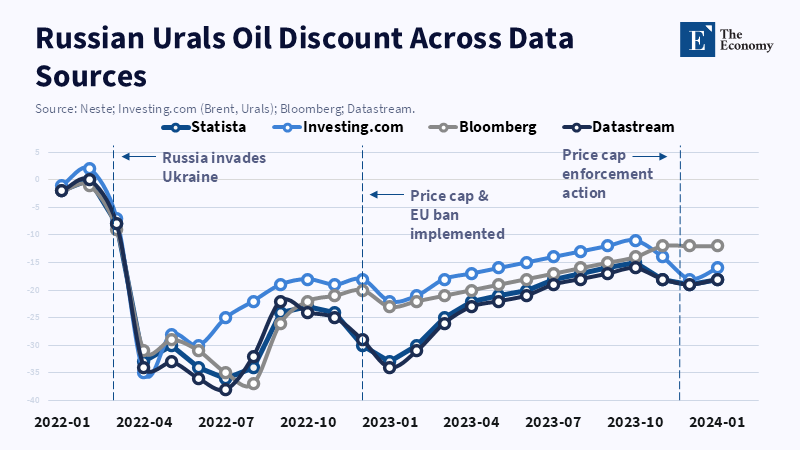
Data from energy markets support this idea. The International Energy Agency said that Russian oil exports remained high in 2023, averaging about seven million barrels per day of crude oil and refined products combined. According to a U.S. Department of the Treasury report, Russian federal government oil revenues from January to March 2023 were more than 40 percent lower than the same period a year earlier, indicating that the oil price cap had a larger impact on revenue than on supply.
Trade patterns also changed a lot. European buyers mostly replaced Russian oil with oil from other producers, while Russian exports shifted to Asian markets such as India and China. This change lengthened shipping routes and increased logistical costs in global oil markets. Experts at Chatham House note that the restrictions changed trade flows without completely removing Russian oil from global supply, helping prevent the supply shock many initially feared.
However, enforcing the policy was difficult. Russia started using a shadow fleet of tankers that operated outside Western insurance systems. These ships helped keep export volumes up even as Western regulators tried to enforce price restrictions. Although these challenges exist, the cap still affected prices by forcing Russian exporters to accept lower prices than global levels.
How the Oil Price Cap Affected Prices and Market Swings
One of the most valuable things we learned from the Russian restrictions is that the oil price cap seems to have had a bigger effect on market swings than on average oil prices. Economists describe this difference as first-order and second-order effects. First-order effects are changes in average prices, while second-order effects are changes in the extent of price variation.
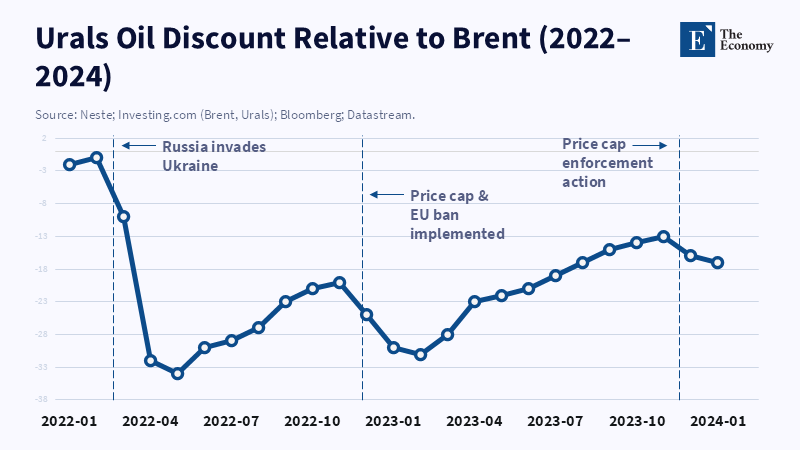
Research on the restrictions suggests that the cap mostly affected the second category. By raising concerns about enforcement, transport costs, and future policy changes, the restrictions increased short-term volatility in oil markets. According to a recent analysis, the oil price cap did not significantly increase the long-term average oil price, as production decisions and export flows were adjusted over time, and the effect on the Russian oil export price was minimal once Western services resumed facilitating shipments to Asia. If producers expect prices to rise significantly in the future, they might wait to extract oil from the ground. This lowers supply now and can push prices up. But if future prices are constrained by policy, such as the oil price cap, producers have less reason to wait. This can keep supply steady even when restrictions interrupt traditional trade routes.
Economic analysis shows that limiting future price expectations can shift extraction from the future to the present. In terms of numbers, this changes how much prices vary rather than their average. Markets might see more short-term changes as trade flows shift, but the overall price level remains fairly stable.
Market concentration also adds to the changes. When restrictions reduce the number of suppliers on certain trade routes, buyers depend more on the remaining producers. This makes them more sensitive to upheavals, which can amplify price swings even when average prices remain unchanged. It's important for decision makers to understand this. A restriction policy that increases swings but keeps average prices steady can still meet its goals without inducing widespread inflation in global energy markets.
How to Make an Oil Price Cap Work Better
What happened with the Russian restrictions gives us several ideas for creating a future energy policy. First, restrictions that focus on revenue rather than supply seem to be more effective at stabilizing global markets. By allowing oil to continue flowing while limiting profits, officials can lower the risk of big supply drops.
Second, it's important to be predictable. A trustworthy, stable oil price cap reduces the reasons producers have to wait to extract oil from the ground. When producers expect future prices to remain low, they are more likely to keep production steady rather than hold back supply in hopes of higher prices.
Policy analysis shows that how the policy is enforced is key to maintaining its trustworthiness. Monitoring shipping services, insurance companies, and financial transactions helps ensure exporters comply with the price cap. Experts say stronger enforcement could greatly improve the cap's effectiveness while maintaining global supply stability.
Third, we need to see more clearly what's happening in worldwide oil markets. Better information on shipping routes, tanker ownership, and prices can help regulators find ways to avoid restrictions and lower uncertainty among market participants. More openness also reduces speculative behavior, which can make market swings larger.
Finally, international cooperation is very important. Oil markets are global, and restrictions imposed by one country are often less effective. Coordinated policies among major importing countries ensure that restrictions are applied consistently across global trade networks. For both teachers and decision-makers, the big lesson is clear. Energy restrictions should not only be seen as ways to limit supply. When designed carefully, they shape expectations that guide production decisions over time.
Predictable Policy for Stable Energy Markets
The idea that restrictions always raise oil prices overlooks a key aspect of resource economics. Oil producers decide not only how much to extract from the ground but also when to extract it. The Russian oil price cap shows how policy can affect these decisions in ways that stabilize global markets.
Data from international energy sources show that Russian export volumes remained high even with restrictions, while the country's revenues declined due to lower prices and higher transport costs. This shows how expectations affect production behavior. When future prices are limited, producers have little reason to wait to extract oil from the ground.
The result is a policy that limits revenue without removing large amounts of oil from global markets. While the restrictions did increase market swings at times, they did not cause the long-term price increase that many experts initially predicted.
For decision makers, the lesson is clear. Consistency and foreseeability are as important as enforcement. When governments create restrictions with explicit rules and transparent expectations, policies like the oil price cap can change market incentives while protecting the global energy supply. As international tensions continue to affect energy trade, understanding the economic reasons behind these policies will be key to creating restrictions that are both successful and economically sustainable.
The views expressed in this article are those of the author(s) and do not necessarily reflect the official position of The Economy or its affiliates.
References
Dubrovskiy, V. and Nixey, J. (2025) Tightening the oil-price cap to increase the pressure on Russia. London: Chatham House.
Ferrari, G. and Koch, T. (2018) ‘An optimal extraction problem with price impact’, arXiv preprint, arXiv:1812.01270.
International Energy Agency (IEA) (2022) Oil market and Russian supply – Russian supplies to global energy markets. Paris: International Energy Agency.
International Energy Agency (IEA) (2024) Russia’s war on Ukraine – Topics. Paris: International Energy Agency.
Johnson, S., Rachel, Ł. and Wolfram, C. (2023) ‘How to make the price cap on Russian oil most effective’, VoxEU Column. London: Centre for Economic Policy Research.
Johnson, S., Rachel, Ł. and Wolfram, C. (2026) ‘How sanctions can help stabilise global oil supply’, VoxEU Column. London: Centre for Economic Policy Research.
Kilian, L., Rapson, D. and Schipper, B. (2024) The impact of the 2022 oil embargo and price cap on Russian oil prices. CEPR Discussion Paper No. 18934.
PortNews (2023) ‘Russia’s total exports of oil and petroleum products in February 2023 fell to 7.5 million barrels per day’, PortNews, 15 March.
U.S. Department of the Treasury (2023a) The price cap on Russian oil: A progress report. Washington, DC: U.S. Department of the Treasury.
U.S. Department of the Treasury (2023b) Statement of the G7 and Australia on actions taken to enforce price caps for seaborne Russian-origin oil and petroleum products. Washington, DC: U.S. Department of the Treasury.
U.S. Department of the Treasury (2024) New U.S. Department of the Treasury price cap analysis shows that increased sanctions enforcement is forcing Russia to sell oil at a steeper discount and limiting Russian revenue. Washington, DC: U.S. Department of the Treasury.
Working across research, policy, and data-driven analysis, the Editorial Board ensures that published pieces reflect a consistent institutional perspective grounded in quantitative reasoning and long-term structural assessment.