Between Aid and Ambition: Can China Investment Southeast Asia Be Recast as Win-Win?

Working across research, policy, and data-driven analysis, the Editorial Board ensures that published pieces reflect a consistent institutional perspective grounded in quantitative reasoning and long-term structural assessment.
Authored On
Modified
China’s investment fuels Southeast Asia’s growth but raises dependence
The region has become the testing ground for China’s global leadership
Mutual benefit—not dominance—will determine the partnership’s future
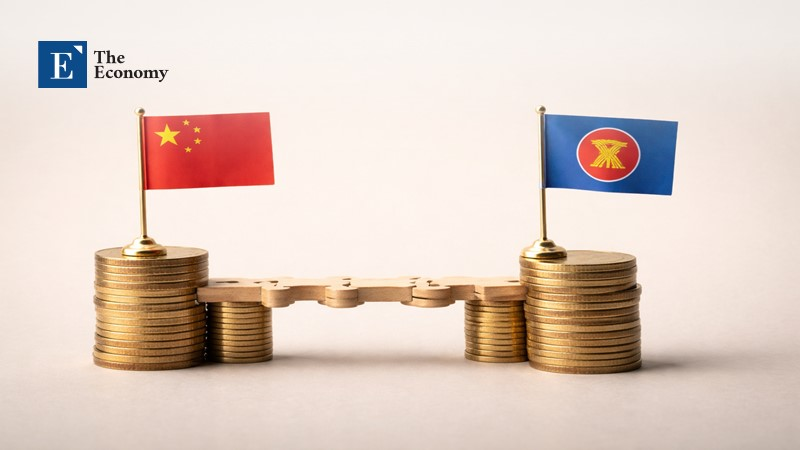
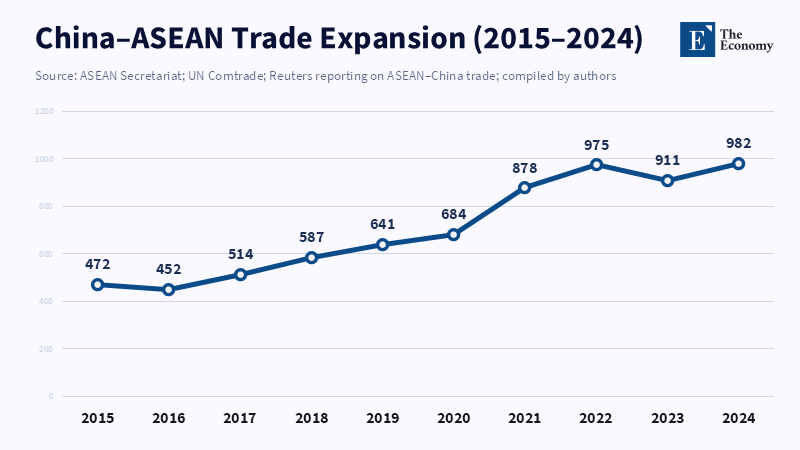
In 2024, economic trade between China and ASEAN countries reached nearly $1 trillion. This exchange represents a significant integration of factories, ports, and energy infrastructure, influencing economies, employment, and political landscapes. According to information on projects such as the China–Laos Economic Corridor, Chinese investment in Southeast Asia plays a significant role in supporting infrastructure and economic development, which can impact the daily lives of workers and influence the growth and opportunities available to smaller nations. The immediate results include thriving factories, increased exports, and updated infrastructure. The drawbacks, such as manipulated regulations, environmental strain, and political reliance, are less obvious but can persist for many years. To view Chinese funds as merely a means of growth ignores the unequal power they confer. Instead of debating whether Southeast Asia should accept funds from China—which it already does—the main concern is how to direct these funds toward outcomes that are strong, open, and mutually beneficial.
China Funds in Southeast Asia: Extent, Impact, and the Growing Power Imbalance
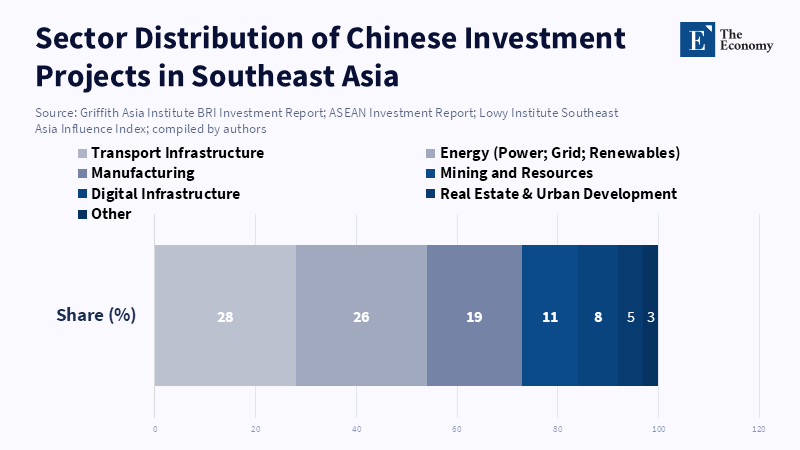
The extent of China's involvement in Southeast Asia is substantial and continues to grow. At the start of the 2020s, funds shifted from mainly infrastructure loans to a steady flow of factory construction, energy projects, and the expansion of digital networks. By 2023–24, Chinese companies were a leading source of new projects in transport, energy, and manufacturing. This level of concentration is important as it shifts the balance of power. If the majority of new factories, ports, and energy systems come from a single place, that place gains more influence. Governments may feel pushed to ensure projects continue without disruption. Regional suppliers and contractors adjust to norms established by outside entities. The effectiveness of policy action can erode over time, especially if the institutions responsible for assessment, negotiation, and agreement maintenance are not robust.
The type of funds makes the risk even greater. Chinese funds are often used for long-term, capital-intensive projects: ports that shape trade routes, energy plants that determine pollution levels for years, and core infrastructure that sets logistics routes. These aren't flexible funds that can be easily changed. They lead to lasting reliance in both supply chains and the politics of permissions. These dependencies may be used as a source of pressure during times of difficulty. If a small country loses its ability to regulate or access other markets, it's an economic issue and a matter of strategic importance. Acknowledging this is the first move toward creating policies that consider economic security as a result of good governance, not political views.
Creating these policies involves both technical skills and political tactics. It means strengthening purchasing departments' skills, standardizing environmental impact studies, and sharing fund details to allow for review by society and lawmakers. It also requires finding a range of partners. Though not a cure-all, broadening the range of funds and tech partners reduces the likelihood that any one group can exploit market access or credit. The aim is not to exclude China, since this would be costly and likely not effective, but to ensure that Chinese funds are among several reliable sources. Furthermore, projects should adhere to clear, enforced rules.
China Funds in Southeast Asia: Beijing's Motivations and the Importance of Reputation
Beijing has logical reasons to increase its funds in other countries. Slower growth at home and overproduction in certain fields encourage companies to seek new markets and lower-cost resources. Projects in other countries soak up extra production. They also protect resources and supply chains for important sectors. Looking from Beijing, growing funds in Southeast Asia is a form of diplomacy. It joins markets, creates opportunities for national leaders, and builds interconnected tech systems that can favor Chinese companies. This is a logical plan, but it could be seen as exploitative. If their actions are seen as consistently taking advantage of or ignoring environmental protections, their public image could suffer.
A good image matters because power depends on agreement as much as influence. If people and leaders in Southeast Asia see Chinese projects as unfair, they may try to avoid being too closely involved. This could take different forms: accepting projects while maintaining political distance, seeking different partners for important projects, or imposing trade barriers to raise the cost of Chinese goods. These reactions reduce the possibility of cooperation and raise the risk for Chinese companies. If low rules lead to gains now, it could result in long-term strategic losses for Beijing. If Chinese projects treat everyone fairly and are integrated locally, there is less political risk and more consistent returns. Making rules better benefits everyone.
How they are seen socially also matters within China. If projects in other countries fail or cause social problems, they can hurt Chinese companies and the government groups that support them. This pushes for better project selection, clearer environmental safety measures, and better regional partnerships if these things are taken seriously in Beijing. The area has influence not just through money but through world opinion and diplomatic relationships. China's reaction to this pressure will determine if funds become a basis for trust or create recurring negative feelings.
China Funds in Southeast Asia: How Policies Can Create a Fair Partnership
Southeast Asia can address concerns about Chinese investment by focusing on policies that promote transparency, especially since research shows that firms tend to limit their investments as uncertainty about China's economic policies rises, according to a 2025 article published on ScienceDirect. Public bidding, sharing how funds are allocated, and the availability of environmental studies reduce the risk of dishonest deals. According to a CSIS report, Chinese-funded energy projects in Southeast Asia often face public criticism over environmental and safety standards, which can create political challenges for governments, especially when these projects attract public visibility.
The second is improving domestic abilities. Training those who handle purchasing, supply, and regulatory reporting, and who spend on independent auditors, is a simple yet effective step. These upgrades allow authorities to compare offers based on technical value rather than political stress.
Third, environmental and social standards that can be enforced should be contract requirements. Requiring independent monitoring, funds for damage repair, and avenues for communities to seek compensation turns promises into legal duties. These actions improve project quality and reduce the risk of long-term costs to fix environmental damage. Some may argue that higher standards increase costs and discourage funds. However, many investors, including some Chinese firms in clean technologies, value clear regulations. They will pay more for predictable rules than for politically unstable projects.
Fourth, strategic diversification must be handled carefully. Policies can concentrate on areas where other partners are available or where local benefits are high. For instance, support for non-Chinese companies in food processing, refining rare-earth elements, or digital services can reduce reliance on a single source without sacrificing growth. Public-private partnerships that have clear regional content rules also help. These actions do not need to be protectionist but are ways to manage risk.
Fifth, learning and skills are very important. Universities and training centers should teach project evaluation, environmental law, and community involvement. That investment creates experts who can make sure projects meet standards. Stronger training becomes a benefit over time because countries with better evaluation skills attract higher-quality funds, as risks are lower.
Finally, coordinating at the regional level makes it harder to pressure others. ASEAN processes can standardize rules for purchasing and environmental assessment. Coordination, even if gentle, is important. When several governments share and enforce similar rules, it lowers the ways to persist with low-standard projects. Regional groups can also gather technical expertise and share resources to review cross-border projects.
Changing Dependence into a Lasting Partnership
The truth about Chinese funds in Southeast Asia is not simple or fixed. The area has already formed strong economic bonds with China. This reliance is both a reality and a benefit. But it is also a cause of weakness if governance does not keep up with the flow of funds. The task for policymakers is clear. Governments in Southeast Asia must view funds as a matter of governance as much as a chance for financial benefit. This means making deals open, improving evaluation skills, enforcing environmental rules, and purposefully growing the number of partners. For China, the lesson is similar: influence based on taking advantage is weak. To lead long-term needs rules, giving back, and regard for the environmental and political costs faced by partners.
Strategic patience and strong institutions will determine whether the next 10 years of funds lead to strong growth or deeper power imbalances. The right choice is not to reject funds from China but to insist that they be used in ways that protect local environments, leave room for policy choices, and expand opportunities. This insistence is not anti-China but supports positive growth. It calls for results that benefit everyone in the long run. If both groups agree to this, Southeast Asia can use funds from China to create a broader foundation of prosperity in the area. According to a report from CSIS, Southeast Asian countries must balance immediate energy demands with their pledges for carbon neutrality, making this a practical decision about managing growth and stability rather than an ideological one. If they fail to act, focusing on short-term gains could lead to instability in the long run. Create governance that matches the scale of the money, or accept the result of not doing so.
The views expressed in this article are those of the author(s) and do not necessarily reflect the official position of The Economy or its affiliates.
References
Asia Society Policy Institute (2024) China’s Investments in ASEAN and the Belt and Road Initiative. New York: Asia Society Policy Institute.
Asia Society Policy Institute (2024) Balancing Act: Assessing China’s Growing Economic Influence in ASEAN. New York: Asia Society Policy Institute.
Asia Society Policy Institute (2024) China’s Cooperation with Southeast Asia: Clean Energy Projects and Investments. New York: Asia Society Policy Institute.
Bai, J. and Qiu, T. (2023) ‘Automatic procurement fraud detection with machine learning’, arXiv preprint.
Carnegie Endowment for International Peace (2025) Biopharmaceuticals Rising: China’s Strategic Pivot to Southeast Asia Amid Great Power Tech Competition. Washington, DC: Carnegie Endowment for International Peace.
Latiff, R. and Azhar, D. (2025) ‘China and ASEAN deepen economic ties amid shifting supply chains’, Reuters.
Le Monde (2025) ‘Laos’ 4,000 Islands archipelago grapples with China’s economic expansion’, Le Monde, 27 December.
Lowy Institute (2025) Southeast Asia Influence Index 2025. Sydney: Lowy Institute.
Mai, L. and Natalegawa, A. (2025) ‘Chinese energy investments in Southeast Asia’, Center for Strategic and International Studies.
Nedopil, C. (2025) China Belt and Road Initiative (BRI) Investment Report 2025. Griffith Asia Institute.
Patton, S., Sato, J. and Yaacob, R. (2025) The State of Southeast Asia Survey 2025. Singapore: ISEAS–Yusof Ishak Institute.
Reuters (2025) ‘China and ASEAN trade relations strengthen amid global economic shifts’, Reuters.
The Straits Times (2025) ‘China’s investments in South-east Asia snarl US plans on supply chains’, The Straits Times, 25 April.
Trissia Wijaya (2026) ‘Chinese investment and economic security in Southeast Asia’, East Asia Forum, 4 March.
UNCTAD (2024) World Investment Report 2024. Geneva: United Nations Conference on Trade and Development.
Wong, K., Dayant, A. and Stanhope, G. (2024) ‘Southeast Asia: Over $52bn of Chinese-backed infrastructure not delivered due to political instability and poor local engagement’, Business & Human Rights Resource Centre.
Xinhua (2025) ‘China remains ASEAN’s largest trading partner for 16 consecutive years’, Xinhua, 9 September.
Working across research, policy, and data-driven analysis, the Editorial Board ensures that published pieces reflect a consistent institutional perspective grounded in quantitative reasoning and long-term structural assessment.