When 'Made in Europe' Meets Machines: Humanoid Robots, Policy and the New Industrial Paradox

Working across research, policy, and data-driven analysis, the Editorial Board ensures that published pieces reflect a consistent institutional perspective grounded in quantitative reasoning and long-term structural assessment.
Authored On
Modified
Humanoid robots are entering car factories rapidly
Local manufacturing policy may accelerate automation
Policies must link subsidies to jobs and skills
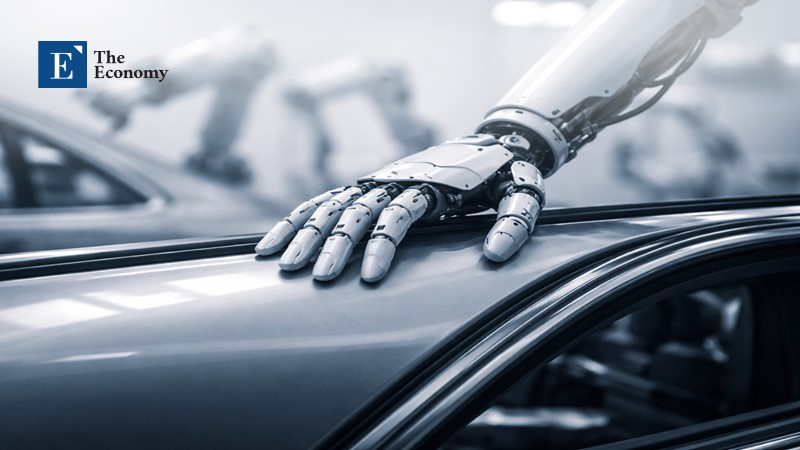
In 2025, several major automakers quietly tested a new kind of worker on assembly lines: humanoid robots. Unlike human workers, these machines don't clock in, join unions, or get paid. While their use is new, the message is clear: car companies in China, Europe, and the U.S. are experimenting with machines that can walk, lift, and use tools in spaces designed for people. Governments link financial aid and contracts to local production to boost manufacturing and secure clean-vehicle supply chains. However, in factories with humanoid robots, job creation and local income become uncertain, since production can happen in Europe without hiring many new people. This disconnect between factory location and the workforce is at the heart of debates about the use of humanoid robots in car manufacturing.
Humanoid Robots in Car Manufacturing: The New Industrial Reality
In the last two years, humanoid robots have moved from curiosity to real-world tests. Companies now run trials where robots lift, organize, and move materials—tasks once done by temporary workers. Regular automation excels at repetitive tasks, but humanoid robots offer flexibility. They can be retrained, moved to different lines, and take on various tasks during different shifts.
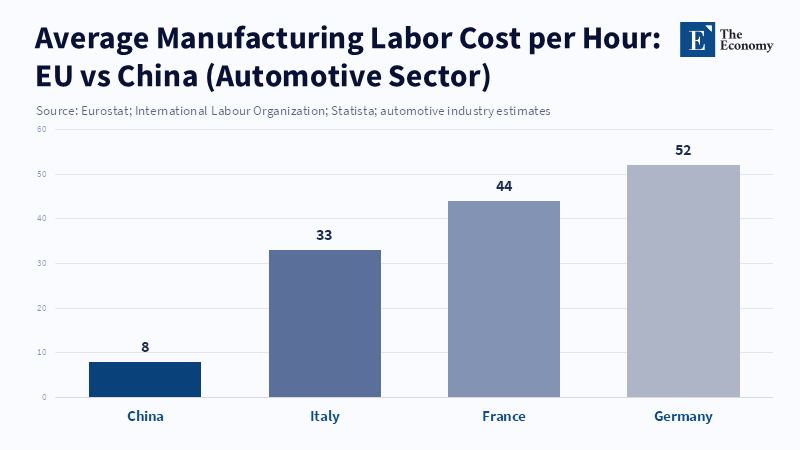
This flexibility changes how companies plan their spending. A single group of humanoid robots can handle different car models and tasks without the need to hire many specialists for each one. According to a Forbes report, the upfront cost of humanoid robots is estimated at between $120,000 and $200,000 per unit. While these robots offer flexibility as reusable, movable workers across a plant, they do not necessarily lower the cost of paying high wages in expensive locations compared to other automation options that cost significantly less. The contrast is clear: flexibility versus traditional specialization, and higher robot costs versus cheaper standard automation.
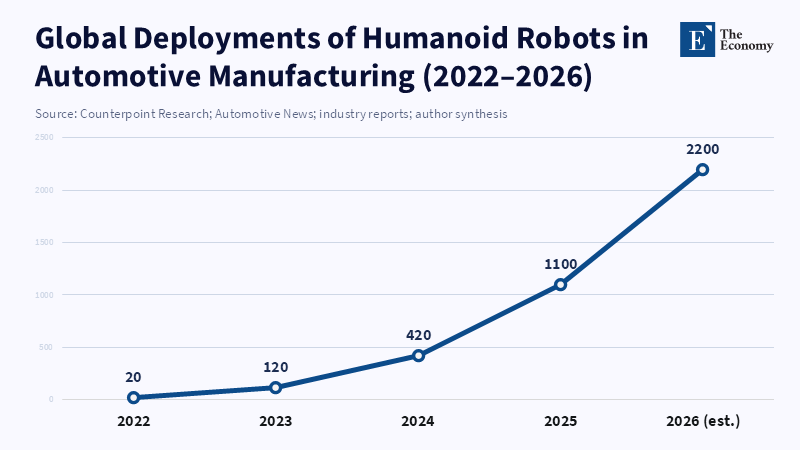
The benefits are clearer in high-wage markets. When labor and social costs are a big part of budgets, buying robots that have been used for years is appealing. Early adopters of humanoids report that these robots are slower than traditional automation and need extra work to adapt tools and help them navigate. As software improves and suppliers standardize parts, these issues should decline. According to virtualmachine.org, mass-producing humanoids in 2025 and 2026 has already lowered average costs from $150,000–$200,000 in 2024 to $80,000–$120,000.
The effect on hiring depends on which tasks are automated. If simple work done by temps is automated, the employment impact is small but real. According to a report, Hyundai Motor's union warns that humanoid robots on assembly lines could cause major job losses among skilled assemblers, possibly increasing unrest. Car companies are testing robots where automation programs or suppliers already exist. China has active production and supplier groups that scale quickly. BMW Group reports that a center in Leipzig, Germany, is testing a multifunctional humanoid robot for high-value car components like high-voltage batteries, aiming to reduce physical strain and improve safety. Leaders should note that counting factories but not workers gives an incomplete picture. Humanoid robots create jobs in integration, maintenance, and software, but fewer and requiring different skills than assembly jobs.
Humanoid Robots in Car Manufacturing: Policy Design and Unintended Consequences
According to a report from the Alternative Fuels Observatory, while leaders in Europe have rapidly linked electric vehicle subsidies and contracts to local assembly, these measures do not necessarily ensure that the income or community benefits from hiring large numbers of workers are automatically preserved. The goal is as much political as it is economic: to secure supply chains, keep the added value local, and bring back industrial jobs. These are important goals, but the specific rules matter. If support depends on location or component value rather than the makeup of the workforce, then companies can follow the rules by using humanoid robots locally while keeping payroll low. This highlights the contrast between policy intent and practical outcome.
The unwanted result is simple. The public sees a press release about a new plant and assumes that jobs will follow. But a plant mainly staffed by robots generates less local spending and tax revenue than leaders expected—this contrast highlights the gap between public expectations and economic outcomes. The problem is not just theoretical. Companies openly discuss investments in digital capabilities, AI, and robotics when they announce new locations. These announcements attract investment, supplier networks, and political support. But they also change the talks between governments and companies. When a government offers money for local assembly, companies naturally develop plans to maximize their return on investment. If robots lower production costs in a high-wage area, the need to hire many people is reduced. This does not mean stopping automation. It means rules should be clearer on social goals. Linking subsidy eligibility to workforce promises—such as minimum human work or hiring targets—changes companies' calculations and protects the social benefits of public money.
There is a practical way to set these rules. Conditions can be clear and measurable. Governments can require reports on automation, expected employee numbers, and the balance between human and machine work. They can reclaim funds if hiring falls short and prefer companies with strong plans to retain and train workers. According to the International Federation of Robotics, aligning company goals with public interests helps ensure robots deliver real economic benefits. Without careful planning, 'made in Europe' factories may become only symbolic, offering little to local employment.
Humanoid Robots in Car Manufacturing: What Educators, Firms, and Policymakers Must Do Now
If robots are the industrial future, leaders must guide change to benefit all. First, educators must swiftly update training programs. Short, step-by-step programs in robot supervision, safety, and systems integration should launch quickly. These courses should be co-designed with car manufacturers and suppliers for employer acceptance. Portable certifications help workers move between jobs and enable employers to hire locally without extensive training. Without them, the labor supply lags and local job mismatches worsen.
Second, companies must outline clearer transition plans. This means publishing plans showing how humanoid robots will affect employee numbers, which jobs will be added, and which employees will be retrained. Plans should detail how displaced workers will find new roles or receive income support. Companies can also prefer local suppliers that offer training, not just parts. This signals that new plant agreements require workforce training.
Third, leaders should revise public financial incentives. Largest subsidies should depend on workforce numbers and solid reporting. Funds can be reclaimed from companies missing job targets over set periods. The International Federation of Robotics notes a 10.7% increase in robot use by U.S. automakers in 2024, highlighting how contracts can encourage companies to adopt repeatable hiring, retraining, and local supplier plans. Transition funds can help workers achieve a living wage and quick retraining when automation causes job loss. These funds should involve social partners to ensure fairness and sustainability.
Good industrial policy does not oppose automation. It means crafting rules that consider who works in plants and how wealth grows locally. Robotics can raise safety, productivity, and quality. But benefits may concentrate if unchecked. The choice is not technology versus jobs, but whether public money should fuel productivity that benefits only shareholders or one shared with workers through training, hiring, and ongoing local investment.
The use of humanoid robots in car factories makes a policy choice clearer. Europe and its partners want production close to home. But "close to home" is not the same as "built by locals". Humanoid robots can meet location rules while changing the social benefits of public support. The answer is not to slow down innovation but to change incentives so that automation expands opportunity instead of reducing it. Subsidies and contracts should depend on measurable workforce results. With projections from Morgan Stanley suggesting the global humanoid robot market could reach $5 trillion by 2050 and China possibly having 300 million units, a report from Le Monde notes the growing importance of supporting fast, employer-linked retraining and portable certifications. It also emphasizes the need for clear reporting on automation levels and holding companies accountable for their hiring and training commitments through enforceable regulations. If we act now, automation can make work safer, strengthen companies, and make communities more prosperous. If we fail, we will have built factories full of machines but without the jobs that industrial policy promised. The future will be decided not just by robots but by the policy choices we make.
The views expressed in this article are those of the author(s) and do not necessarily reflect the official position of The Economy or its affiliates.
References
AI Bridge (Virtual Machine), 2026. Acceleration of Humanoid Robot Adoption in Manufacturing by 2026: At the Intersection of Labor Shortage and Automation Innovation. AI Bridge: Asia to the World.
AI Business (Hope, G.), 2026. Humanoid Robots Now Assembling Cars in Europe and China. AI Business.
Automotive News, 2026. ANE China Agibot robot Europe production coverage. Automotive News.
Bloomberg (Shin, H.), 2026. Hyundai unveils new humanoid robot to work in its car factories. Bloomberg.
Boeriu, H., 2026. BMW Deploys Humanoid Robots in Europe for the First Time. BMWBLOG.
Business Korea, 2026. Automakers shift focus to humanoid robotics market. Business Korea.
Callari, T.C., 2025. Realising human-robot collaboration in manufacturing? A human-centred Industry 5.0 perspective. ScienceDirect.
Clean Energy Wire, 2025. Germany agrees €3bn support scheme to make EVs affordable; national schemes and EU measures. Clean Energy Wire.
Counterpoint Research, 2025. Auto industry represents great potential for humanoid robot installations. Counterpoint Research.
Counterpoint Research, 2026. Humanoid robotics leans on automotive industry for future growth. Counterpoint Research.
Eurostat, 2025. Hourly labour costs statistics (update 2024). Eurostat.
Financial Times, 2026. BMW to put humanoid robots on production line at German plant. Financial Times.
Hyundai Motor Group, 2026. Hyundai Motor Group announces AI robotics strategy to lead human-centered robotics era at CES 2026. Hyundai Motor Group press release.
International Federation of Robotics (IFR), n.d. International Federation of Robotics.
International Federation of Robotics (IFR), 2025. Robot installations in US auto industry up by double digits. IFR Press Release, 8 May 2025.
Industrial Equipment News (IEN), 2026. Humanoid robot market could reach nearly $30 billion by 2036. Industrial Equipment News.
Korea Herald, 2026. Article on humanoid robotics and automakers. The Korea Herald.
Morgan Stanley Research, 2025. Humanoid Robot Market Expected to Reach $5 Trillion by 2050. Morgan Stanley Research.
Reuters, 2026. Hyundai Motor Group to invest $6.3 billion in AI data centre and robot factory. Reuters.
Reuters (Yang, H. & Jin, H.), 2026. Hyundai Motor's Korean union warns of humanoid robot plan, sees threat to jobs. Reuters.
Transport & Environment, 2024. Subsidies for petrol and diesel company cars cost EU taxpayers €42 billion every year. Transport & Environment.
Undheim, T.A., 2025. Humanoid Robots Won't Save Manufacturing. Here's What Will. Forbes.
Working across research, policy, and data-driven analysis, the Editorial Board ensures that published pieces reflect a consistent institutional perspective grounded in quantitative reasoning and long-term structural assessment.