Solar Subsidies and the Geography of Cheap Energy

Working across research, policy, and data-driven analysis, the Editorial Board ensures that published pieces reflect a consistent institutional perspective grounded in quantitative reasoning and long-term structural assessment.
Authored On
Modified
Solar subsidies helped drive the dramatic fall in solar energy costs
But geography determines who benefits most from cheap solar
Smart policy must match solar expansion with regional cooperation and grid investment
Solar subsidies have moved solar power from a niche to the mainstream in just over a decade, thanks to a 90% drop in global costs for utility-scale solar PV systems from 2010 to 2023. While many argue that government support alone makes solar cheaper than fossil fuels, this view is incomplete. Low panel costs are necessary, but who actually benefits depends on factors like location, grid connections, industrial concentration, and financing. Solar subsidies should be seen as catalysts requiring careful site planning and international finance, not as substitutes for a broader energy strategy. This distinction matters, since policy choices now will shape which regions gain or are left out of the shift to low-cost, clean energy.
Solar subsidies and the limits of simple cost parity
The real and substantial reduction in solar costs is clear in the headline numbers. The global weighted average levelized cost of energy (LCOE) for newly installed utility-scale solar projects decreased from around USD 0.46/kWh in 2010 to approximately USD 0.044/kWh in 2023. This considerable change explains why many new renewable energy projects can now compete with the lowest-cost fossil fuel options in many markets. Policymakers have understandably interpreted this as an opportunity to expand solar by simply replicating the same subsidy strategies across the board. This approach, however, ignores essential realities of the grid and location.
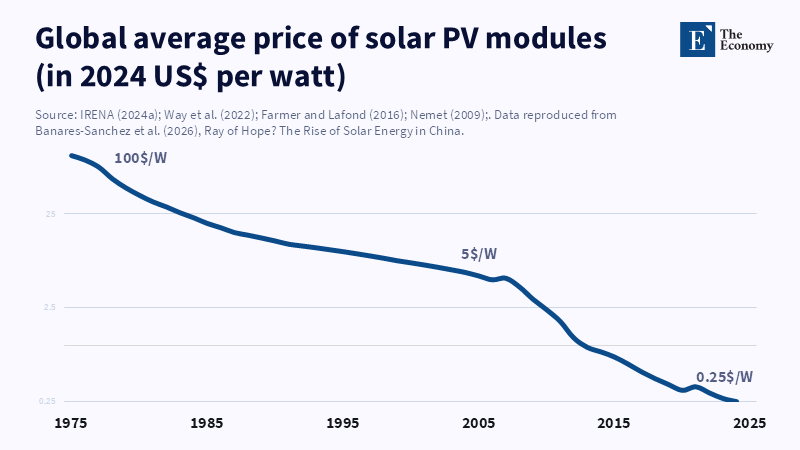
The cost of modules is only one element in the cost of delivering electricity. Other factors, such as balance-of-system expenses, location, land acquisition, permits, local workforce, grid connection, and energy storage, also affect the project. Soft costs also decreased between 2018 and 2023, but the decline wasn't consistent across all markets. Some nations experienced smaller reductions in balance-of-system and permitting costs. When panels become very cheap, these other costs can cause bottlenecks. Capacity factors also differ with latitude, cloud cover, and time of year. A kilowatt of panels in an area with abundant sunshine will generate more energy each year than the same kilowatt near the Arctic Circle. The variance changes the cost per kWh, even if the module prices remain the same. System value is also worth considering. Solar energy generated in the middle of the day in a grid with flexible demand is more valuable than the same amount of energy put into a grid that is already overloaded. To summarize, governmental support for installations is not an automatic indicator of economic power being delivered everywhere.
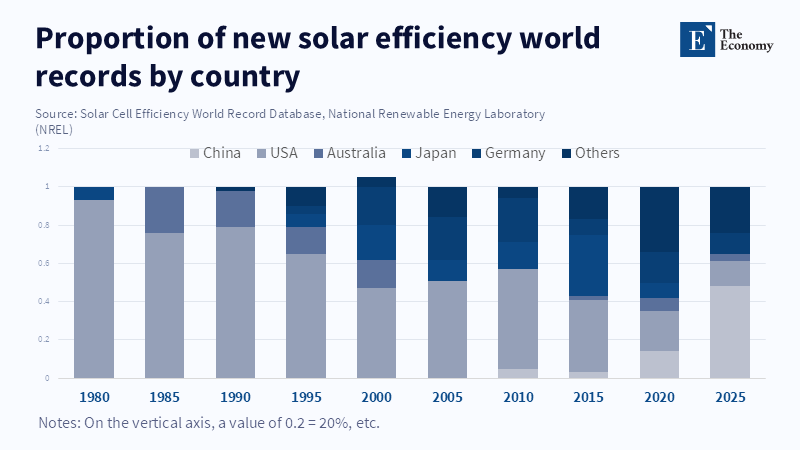
The structure of the solar industry can either magnify or diminish the impact of subsidies. According to Wood Mackenzie, China's government has intervened to stabilize the solar equipment market, altering global procurement expectations and influencing module prices worldwide. This concentration, however, also results in dependence on a single country for political and manufacturing needs. Subsidies that aim only to lower installation costs without addressing supply chain problems may leave importing nations vulnerable to price or government changes, even as total module prices decrease. This is why a subsidize-everything approach would lead to uneven outcomes rather than lasting, affordable electricity for all.
Solar subsidies and the geography of energy advantage
Countries are not all starting from the same position when it comes to solar energy. The Mediterranean region and much of North Africa have solar radiation that can sustain high utilization rates. In these areas, coastal states typically generate more electricity per installed kilowatt than countries at higher latitudes, which receive less sunlight and experience longer winter nights. If two countries with identical support programs have very different geographic locations, the results will differ. A subsidy of one euro will yield more usable kilowatt-hours in a sunny place than in a northern country. This explains why some countries achieve cost parity more quickly, while others struggle to achieve similar economic returns from installations.
To move beyond generalizations that solar is now cheaper, governments have to create subsidy initiatives based on solar quality and grid connection costs. Subsidies should speed up placement and power grid construction where resource presence is strong. When resources are scarce, subsidies should concentrate on efficiency, storage, flexible demand, or hybrid renewables. Not making that adjustment will cause overspending in low-utilization power or under-spending when potential profit is high.
Solar subsidies and cross-border energy cooperation
Plans that cross international lines should also be considered. The idea of connecting areas with abundant sunshine to population centers via high-voltage direct current lines is not new. Experts have proposed connecting the Mediterranean to Europe and creating links from North to South to equalize resource variations and spread costs. Transmission is costly and requires long-term organization, shared control, and reliable funding. The European Union and nearby countries should handle questions of finance, power, and local growth simultaneously, ensuring exporting regions are not left with weak local grids or unequal deals. The Mediterranean example shows how geography makes international planning essential if affordable panels can deliver affordable electricity to consumers across the continent.
Finance is able to bridge the gap when geography separates where the lowest-cost panels are most effective. Northern countries with limited solar exposure have two options that reinforce each other. The first is to invest in supporting technologies, such as offshore wind, geothermal energy, seasonal storage, or small nuclear reactors, rather than making solar-only subsidies a poor fit. The second is to use financial tools to support large solar projects in partner countries that receive more sunshine, while agreeing to terms that support local jobs, technology releases, and grid improvements. The EU's Trans-Mediterranean cooperation plans show the purpose of engagements like these, which demonstrate how international finance can align relative advantage with coordinated decarbonization efforts.
Financing the solar transition beyond subsidies
These monetary instruments matter. Providing financial assistance can boost development, but may put local markets at risk due to rising debt or distortions in local markets if not paired with skills development. Mixed finance, in which public funds are allocated to private money, must be organized to ensure that the host country receives quantifiable benefits. This means adding production clauses, technology transfer windows, workforce development goals, and power grid investments to financing projects. In practice, a northern country sponsoring a southern utility-scale solar project should seek a mix of local suppliers, training, and distributed ownership models rather than treating solar power as something to be purchased and delivered. Recent EU activity has confirmed that production policy is determining how governments view local manufacturing.
There is an argument that these requirements can slow deployment and not enable meeting climate goals. Creating difficulties will result in possible supply chain problems and grids that cannot absorb inconsistent power. Governments should take a balanced strategy and accept short-term expenses for long-term system value. Temporary import-led projects can fill gaps when fast deployment is critical, provided they are combined immediately with binding plans for local skills and grid improvements. This is the deal that changes affordable modules into lasting electricity.
Solar subsidies accomplished their goals by lowering costs and increasing the availability of clean electricity. The success of affordable panels is not the complete picture. Location, grid integration, industrial production, and funding determine if those panels become affordable electricity for homes, businesses, and schools. Governments must stop treating solar subsidies as a one-size-fits-all. They must pair subsidies with geographical planning, different technology plans, and funding that shares profits with communities. When sources can help sun-rich partners, countries should assist with project development that creates local jobs. Where solar radiation is limited, subsidies should support alternative supplies and flexible demand. In sum, system design and fair finance determine who benefits from affordable power. Coordinating subsidy design with geography and shared finance is urgent, as failure threatens an unequal power transition.
The views expressed in this article are those of the author(s) and do not necessarily reflect the official position of The Economy or its affiliates.
References
Banares-Sanchez, I., Burgess, R., László, D., Simpson, P., Van Reenen, J. and Wang, Y. (2026). Ray of hope? The rise of solar energy in China. VoxEU / Centre for Economic Policy Research.
Ben Jannet, H., Thaler, R. and Carbone, A. (2017). Business model for cross-border interconnections in the Mediterranean basin. Energy Policy, 107, pp. 96–108.
Elgendy, K. (2025). Here’s how and why the Mediterranean could lead in the global clean energy revolution. Climate Champions.
Hryshko, Y. (2025). Solar and storage costs are set to increase 9% in Q4 2025 as Chinese policy shifts end an era of low equipment prices. Wood Mackenzie, 2 October.
International Energy Agency (IEA) (2023). Solar PV global supply chains. Paris: International Energy Agency.
International Renewable Energy Agency (IRENA) (2024). Renewable Power Generation Costs in 2023. Abu Dhabi: International Renewable Energy Agency.
Jowett, P. (2024). Global average solar LCOE stood at $0.044/kWh in 2023, says IRENA. pv magazine International, 27 September.
Lu, E. and Wang, D. (2025). Impacts of climate change on photovoltaic potential in Africa. arXiv preprint.
MedLink Programme (2023). Medlink: Decarbonizing North Africa and EU energy sector. European Commission International Partnerships, 15 March.
Nemet, G.F. (2009). Interim monitoring of cost dynamics for publicly supported energy technologies. Energy Policy, 37(3), pp. 825–835.
Way, R., Ives, M.C., Mealy, P. and Farmer, J.D. (2022). Empirically grounded technology forecasts and the energy transition. Joule, 6(9), pp. 2057–2082.
Farmer, J.D. and Lafond, F. (2016). How predictable is technological progress? Research Policy, 45(3), pp. 647–665.
European Commission (2026). European Commission banks on ‘Made in Europe’ to save local industries. Le Monde, 4 March.
Our World in Data (2024). Global average price of solar photovoltaic modules. Oxford: Global Change Data Lab.
National Renewable Energy Laboratory (NREL) (2024). Solar cell efficiency world record database. Golden, CO: National Renewable Energy Laboratory.
Sensiba, J. (2022). Mediterranean Sea could become a supergrid. CleanTechnica.
Working across research, policy, and data-driven analysis, the Editorial Board ensures that published pieces reflect a consistent institutional perspective grounded in quantitative reasoning and long-term structural assessment.